The Rural-to-Regional Rebound: A Case Study on Scaling Sustainable Church Growth Through Digital Integration at Northwood Community Church
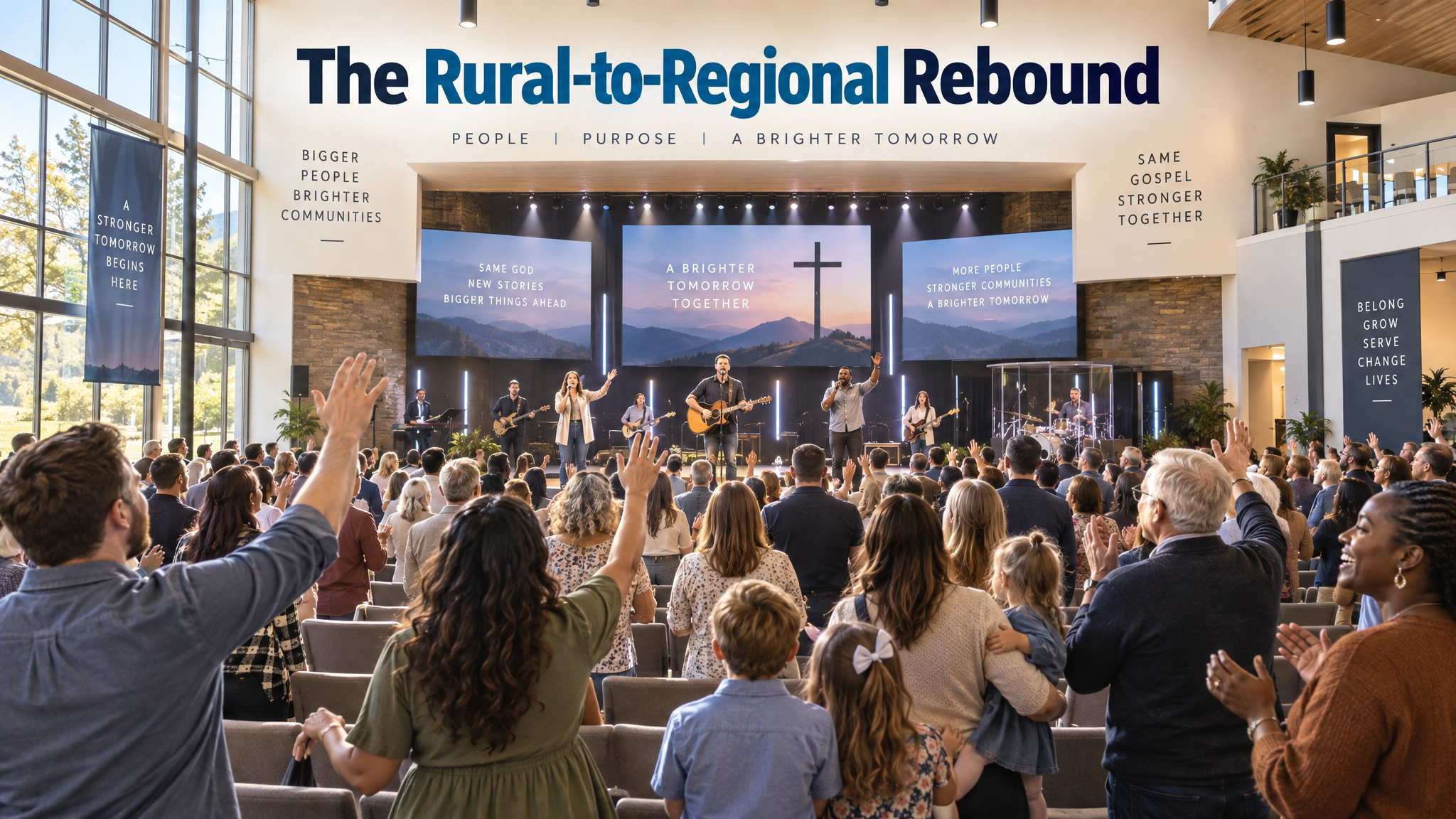
The Rural-to-Regional Rebound: A Case Study on Scaling Sustainable Church Growth Through Digital Integration at Northwood Community Church
The Growth Bottleneck: A Case Study in Scaling Challenges
Northwood Community Church, located in a formerly rural but rapidly suburbanizing region, faced a predicament common to many mid-sized congregations. Founded three decades ago as a tight-knit community of 150 members, the church suddenly found itself at the center of a population boom. By 2024, attendance had surged to 800, but the "mid-sized church" systems that had served them well for years were beginning to fracture.
The pastoral team was overwhelmed, the volunteer pipeline was clogged with manual processes, and new attendees were slipping through the cracks of a legacy paper-and-spreadsheet ecosystem. This case study examines how Northwood transitioned from a localized, manual ministry to a data-informed, regional powerhouse using strategic digital integration and the FaithBridge framework.
Phase 1: Identifying the Infrastructure Deficit
Before Northwood could scale, they had to admit they were stuck. Pastor Sarah Jenkins observed that while the sanctuary was full, the "life" of the church—discipleship, small groups, and service—was stagnant. "We were growing in numbers but thinning in impact," Sarah noted. The administrative burden of tracking attendance, following up with first-time guests, and managing a multi-site campus launch was depleting the staff's energy for actual ministry.
The Paper Trail Problem
Every Monday, staff spent six hours manually entering data from "Connection Cards" into a disconnected database. The delay meant that guests often didn't receive a welcome email until Wednesday or Thursday—by which time the Sunday experience had already faded. This lag in engagement was the primary driver of their 40% attrition rate for new visitors.
The Volunteer Management Abyss
Scheduling volunteers for three services across two locations was handled via a complex web of text messages and private emails. The lack of a centralized system led to double-booking, burnout, and a sense of chaos among the "boots on the ground."
Phase 2: Architecting the Digital Mesh
In early 2025, Northwood partnered with FaithBridge to overhaul their operational architecture. The goal wasn't just to buy software, but to build a digital mesh that supported human connection.
Automating the Welcome Wagon
The first step was replacing physical cards with a digital-first onboarding pipeline. Using FaithBridge's integrated guest management, Northwood implemented a QR-code based check-in system.
When a guest checked in, a series of automated but highly personalized triggers were activated:
- Immediate (T+5 minutes): A text message thanking them for visiting and offering a link to a digital "coffee with the pastor" signup.
- First 24 Hours: A personalized email from a volunteer in their specific demographic area.
- Mid-Week: A prompt for a "Next Steps" class.
The result? The guest retention rate jumped from 60% to 85% within three months.
Centralizing the Volunteer Ecosystem
By migrating to FaithBridge's volunteer management module, Northwood empowered Ministry Leads to manage their own schedules within a unified calendar. The system used predictive analytics to flag potential burnout in volunteers who were serving more than two weeks in a row, allowing leadership to intervene and rotate staff proactively.
Phase 3: Scaling Through Data-Informed Discipleship
The most profound shift occurred in how Northwood tracked spiritual growth. Traditionally, growth was measured by seat count. With the new system, they could track "engagement velocity"—the speed and depth at which a new member moved from attending to serving to leading.
The Small Group Catalyst
Integrating their small group directory with real-time geographic data allowed Northwood to identify "underserved zones" where new housing developments lacked a local host home. They were able to plant six new micro-groups exactly where the growth was happening before the formal campus launch, creating a "soft-landing" for new regional members.
Strategic Capital Allocation
With the financial integration provided by FaithBridge, the church leadership could see real-time giving trends. This transparency allowed them to adjust their capital campaign for the new regional campus based on actual, sustainable tithing data rather than optimistic projections.
The Results: Sustainable Expansion
One year after the integration, Northwood Community Church successfully launched its second campus. The transition was seamless because the "digital DNA" of the first campus was easily replicated.
- Attendance Growth: 25% year-over-year increase in sustainable attendance.
- Volunteer Engagement: 45% increase in active volunteers, with a 30% reduction in churn.
- Operational Efficiency: 50% reduction in administrative hours spent on data entry, redirected toward community outreach.
Conclusion: Preparing Your House for Growth
The story of Northwood is not just about technology; it’s about stewardship. By optimizing the "boring" systems of administration and data management, they freed up the "sacred" work of ministry. Growth without systems leads to chaos, but growth supported by a digital mesh leads to a thriving, scalable community.
Is Your Church Ready to Scale?
If you find your leadership overwhelmed by manual processes or struggling to track the health of your expanding congregation, it’s time to look at your infrastructure. FaithBridge is designed to be the engine behind your mission, providing the tools you need to manage expansion without losing the heart of your ministry.
Experience the FaithBridge difference today. Schedule a walkthrough of our growth-focused church management platform and start building a sustainable future for your community.
Frequently asked questions
How does digital integration support church growth?
It automates administrative tasks, allowing staff to focus on ministry and providing real-time data for strategic decisions.
What was the biggest challenge for Northwood?
Overcoming a paper-based legacy ecosystem that caused new visitors to slip through the cracks.
Can FaithBridge help with multi-site expansion?
Yes, by creating a replicable digital DNA that ensures consistent member experiences across all locations.
Related articles

Church Growth
The Data-Driven Expansion: A How-To Guide for Using Predictive Analytics to Identify High-Impact Locations for New Church Campuses

Church Growth
The Urban Incubation Model: A Case Study on Architecting Sustainable Church Growth in High-Density Metropolitan Districts

Discipleship
The Discipleship Engine: A How-To Guide for Designing Scalable Micro-Group Ecosystems for Sustainable Spiritual Formation
Explore FaithBridge