10 Strategic Rhythms for Scaling Sustainable Discipleship: Architecting a Culture of Continuous Spiritual Formation
The Challenge of Scalable Spiritual Formation
In the rapidly evolving landscape of the modern ministry, the primary mandate of the Great Commission—to make disciples—often faces a significant bottleneck: scalability. Many churches find themselves trapped in a "heroic" model of discipleship, where spiritual growth is dependent on a small handful of highly gifted leaders or a single, intensive program. While these methods can be effective in a small setting, they rarely survive the complexities of a growing congregation or the demands of a digital-first era.
To bridge this gap, leaders must move beyond occasional programs and toward a durable discipleship infrastructure. This requires architecting a culture where spiritual formation is not an event, but a continuous, systemic rhythm that permeates every level of the organization. By shifting the focus from individual heroics to scalable systems, churches can ensure that every member has a clear, accessible pathway toward maturity.
FaithBridge was built to facilitate this exact transition. By providing the digital plumbing for ministry engagement, FaithBridge allows leaders to automate the administrative overhead of discipleship, freeing them to focus on the relational depth that transformation requires.
In this deep-dive listicle, we explore 10 strategic rhythms for architecting a sustainable culture of scalable discipleship.
1. Implement a Unified Maturity Framework
The first step in scaling discipleship is defining what "maturity" looks like in your specific context. Without a unified framework, your team will likely be pulling in different directions, leading to a fragmented experience for the congregation.
Defining the Core Competencies
A scalable framework identifies the 4–6 core competencies or "marks" of a disciple. These might include biblical literacy, communal engagement, sacrificial giving, and missional living. When these markers are clearly defined, every ministry department can align its curriculum and events to support these outcomes.
Creating a Shared Language
Scalability thrives on simplicity. By using a consistent language across your kids' ministry, youth groups, and adult small groups, you create a cohesive journey. This shared vocabulary acts as a "connective tissue" that helps congregants recognize their progress regardless of the specific program they are in.
2. Transition from Static Programs to Dynamic Pathways
Programs have a beginning and an end; pathways are continuous. To scale spiritual formation, you must transition from a calendar filled with disconnected events to a seamless journey of growth.
The Power of "Next Steps"
Every touchpoint in your church—from the Sunday service to a neighborhood service project—should have an obvious, low-friction "next step." A scalable infrastructure ensures these steps are not just announced from the stage but are tracked and nurtured through a centralized system like FaithBridge.
Mapping the Journey
Visualize the path a new believer takes. Where do they go after their first visit? How do they move from the "large gathering" to a "small group"? By mapping this journey, you can identify where people are dropping off and architect systems to close those gaps.
3. Leverage Micro-Groups for Relational Density
While large-group teaching is essential for vision-casting, deep transformation often happens in smaller, more intimate settings. However, traditional small group models often struggle to scale because they require high-capacity leaders who are in short supply.
The 3-4 Person Rhythm
Micro-groups (often called Huddles or DNA groups) consisting of 3–4 people are inherently more scalable than 12-person small groups. They require less formal "teaching" and more mutual accountability. Because the barrier to entry for leading a micro-group is lower, you can multiply these units much faster.
Architecting Accountability
Scalable discipleship requires a mechanism for accountability that doesn't feel like micromanagement. By encouraging micro-groups to share their "rhythms"—such as daily scripture reading or prayer requests—through a shared digital platform, you create a culture of visibility and support.
4. Architect a "Digital-First" Content Strategy
In a world where attention is the most valuable currency, your discipleship strategy cannot be confined to the four walls of the church building. A scalable culture meets people where they are: on their devices.
Asynchronous Learning
Not everyone can attend a midweek Bible study. By creating high-quality, asynchronous digital content—videos, podcasts, or interactive devotionals—you allow congregants to engage with spiritual formation on their own schedule. This "on-demand" discipleship significantly increases your reach without increasing your staff's workload.
Content as a Catalyst
Digital content should not be the end goal; it should be the catalyst for offline conversation. Use your digital platforms to provide the "fuel" for your micro-groups, ensuring that communal time is spent on application rather than just information transfer.
5. Formalize a Leadership Multiplication Pipeline
The single greatest constraint on the growth of a discipleship culture is the lack of leaders. A scalable infrastructure must have a built-in "engine" for identifying and developing new disciple-makers.
The "I Do, We Do, You Do" Model
Scalability requires a shift from "doing ministry" to "equipping others for ministry." By formalizing a mentorship rhythm where current leaders are always apprenticing a potential successor, you create a self-sustaining cycle of leadership multiplication.
Identifying Potential Early
Use your ministry data to identify high-engagement individuals who may not yet be in leadership. A proactive search for potential, rather than a reactive wait for volunteers, is essential for maintaining a healthy growth trajectory.
6. Incentivize Vulnerability and Radical Transparency
Systems can facilitate growth, but only a culture of radical honesty can produce transformation. To scale this, leaders must model the very vulnerability they expect from their congregation.
The "Top-Down" Effect
When the lead pastor and staff are open about their own struggles and growth areas, it gives the rest of the church permission to do the same. This reduces the "perfection trap" that often stalls spiritual formation in larger organizations.
Creating Safe Spaces
Scalable platforms should include features that allow for private, secure communication. When people feel their data and their stories are safe, they are far more likely to engage in the kind of deep sharing that leads to lasting change.
7. Integrate Generosity into the Discipleship DNA
The way we handle our resources is one of the most accurate barometers of our spiritual maturity. Therefore, a scalable discipleship culture must treat stewardship not as a separate fundraising department, but as a core spiritual discipline.
From Transactional to Transformational
Giving shouldn't just be about "paying the bills." It's an act of worship. By integrating giving prompts and stewardship teaching directly into your discipleship pathways, you help congregants see their finances as a tool for kingdom impact.
Frictionless Stewardship
Scalability is often hindered by friction. If it's difficult to give, people won't do it. FaithBridge simplifies this by architecting a seamless, multi-channel giving experience that allows congregants to automate their generosity as part of their spiritual rhythm.
8. Prioritize Data-Informed Pastoral Care
In a large church, it's impossible for a single pastor to know everyone's name, let alone their spiritual state. A scalable infrastructure uses data to provide "high-tech, high-touch" pastoral care.
Identifying the "Ghosting" Signal
One of the most valuable data points is absence. If someone who was previously engaged in a micro-group suddenly stops interacting, your system should flag this for a follow-up. This proactive approach ensures that no one slips through the cracks as the ministry grows.
Personalizing the Experience
Data allows you to personalize the discipleship journey. If the system knows a member is going through a career transition, it can suggest relevant resources or connect them with a mentor who has walked a similar path. This level of care is only possible at scale through robust technology.
9. Foster a Missional Outward-Focus
Discipleship that only focuses inward eventually becomes stagnant. A scalable culture must be inherently missional, constantly pointing disciples back toward the world.
Serving as Formation
Service is not just something disciples "do"; it's how they are formed. By architecting scalable "on-ramps" for community service, you ensure that every member has an opportunity to put their faith into action.
Strategic Partnerships
Scale your impact by partnering with local organizations. Rather than trying to do everything yourselves, provide your disciples with a curated list of opportunities to serve the city, backed by a system that tracks engagement and impact.
10. Optimize for Interoperability and Ease of Use
Finally, the greatest discipleship strategy in the world will fail if the tools are too difficult for the average member to use. A scalable infrastructure must be intuitive, interoperable, and integrated.
Removing the "App Fatigue"
People don't want five different apps for church. They want one unified digital home. By consolidating your giving, small groups, content, and events into an integrated ecosystem like FaithBridge, you remove the barriers to engagement.
The Power of Automation
Automating the "mundane" tasks—attendance tracking, event registration, and follow-up emails—allows your staff to reclaim hundreds of hours for what really matters: personal discipleship.
Conclusion: Bridging the Gap to a New Era of Ministry
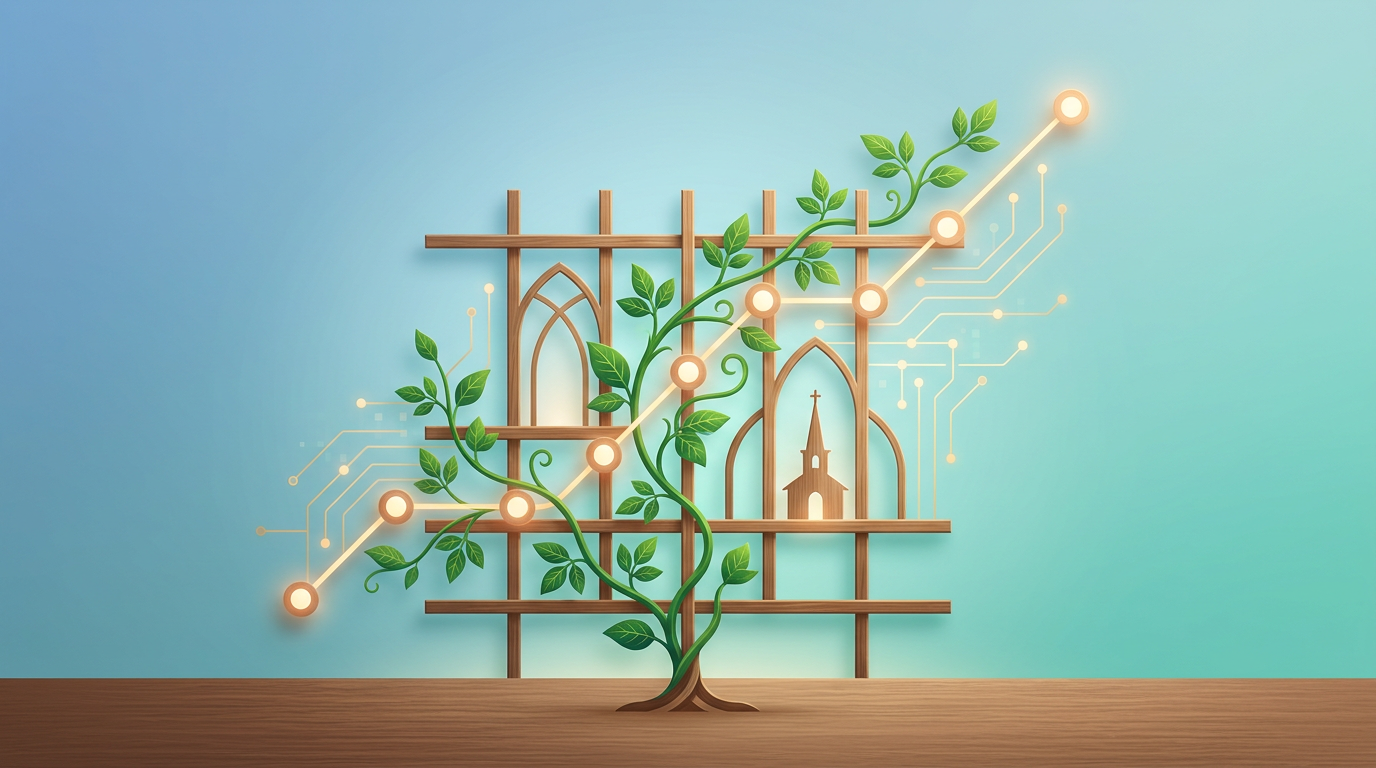
Architecting a scalable discipleship culture is not about replacing the Holy Spirit with a spreadsheet. It is about creating the most efficient, durable, and accessible "trellis" possible so that the "vine" of the Gospel can grow and flourish. By implementing these 10 strategic rhythms, you move your church from a struggle for survival toward a sustainable engine of spiritual transformation.
The modern church faces unprecedented challenges, but also unprecedented opportunities. With the right strategy and the right tools, your ministry can reach more people, more effectively, than ever before.
Elevate Your Ministry Infrastructure with FaithBridge
Is your church's discipleship growth hitting a ceiling? Are you tired of fighting fragmented systems that drain your team's energy? FaithBridge is the unified ministry platform designed to help you scale your impact without losing your soul. From automated discipleship pathways to seamless digital giving, we provide the architecture you need to lead your church into the future.
Ready to see how FaithBridge can transform your ministry? Schedule a personalized demo today and discover the power of an integrated ministry ecosystem. Together, we can architect a future where every member is a disciple, and every disciple is a leader.
Frequently asked questions
What is a discipleship infrastructure?
A discipleship infrastructure is a combination of defined frameworks, leadership pipelines, and technological tools (like FaithBridge) that work together to create a predictable and scalable pathway for spiritual growth within a church.
Why is micro-group discipleship more scalable than traditional small groups?
Micro-groups of 3-4 people are more scalable because they require less formal teaching training, making it easier for more members to step into leadership roles quickly, thus facilitating more rapid multiplication of groups.
How does technology support scalable discipleship?
Technology supports scalability by automating administrative tasks (registration, tracking), providing asynchronous digital content for learning anywhere, and offering data-driven insights to ensure no one is missed in the pastoral care process.
What is the difference between a discipleship program and a pathway?
A program is usually a time-bound event with a clear start and end, whereas a pathway is a continuous, integrated journey where each step naturally leads to the next, facilitated by ongoing support and systems.
Related articles
Discipleship
The Discipleship Engine: A How-To Guide for Designing Scalable Micro-Group Ecosystems for Sustainable Spiritual Formation

Discipleship
The Maturity Matrix: A Deep-Dive into Architecting Data-Informed Discipleship Pathways for High-Growth Churches

Church Growth
The Rural-to-Regional Rebound: A Case Study on Scaling Sustainable Church Growth Through Digital Integration at Northwood Community Church
Explore FaithBridge