Administrative Excellence: A Strategic Comparison of Centralized vs. Decentralized Operations for Scaling Multi-Site Ministries
Administrative Excellence: A Strategic Comparison of Centralized vs. Decentralized Operations for Scaling Multi-Site Ministries
As churches grow and expand into multiple locations, leadership eventually reaches a critical crossroads: how should we manage the administrative weight of a multi-site ministry? For many, the initial instinct is to keep everything close to home, managing all locations from a central office. For others, the desire for local autonomy leads to a decentralized model where each campus operates as a self-contained unit.
The choice between centralized and decentralized operations is not merely a matter of logistical preference; it is a strategic decision that affects everything from budget efficiency and staff morale to the speed of decision-making and the consistency of the guest experience. In this deep-dive comparison, we explore the strengths and weaknesses of both frameworks to help you architect an operational engine that scales without losing the heart of your ministry.
The Case for Centralization: Efficiency and Consistency
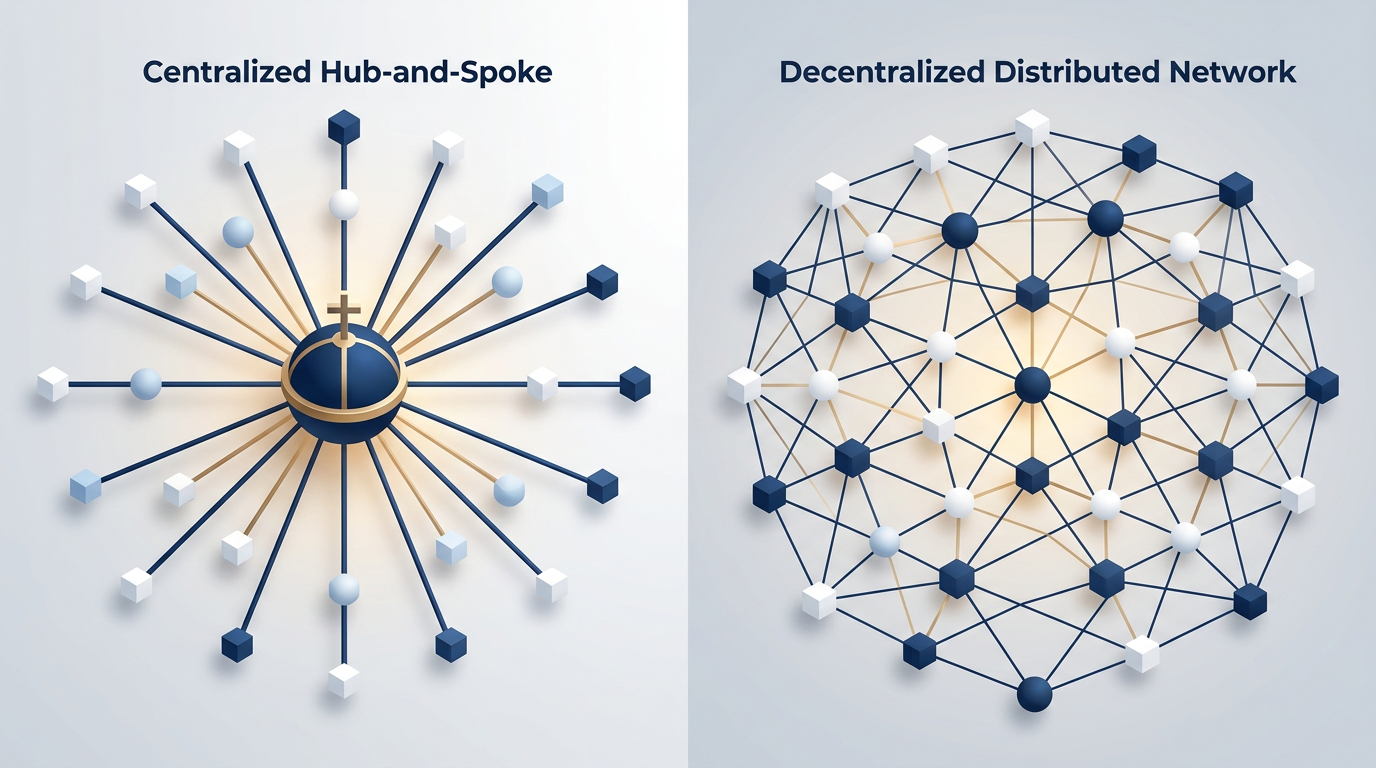
A centralized operational model—often referred to as the "hub-and-spoke" model—places the core administrative functions (finance, HR, communications, IT, and facility management) within a single "Central" team that serves all campuses.
Advantages of Centralization
- Strategic Stewardship and Cost Savings: By consolidating purchasing and vendor management, centralized churches can leverage economies of scale. Instead of four campuses buying four different software subscriptions, the central office negotiates a single enterprise-level contract.
- Brand and Vision Alignment: When every bulletin, social media post, and stage design is vetted by a central creative team, the "FaithBridge feel" remains consistent across every location. This prevents "vision drift" where campuses begin to feel like entirely different churches.
- Specialized Expertise: Centralization allows the church to hire high-level specialists—such as a dedicated CFO or a professional HR Director—which individual campuses could never afford on their own. Smaller campus pastors are freed from the "paperwork" to focus on pastoral care and discipleship.
Potential Drawbacks
The most common criticism of centralization is "bottlenecking." When every decision must be approved by the central office, campus pastors can feel disempowered. If a local campus needs a quick facility fix or wants to pivot their community outreach strategy, the bureaucratic delay can stifle local momentum.
The Case for Decentralization: Agility and Local Impact
In a decentralized model, campuses operate with a high degree of autonomy. While they share a common name and theology, many operational decisions—hiring local staff, managing their own budget, and designing campus-specific programming—are made at the site level.
Advantages of Decentralization
- Fast-Twitch Agility: Campus leaders can respond in real-time to the specific needs of their neighborhood. They don't need a committee meeting at the central office to decide how to help a local school or handle a Sunday morning emergency.
- Local Ownership: Staff and volunteers often feel a greater sense of ownership when they are responsible for their own outcomes. This can lead to higher levels of engagement and a culture of "scrappy" innovation.
- Contextual Ministry: A campus in a suburban residential area has different needs than a campus in an urban downtown core. Decentralization allows ministries to be "hyper-local," adapting their methods to the specific culture of their community.
Potential Drawbacks
The primary risk of decentralization is fragmentation. Over time, campuses may develop their own distinct cultures that eventually conflict with the parent church's mission. Furthermore, decentralization is often more expensive, as it causes a duplication of efforts and makes it harder to maintain high-level financial oversight.
A Comparative Analysis: Which Data Should Drive Your Decision?
To decide which framework is right for your church's current stage of growth, you must weigh several key factors.
| Feature | Centralized Model | Decentralized Model |
|---|---|---|
| Cost Efficiency | High (Economies of Scale) | Low (Duplication of Roles) |
| Decision Speed | Slow (Bureaucratic) | Fast (Autonomous) |
| Brand Consistency | High (Uniformity) | Variable (Contextual) |
| Staff Focus | High (Campus Pastors Focus on People) | Mixed (Pastors Manage Admin) |
| Scalability | High (Easier to Add spokes) | Complex (Requires High-Level Leaders at Every Site) |
The "Hybrid" Alternative: The Sweet Spot of Church Management
For many scaling ministries, the answer is a "Centralized Services" model. In this hybrid approach, back-end functions like payroll, accounting, and database management are centralized for efficiency, while front-end ministry decisions—leadership development, local outreach, and campus culture—are decentralized to empower the local pastor.
5 Practical Steps for Transitioning Your Operational Model
Regardless of which direction you choose, the transition requires intentionality.
1. Define Your "Non-Negotiables"
Identify the core elements that must remain consistent across all locations (e.g., theology, financial transparency, safety protocols). These should almost always be centralized.
2. Standardize Your Technology Stack
To avoid data silos, use a unified church management system (ChMS). Whether you are centralized or decentralized, having one source of truth for member data is essential for tracking engagement across the organization.
3. Build a "Service-Level" Culture
If you choose centralization, the central office must view itself as a service provider to the campuses, not a governing body. Their success should be measured by how well they unburden the campus pastors.
4. Invest in Senior Leadership at the Campus Level
Decentralization only works if you have high-capacity leaders at every site. If you lack experienced administrators at your campuses, you must lean toward centralization until your leadership pipeline is matured.
5. Establish Clear Feedback Loops
Create regular rhythms where campus pastors can provide feedback to the central team. This prevents the "ivory tower" syndrome where the central office becomes disconnected from the reality of Sunday morning ministry.
Conclusion: Designing for the Future
There is no one-size-fits-all answer to the central vs. decentralized debate. The right choice depends on your church’s unique DNA, resources, and growth trajectory. However, the most successful multi-site ministries are those that prioritize clarity over control. By defining exactly which decisions are made where, you remove friction and empower your leaders to do what they do best: reaching people for Christ.
If you are struggling to manage the complexity of your growing ministry, it might be time to evaluate your operational engine. Designing a scalable infrastructure today ensures that you are ready for the opportunities of tomorrow.
Ready to Scale Your Ministry Operations?
FaithBridge helps churches navigate the complexities of growth with data-driven insights and integrated management tools. Designed specifically for multi-site ministries, FaithBridge unifies your data, simplifies your administration, and empowers your leaders to focus on what matters most.
Try FaithBridge today and see how we can help your church build a sustainable foundation for growth.
FAQ
Is it more expensive to run a decentralized church?
Generally, yes. Decentralization often leads to the duplication of administrative roles and software costs across different campuses, whereas centralization leverages economies of scale to reduce per-site expenses.
When should a church move from centralization to decentralization?
A church should consider decentralizing front-end ministry decisions when the local campuses reach a level of maturity where the central office is becoming a bottleneck to local neighbourhood impact.
How do you maintain culture in a decentralized model?
Culture is maintained through unified leadership training, shared theology, and regular gatherings of all campus staff to realign on the primary mission and vision.
Can a church switch models after they have already scaled?
Yes, but it is challenging. Moving from decentralization to centralization requires significant "buy-in" from campus leaders who may feel they are losing autonomy. Moving from centralization to decentralization requires intentional leadership development to ensure campuses are ready for the new responsibility.
Frequently asked questions
Is it more expensive to run a decentralized church?
Generally, yes. Decentralization often leads to the duplication of administrative roles and software costs across different campuses, whereas centralization leverages economies of scale to reduce per-site expenses.
When should a church move from centralization to decentralization?
A church should consider decentralizing front-end ministry decisions when the local campuses reach a level of maturity where the central office is becoming a bottleneck to local neighbourhood impact.
How do you maintain culture in a decentralized model?
Culture is maintained through unified leadership training, shared theology, and regular gatherings of all campus staff to realign on the primary mission and vision.
Can a church switch models after they have already scaled?
Yes, but it is challenging. Moving from decentralization to centralization requires significant 'buy-in' from campus leaders who may feel they are losing autonomy. Moving from centralization to decentralization requires intentional leadership development to ensure campuses are ready for the new responsibility.
Related articles
Church Management
The Administrative Architecture: 10 Strategic Frameworks for Scaling Sustainable Operations in High-Growth Faith Communities

Church Growth
The Rural-to-Regional Rebound: A Case Study on Scaling Sustainable Church Growth Through Digital Integration at Northwood Community Church

Discipleship
The Discipleship Engine: A How-To Guide for Designing Scalable Micro-Group Ecosystems for Sustainable Spiritual Formation
Explore FaithBridge