From Hero to Hub: A Deep-Dive into Transitioning from Solo Leadership to a Distributed Pastoral Framework

The Myth of the Heroic Pastor
For decades, the prevailing narrative of church growth has centered on the "heroic" leader—the visionary senior pastor whose charisma, stamina, and singular focus drive the entire organization forward. In this model, the pastor is the primary spokesperson, the chief decision-maker, and the ultimate source of spiritual direction. While this approach has helped launch thousands of ministries, it carries a hidden cost: an unsustainable reliance on a single individual that often leads to burnout, organizational bottlenecks, and a "ceiling" on spiritual maturity within the congregation.
As churches scale and the complexity of modern ministry increases, the hero model is showing its cracks. The weight of administrative oversight, emotional counseling, theological preparation, and strategic planning is too much for any one person to carry indefinitely. The alternative—and the future for growing, healthy churches—is a transition from the "Hero" to the "Hub": a distributed pastoral framework that empowers a team to lead together.
This deep-dive explores the strategic, theological, and practical necessity of transitioning to distributed leadership, providing a roadmap for pastors and boards looking to build a more resilient and scalable ministry.
The Limitations of the Solo-Leader Model
The solo-leader model often thrives in the early stages of a church's life. A founder’s passion is infectious, and their ability to quickly make decisions allows for rapid mobilization. However, as the church moves past the "pioneer" phase, the limitations become apparent.
1. The Burnout Barrier
When the health of the entire organization depends on one person’s energy and mental health, the risk of burnout is nearly 100%. Pastoral burnout isn't just about working long hours; it’s the weight of being the "final answer" for every problem. Over time, this exhaustion leads to diminished creativity, emotional withdrawal, and in many cases, a premature exit from ministry.
2. The Decision Bottleneck
In a centralized model, the senior pastor becomes a bottleneck. Every major decision—from the color of the lobby to the curriculum of the children's ministry—must pass through their desk. This slows down the organization and prevents talented staff and volunteers from exercising their own leadership gifts. The result is a church that cannot move faster than its leader can process information.
3. The Ceiling on Maturity
When a congregation looks to one person as the sole source of wisdom and authority, they often fail to develop their own spiritual muscles. Distributed leadership encourages a "body of Christ" theology, where every member understands their role and responsibility. In a hero-centric model, the congregation becomes spectators rather than participants.
Defining Distributed Leadership in Ministry
Distributed leadership is not merely delegation. It is not just giving people tasks; it is sharing the authority to lead. In a distributed "Hub" framework, the senior leader transitions from being the center of attention to the center of a network.
The Hub is the point of alignment, not the point of control. In this model:
- Authority is Localized: Decisions are made by those closest to the action (e.g., the youth pastor makes final calls on youth curriculum).
- Leadership is Plural: A team of elders or directors provides mutual accountability and spiritual oversight.
- Expertise is Respected: The senior leader recognizes they are not the smartest person in every room and defers to others’ expertise in areas like finance, technology, or community outreach.
The Architecture of the "Hub"
Building a hub-based leadership structure requires a fundamental shift in how roles and accountability are defined. It starts with creating a "Leadership Core" that shares the primary weight of ministry.
The Five Pillars of a Distributed Hub
- The Visionary/Primary Communicator: Responsible for the overall direction and public teaching of the church, but supported by others who can also carry the vision.
- The Operational Strategist: A leader (often an Executive Pastor) who translates vision into systems, ensuring the "Hub" remains organized and efficient.
- The Ministry Leads: High-capacity leaders who have full ownership over specific verticals (Discipleship, Outreach, Worship).
- The Board/Eldership: A group that provides high-level governance and guards the theological and moral integrity of the Hub.
- The Technological Infrastructure: The digital systems that allow these leaders to communicate, track progress, and share data seamlessly.
Practical Steps for the Transition
Transitioning from "Hero" to "Hub" is a cultural journey that takes years, not weeks. It requires the senior leader to intentionally decrease so that the collective leadership can increase.
Step 1: Honest Self-Assessment
The senior pastor must acknowledge their own limitations. This requires humility and a willingness to let go of the "ego boost" that comes from being the indispensable leader. A successful transition begins when the leader can honestly say, "The church is better if I'm not the one making this decision."
Step 2: Identify and Onboard Core Leaders
Don't wait for the "perfect" leaders to appear. Identify the high-capacity individuals already within your congregation or staff who demonstrate the character and competency to share the lead. Start by giving them ownership of small projects, then gradually increase their authority.
Step 3: Formalize Accountability Structures
Distributed leadership doesn't mean "everyone does whatever they want." It requires clear boundaries. Define who is responsible for what, how success is measured, and how conflicts are resolved. Regular "Hub Meetings" should focus on alignment rather than just status updates.
Step 4: Invest in Systems of Transparency
In a distributed model, information must be shared, not hoarded. If only the senior pastor knows the church's financial status or the true attendance numbers, they will remain the Hero. Using platforms like FaithBridge allows every leader in the Hub to see the same data, fostering a culture of trust and shared responsibility.
The Impact on Church Growth and Sustainability
The shift to a distributed framework pays massive dividends for the health of the church long-term.
Scalable Growth
A church with a distributed Hub can scale infinitely because leadership capacity is added as the church grows. Instead of one leader getting stretched thinner, more leaders are added to the network, each bringing new energy and perspective.
Long-Term Pastoral Health
When a pastor knows they have a team to lean on, the pressure is lifted. They can take real sabbaticals, focus on their primary gifts, and enjoy a sustainable, decades-long ministry. Distributed leadership is the ultimate insurance policy against pastoral failure and burnout.
Increased Congregational Engagement
As authority is pushed down to the ministry level, volunteers feel more empowered. They aren't just "helping the pastor"; they are part of a team with real influence. This leads to higher retention, deeper spiritual commitment, and a more vibrant church culture.
Conclusion: From Hero to Hub
The era of the "Lone Ranger" pastor is ending. In a world that is increasingly complex and a culture that is increasingly skeptical of centralized power, the distributed leadership model offers a path that is both biblically grounded and operationally superior.
Transitioning from Hero to Hub isn't about diminishing the role of the senior leader; it’s about magnifying the impact of the entire church. It's about building a structure where the mission is bigger than any one personality, and where the "body of Christ" truly functions as it was intended.
Is your church ready to make the shift? The transition requires courage, humility, and the right systems to support a new way of leading.
Empower your leadership team with FaithBridge. Our platform is designed to support distributed leadership frameworks by providing the data, communication tools, and administrative systems your "Hub" needs to flourish. [Try FaithBridge Today] and start building a more sustainable future for your ministry.
Frequently asked questions
What is distributed pastoral leadership?
Distributed pastoral leadership is a model where authority and responsibility are shared across a team of qualified leaders rather than resting solely on one individual (the 'hero' pastor).
How does distributed leadership prevent pastoral burnout?
By sharing the emotional, administrative, and spiritual load, it prevents any one person from becoming the single point of failure and allows for rest and specialized focus.
Is distributed leadership biblical?
Yes, many theologians point to the New Testament model of a plurality of elders and the 'body of Christ' metaphor where every member has a role to play in the health of the church.
What is the biggest challenge in transitioning from solo leadership?
The biggest challenge is often cultural and psychological—shifting from a culture of personality to a culture of shared mission and mutual accountability.
Related articles

Pastoral Leadership
The Transition Engine: A Case Study on Successful Lead Pastor Succession and Cultural Continuity at Grace Collective
Church Growth
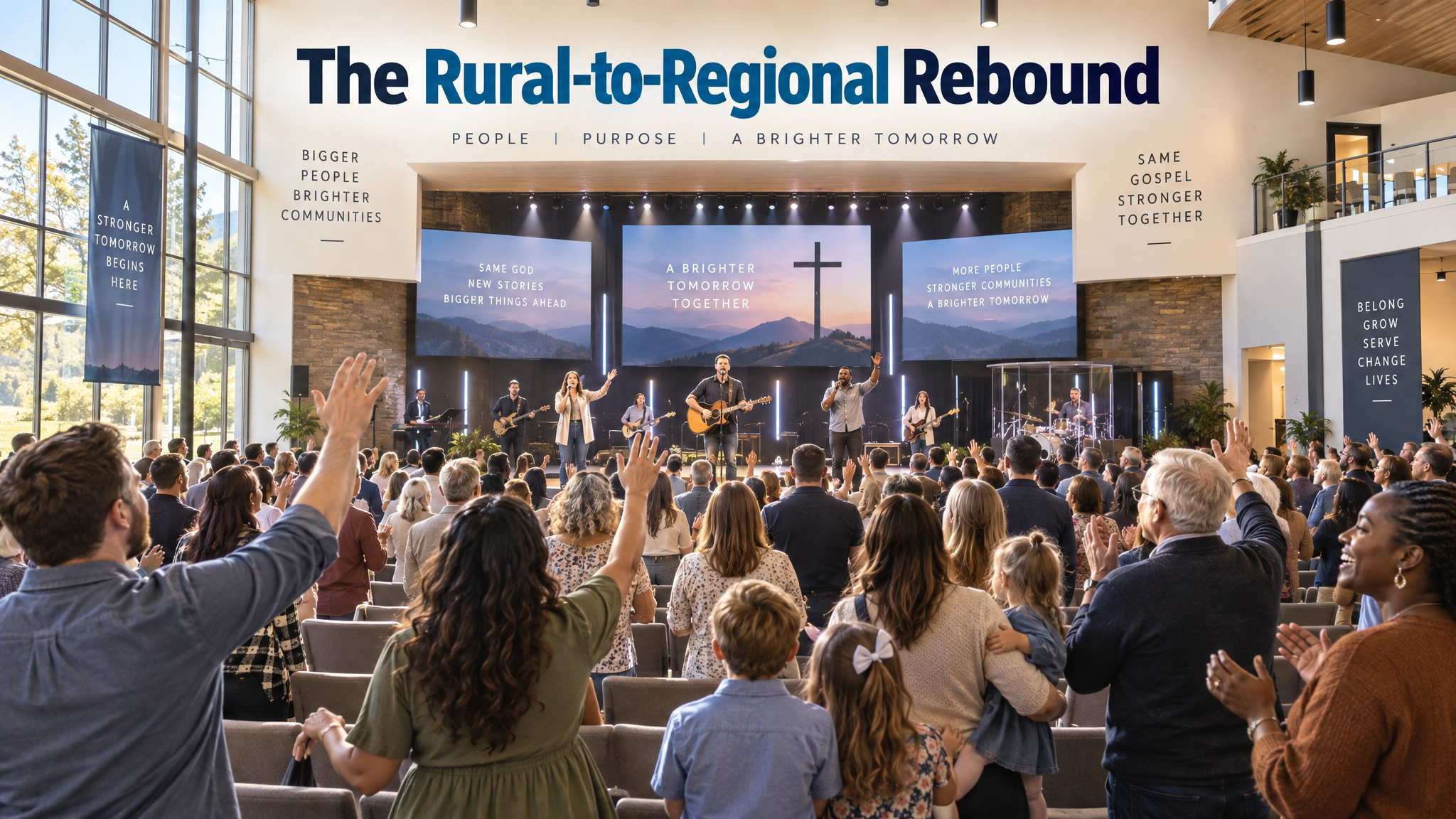
The Rural-to-Regional Rebound: A Case Study on Scaling Sustainable Church Growth Through Digital Integration at Northwood Community Church

Discipleship
The Discipleship Engine: A How-To Guide for Designing Scalable Micro-Group Ecosystems for Sustainable Spiritual Formation
Explore FaithBridge