Scaling the Shepherd’s Heart: 12 Best Practices for Implementing a Sustainable Multi-Layered Pastoral Care Framework

The Paradox of Growth: When Care Becomes a Bottleneck
Growth is the visible evidence of a healthy church, yet it often creates an invisible crisis: the dilution of pastoral care. In the early days of a ministry, the lead pastor knows every name, every story, and every struggle. But as a church scales toward 200, 500, or 2,000 members—or expands across multiple campuses—the relational model that once fueled growth becomes its most significant constraint.
The "Shepherd’s Heart" doesn't have an infinite capacity to scale through a single individual. When a leadership team attempts to maintain a centralized care model during expansion, the results are predictable: pastoral burnout, member neglect, and an eventual plateau because the system can no longer support the weight of the people it attracts.
To sustain growth, church leaders must transition from being the primary caregiver to becoming the architect of a shepherding ecosystem. This requires a shift in mindset from doing ministry to equipping for ministry. Here are 12 best practices for implementing a sustainable, multi-layered pastoral care framework that ensures your church remains personal, even as it becomes powerful.
1. Decentralize the Primary Care Touchpoint
The first step in scaling is admitting that the Senior Pastor cannot be the primary contact for every crisis. A scalable framework places the weight of initial care on Small Group leaders or Lay Ministers. In this model, the group leader is the "first responder," while the professional staff serves as the "specialized clinic" for escalated needs.
2. Implement a Tiered Leadership Pipeline
Create a clear hierarchy of care that allows for natural escalation.
- Tier 1: Small Group Leaders (relational maintenance).
- Tier 2: Coaches/Area Directors (oversight of 5-7 group leaders).
- Tier 3: Pastoral Staff (complex counseling, hospital visits for leaders, and system management). This tiers-of-oversight approach ensures that no single leader is managing more than a handful of direct reports, which is the key to sustainable relational health.
3. Standardize "Care Protocols"
Don't leave care to chance. Define what a "win" looks like for different life events. If a member is hospitalized, what is the expected response time? If a child is born, who sends the meal train? When protocols are standardized, lay leaders feel empowered because they have a clear roadmap, and members experience consistent care regardless of who their specific leader is.
4. Leverage "Care Tags" in Your Management System
A sustainable framework requires visibility. Use platforms like FaithBridge to tag members based on their current life stage or crisis. By tracking "Care Cycles"—such as bereavement, unemployment, or new marriage—pastoral staff can generate reports to see where the heaviest needs are concentrated and deploy resources accordingly.
The Role of Real-Time Data in Spiritual Health
You cannot care for what you do not measure. By monitoring engagement markers—attendance dips, giving fluctuations, or small group absence—your systems can trigger an "Auto-Alert" for a check-in call before a member drifts away entirely.
5. Formalize the Onboarding of Care Ministers
Pastoral care is a skill that must be taught. Develop a 4-to-6-week training module for prospective care leaders that covers active listening, crisis management, confidentiality, and when to refer a member to professional counseling. Scaling without training is simply scaling dysfunction.
6. Build a "Relational Reserve" for Leaders
Burnout happens when output exceeds input. Ensure that every leader in your care framework has a "Shepherd of their own." Your small group leaders need to be cared for by their coaches as intentionally as they care for their members. If the leaders aren't healthy, the care they provide will eventually become transactional.
7. Utilize Asynchronous Communication for Care Notes
In a multi-site or large-staff environment, the left hand must know what the right hand is doing. Centralized care notes (protected by appropriate privacy settings) allow a pastor to walk into a meeting with a member and know exactly what the small group leader discussed the week prior. This prevents the member from having to repeat their trauma and builds deep trust.
8. Prioritize "Relational Intelligence" Over Administrative Skill
When selecting leaders for your care framework, prioritize high EQ. While administrative skill is necessary for system health, pastoral care is fundamentally about empathy and presence. Look for leaders who "smell like sheep"—those who are naturally present in the lives of others without being asked.
9. Create Specialized "Care Teams"
Not every care need can be met by a generalist small group leader. Establish specialized teams for specific life stages:
- Bereavement Team: Experts in grief support and funeral logistics.
- Hospital/Homebound Team: Those with the flexibility and heart for visitation.
- Benevolence Team: Trained to navigate financial needs with dignity and accountability.
10. Establish a Clear Referral Network
A healthy church knows its limits. Your pastoral care framework should include a vetted list of professional counselors, medical professionals, and specialized support groups (AA, DivorceCare, etc.). A scalable system knows when to pass the baton to a professional to ensure the member gets the highest level of care.
11. Implement "Pulse Surveys"
Once or twice a year, send out a brief, anonymous survey to your congregation asking them to rate their feeling of "being cared for" on a scale of 1-10. This data provides a heat map of your framework's effectiveness. If one campus or one neighborhood is consistently scoring lower, you know exactly where the system needs reinforcement.
12. Automate the Routine, Personalize the Critical
Administrative tasks—like sending an anniversary card or a follow-up email after a first-time visit—should be automated. By letting your software handle the "routine" touches, you free up your human leaders to focus their limited time on the "critical" moments that require a real voice and a physical presence.
Scalable Compassion Through Integrated Workflows
The goal of a multi-layered framework isn't to replace the pastor’s heart with a machine; it’s to use the machine to make the pastor’s heart more effective. When your workflows are integrated, a hospital visit doesn't just happen; it’s tracked, followed up on, and supported by a meal train—all without the Lead Pastor needing to send a single text message.
Building the Future of Your Church
Scaling pastoral care isn't about working harder; it's about building smarter. By empowering your congregation to care for one another through a structured, multi-layered framework, you move closer to the biblical model of the Body of Christ—where every part does its work.
As you look toward the next phase of your church’s growth, ask yourself: Is our current care system a bridge or a barrier? If your leadership team is the only way care happens, you have reached your limit. But if you can build a sustainable framework of distributed leadership, your capacity for impact is limited only by your vision.
Ready to see how integrated workflows can revolutionize your pastoral care? Discover how FaithBridge empowers church leaders to scale their impact with sustainable, relational systems.
Frequently asked questions
How do you maintain relational intimacy in a large or multi-site church?
Intimacy is maintained by shifting from a 'one-shepherd' model to a 'shepherding network.' By empowering small group leaders and lay ministers with clear care protocols, you ensure that every individual has a primary relational touchpoint even as the central organization grows.
What is the biggest barrier to scaling pastoral care?
The 'pastoral bottleneck'—where the lead pastor or a small staff attempts to handle all significant care needs. Scaling requires decentralizing care through structured leadership pipelines and robust communication systems.
Can technology actually help with pastoral care?
Yes, when used as an administrative bridge rather than a relational replacement. Systems like FaithBridge allow for trackable care notes, automated follow-up reminders, and holistic member views that ensure no one falls through the cracks during rapid growth.
How do you identify new leaders for a care framework?
Look for individuals already displaying 'relational intelligence' and consistent presence in small groups. Use a tiered onboarding process where potential leaders shadow current care ministers before taking on their own small cohort.
Related articles

Pastoral Leadership
The Transition Engine: A Case Study on Successful Lead Pastor Succession and Cultural Continuity at Grace Collective
Church Growth
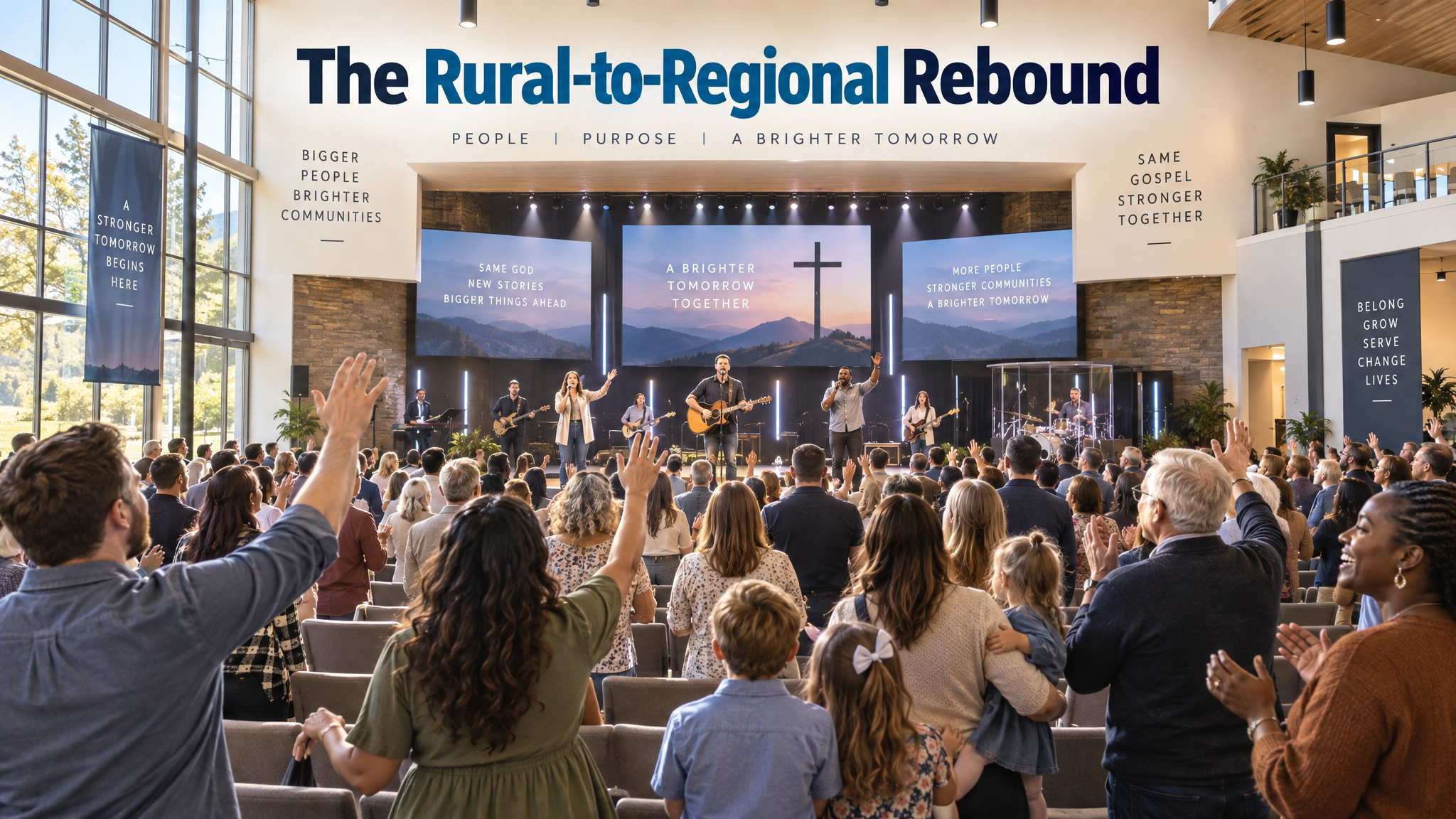
The Rural-to-Regional Rebound: A Case Study on Scaling Sustainable Church Growth Through Digital Integration at Northwood Community Church

Discipleship
The Discipleship Engine: A How-To Guide for Designing Scalable Micro-Group Ecosystems for Sustainable Spiritual Formation
Explore FaithBridge