Systems vs. Soul: Architecting Relational-First Volunteer Onboarding

In the rapidly evolving landscape of modern ministry, the "volunteer problem" remains one of the most stubborn hurdles for growing churches. As congregations scale, the administrative weight of managing hundreds of weekly roles often leads to a reliance on efficient, industrialized onboarding systems. However, a growing number of church leaders are discovering that efficiency is not the same as effectiveness. The tension lies between two distinct philosophies: the "System-First" approach, which prioritizes organizational gaps, and the "Soul-First" approach, which prioritizes the spiritual formation of the individual.
To build a ministry that lasts, leaders must understand the strategic trade-offs between these models. This deep-dive comparison explores how to balance the necessity of robust administrative systems with the non-negotiable requirement for relational depth in volunteer engagement.
The System-First Approach: The Strength of Efficiency
The system-first approach is the hallmark of the modern, well-oiled church machine. It is designed to solve the immediate problem of empty slots in the Sunday morning rotation. In this model, the priority is clarity, speed, and consistency.
Defining Feature: The Operational Pipeline
In a system-first volunteer culture, onboarding looks like a conveyor belt. A newcomer expresses interest, they are automatically entered into a Church Management System (ChMS), they receive an automated text or email, and they are scheduled for a background check and a basic training video. The goal is to move the volunteer from "interested" to "active" with as little friction—and as little human intervention—as possible.
The Benefits of Scale
The primary advantage of this model is its scalability. When a church is managing 500 volunteers across multiple sites, it is impossible for the lead pastor or even the volunteer coordinator to have a coffee with every potential recruit. Systems ensure that no one falls through the cracks and that the legal requirements, such as background checks, are never missed.
The Hidden Cost: Transactional Fatigue
The downside of a system-first approach is that it can feel transactional. When the primary communication a volunteer receives is a scheduling request from an app, they begin to feel like a "cog in the machine" rather than a partner in ministry. Over time, this leads to high turnover and "volunteer burnout," as the individual's soul is not being nourished by the act of service; it is being drained by the requirement of it.
The Soul-First Approach: The Power of Relational Depth
In contrast, the soul-first approach views volunteerism not as a way to "get the job done," but as a primary pathway for discipleship. Service is seen as a means of spiritual formation, where the act of giving one's time and talent is an essential part of becoming like Christ.
Defining Feature: The Relational Hand-off
Onboarding in a soul-first culture is defined by connection. Instead of an automated email, a prospective volunteer is met with an invitation to a conversation. A veteran volunteer or a staff member spends time listening to the person's story, identifying their unique spiritual gifts, and discussing how a specific role might help them grow in their faith. The goal is placement, not just recruitment.
The Benefits of Long-Term Retention
Relational onboarding builds loyalty. When a volunteer feels known and valued for who they are, not just what they can do, they are far more likely to remain committed for the long haul. They stay through the difficult seasons and the messy organizational shifts because their primary tie to the ministry is a person, not a task.
The Challenge: The Bottleneck of Intimacy
The soul-first model is notoriously difficult to scale. It requires a high "leadership tax"—a significant investment of time and energy from current leaders to mentor and onboard new ones. Without clear systems to support these relationships, the church can hit a growth ceiling where the current leaders are too busy "relating" to effectively manage the growing complexity of the ministry.
Comparative Breakdown: Systems vs. Soul
To better understand these models, let’s compare them across four critical dimensions of church health.
1. The Speed of Integration
- System-First: Rapid. A volunteer can be serving within a week of their initial interest.
- Soul-First: Slow. It may take weeks or even months of conversation and trial serving before a volunteer is fully integrated.
- Strategic Insight: Churches need a "Fast Track" system for low-stakes roles (like parking) and a "Deep Track" soul-focused process for high-impact roles (like small group leadership).
2. The Quality of Training
- System-First: Standardized. Video modules and checklists ensure uniform execution of tasks.
- Soul-First: Apprenticeship-based. Learning happens through observation and shared experience with a mentor.
- Strategic Insight: Use systems for technical knowledge (how to use the sound board) but use relational apprenticeship for ministerial wisdom (how to pray with a grieving congregant).
3. Culture and Belonging
- System-First: Functional. The volunteer belongs to a department.
- Soul-First: Emotional. The volunteer belongs to a community.
- Strategic Insight: A system-first church feels like a well-run business; a soul-first church feels like a family. The modern scaling church must strive to be a "family with systems."
4. Sustainability and Burnout
- System-First: High Risk. Volunteers are often treated as expendable resources to be optimized.
- Soul-First: Lower Risk. The emphasis on spiritual health acts as a natural buffer against exhaustion.
- Strategic Insight: Sustainability is found when the system protects the soul by preventing over-scheduling and ensuring adequate rest.
Transitioning to a Relational-First Hybrid Model
The most successful churches don’t choose between systems and soul; they use systems to serve the soul. This hybrid approach—Relational-First Onboarding—leverages technology to automate the "boring stuff" so that leaders have more time for the "important stuff."
Step 1: Automate the Transactional
Use your ChMS to handle background checks, document signing, and scheduling reminders. These are low-value relational touches that actually frustrate people when handled manually (and inconsistently).
Step 2: Elevate the Introduction
Ensure that the very first interaction after a sign-up is a personal reach-out from a human, not an automated system. Even a personalized text from a team lead is better than a generic system email.
Step 3: Architect "Rest Stops" into the Journey
Build systems that force relational check-ins. For example, trigger a notification for a team leader to take a volunteer to coffee after their first 90 days of serving. This uses a system to ensure a relational outcome.
Conclusion: Callings Over Slots
At the heart of the volunteer crisis is a question of identity. Is our church a service provider that needs workers, or a kingdom community that facilitates callings? When we prioritize systems over the soul, we might fill our Sunday morning slots, but we will eventually starve our people of the very community they came to serve.
By strategically comparing and integrating these two approaches, church leaders can move beyond the "rota" and begin architecting a culture where every act of service is a transformative step in a believer's journey. The goal is not a perfectly scheduled Sunday; it is a spiritually healthy, missionally active congregation that is empowered for long-term impact.
Call to Action
Ready to transform your church's volunteer culture? FaithBridge offers the comprehensive tools you need to bridge the gap between efficient systems and relational depth. Our platform helps you automate the administrative burdens of volunteer management while providing the data and insights you need to nurture every soul in your congregation. Visit FaithBridge today and see how we can help you scale your ministry without losing your heart.
Frequently asked questions
What is the biggest mistake churches make in volunteer onboarding?
The biggest mistake is treating onboarding as a purely administrative task. While background checks and training are necessary, failing to connect the volunteer to the broader mission and a relational mentor leads to high turnover and low engagement.
How can a large church maintain a relational feel during onboarding?
Scale relationships by empowering mid-level leaders (team leads) to handle the relational touches. The central staff should build the systems that prompt these leaders to engage personally with every new recruit.
Should all volunteer roles have a relational onboarding process?
While all volunteers should feel valued, the intensity of the relational process should match the impact of the role. High-responsibility roles (like children’s ministry or eldership) require deep relational vetting, while task-focused roles (like setup) can use a more streamlined, system-heavy approach.
How do systems help prevent volunteer burnout?
Systems prevent burnout by ensuring that no single person is over-leveraged. A good scheduling system tracks serving frequency and forces "off weeks," protecting the volunteer's spiritual and emotional health.
Is it possible to switch from a system-first to a soul-first culture?
Yes, but it requires a shift in leadership priorities. Start by auditing your current onboarding journey and identifying "relational gaps" where technology has replaced human connection, then systematically reintroduce personal touches at those points.
Related articles

Volunteer Engagement
Application-Based vs. Invitation-Only: A Strategic Comparison of Volunteer Recruitment Models for High-Growth Churches

Volunteer Engagement
The Volunteer Velocity Framework: 8 Best Practices for Scaling High-Impact Service Teams in a Digital-First Ministry
Church Growth
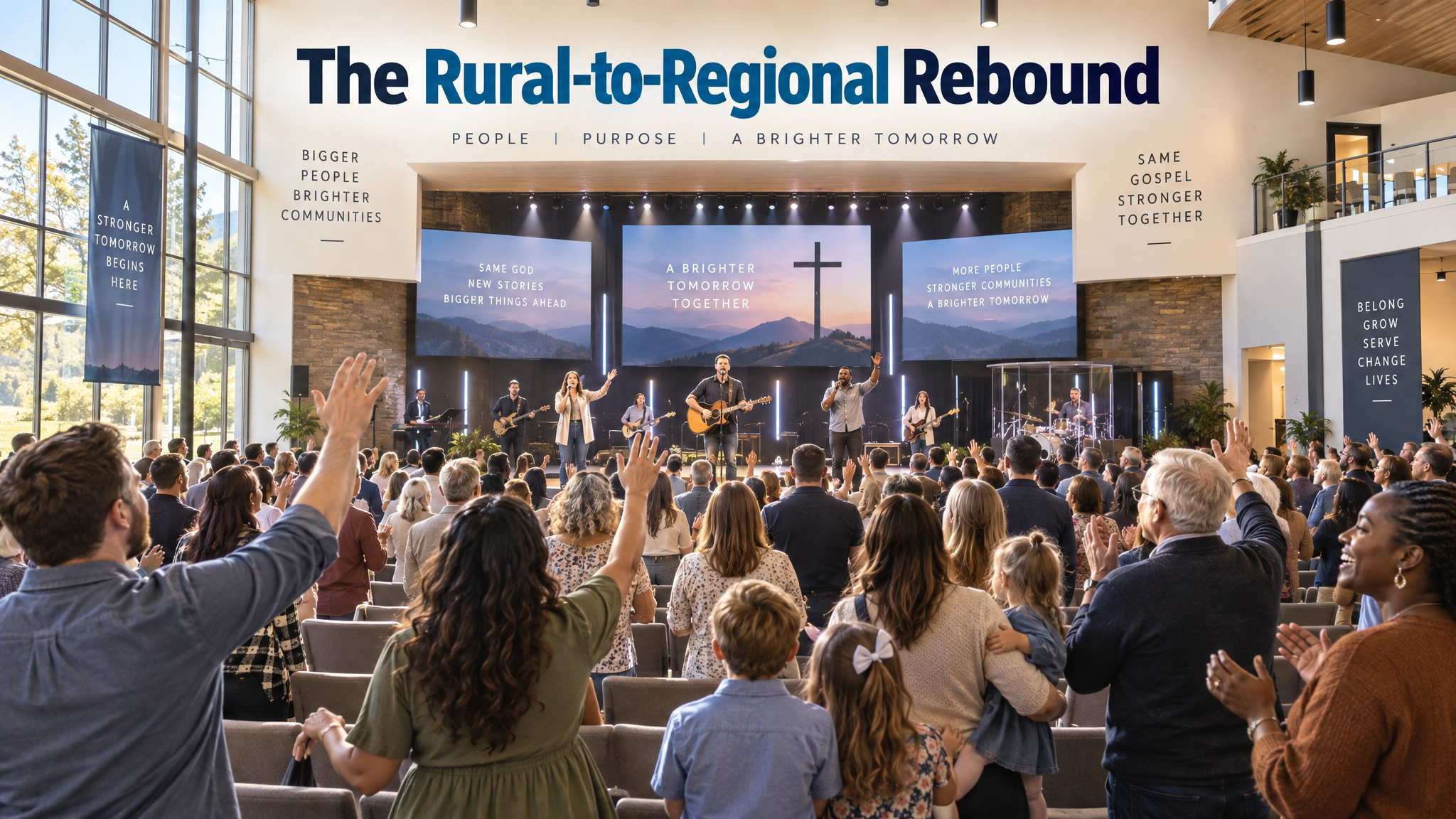
The Rural-to-Regional Rebound: A Case Study on Scaling Sustainable Church Growth Through Digital Integration at Northwood Community Church
Explore FaithBridge