The Commitment Curve: 11 Strategic Rhythms for Maximizing Volunteer Impact and Engagement
Introduction: The Hidden Friction in Church Growth
For many growing churches, the greatest limiting factor isn't a lack of vision, insufficient funding, or inadequate facilities. It is the widening gap between the work that needs to be done and the dedicated hands available to do it. We often call this a "volunteer crisis," but in reality, it is usually a systems crisis. When a church scales, the organic, relationship-based recruitment that worked for a congregation of 200 begins to break down at 500, and completely fails at 1,000.
Building a sustainable volunteer force requires more than just making announcements from the stage. It requires architecting a "Commitment Curve"—a deliberate pathway that moves a casual attendee into a curious observer, then into a consistent contributor, and finally into a committed ministry leader. To sustain this curve, churches must implement strategic rhythms that prioritize the volunteer’s experience as much as the church’s operational needs.
In this guide, we explore 11 strategic rhythms that can transform your church’s approach to volunteer engagement, ensuring that your ministry remains vibrant, scalable, and—most importantly—relational.
1. The Curiosity Rhythm: Lowering the Barrier to Entry
The greatest hurdle for most potential volunteers is the fear of a lifetime commitment to a task they might not even like. The "Curiosity Rhythm" involves creating low-stakes entry points where people can explore ministry without the pressure of a formal application or a long-term contract.
Consider hosting a "First Look" Sunday where attendees can shadow a volunteer in their area of interest for just 30 minutes. By creating a rhythm of invitation rather than expectation, you allow the Holy Spirit to move people toward their giftings naturally. When the barrier to entry is low, the volume of curiosity increases, creating a larger pool for long-term engagement.
2. The Personalized Onboarding Rhythm: Moving Beyond the Mass Orientation
Generic volunteer orientations are often forgettable and rarely inspiring. A strategic onboarding rhythm treats every new volunteer as a unique asset to the Kingdom. Instead of a one-size-fits-all meeting, implement a personalized onboarding track that includes a spiritual gifts assessment, a brief one-on-one conversation with a team lead, and a clear "win" for their first day.
When a volunteer feels that their specific talents are recognized and utilized, their sense of belonging skyrockets. This rhythm ensures that the transition from a "name on a list" to a "teammate in the trenches" happens with intentionality and care.
3. The Competency Rhythm: Equipping for Excellence
Nothing kills volunteer enthusiasm faster than feeling unprepared. The Competency Rhythm is an ongoing commitment to training. This isn't just about a handbook; it’s about micro-training opportunities delivered in the flow of ministry.
Use short, high-impact video tutorials that volunteers can watch on their own schedule. Host quarterly "Lead Labs" where experienced volunteers mentor newer ones. When people feel competent, they feel confident. And confident volunteers are far more likely to remain engaged for the long haul.
4. The Feedback Loop: Listening to the Front Lines
Your volunteers are your eyes and ears on the ground. They see the bottlenecks in the parking lot and the confusion in the lobby before the staff ever does. A healthy engagement rhythm must include a consistent way to receive and process volunteer feedback.
Create a monthly "Huddle Survey" or a simple digital drop-box where volunteers can share their "Glows and Grows"—what’s working well and what needs adjustment. When a volunteer sees their suggestion implemented, their ownership of the mission deepens. They are no longer just workers; they are stakeholders.
5. The Relational Huddle Rhythm: Connecting Before Serving
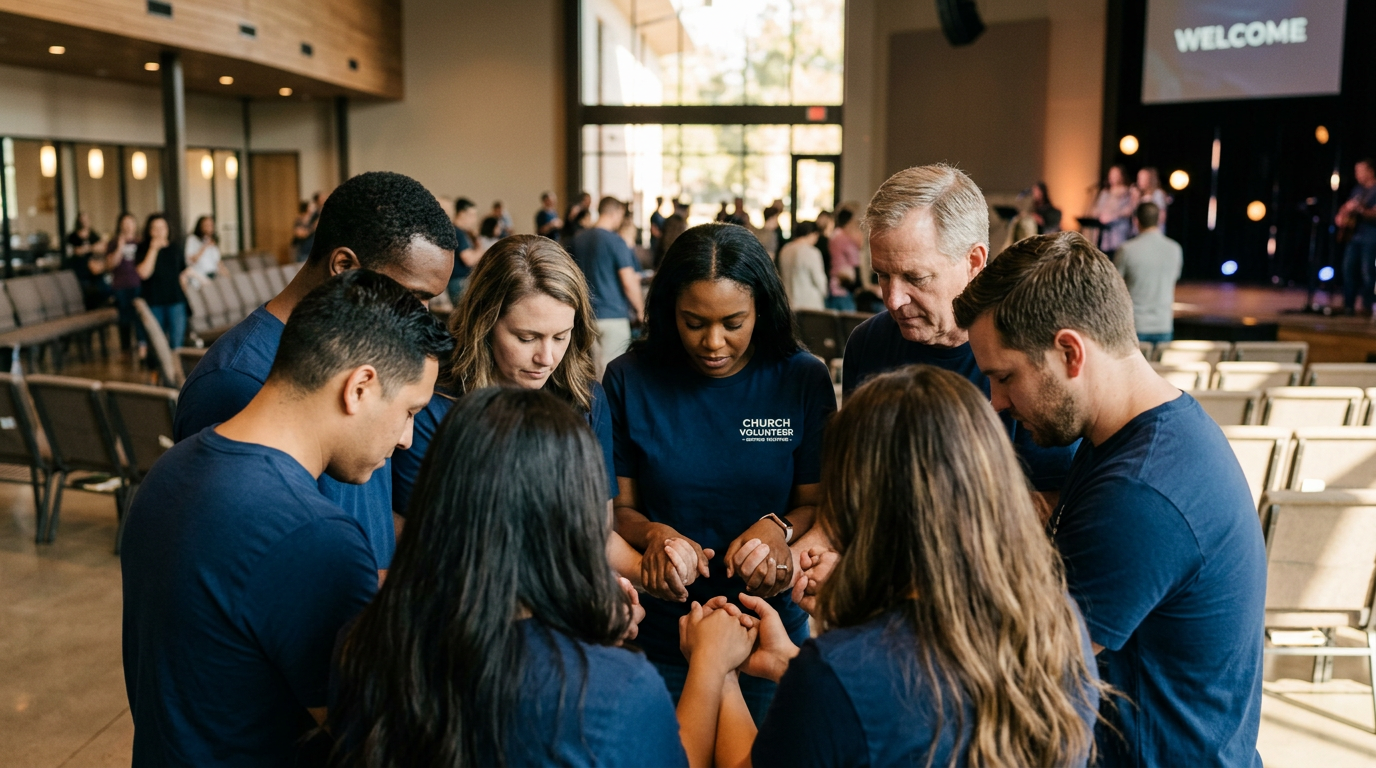
Transactional ministry is the fastest path to burnout. If your volunteers only talk to their team leads about tasks and schedules, they will eventually feel like cogs in a machine. The Relational Huddle Rhythm involves a 15-minute gathering before every service or event specifically designed for prayer, vision-casting, and personal connection.
Use this time to share a "God Story" related to the ministry area. Ask a simple icebreaker question. Pray for each other’s personal needs. By prioritizing the relationship before the role, you remind your team that they are served by the church even as they serve the church.
6. The Appreciation Rhythm: Visible and Invisible Gratitude
"Thank you" should be the most frequently used phrase in your church’s vocabulary. An appreciation rhythm balances public recognition with private affirmation.
Publicly, this might look like a "Volunteer of the Month" highlight in the newsletter or a shout-out during the service. Privately, it’s a handwritten note from the pastor, a surprise coffee card, or a text message expressing gratitude for a specific action. Strategic appreciation isn't about the cost of the gift; it’s about the cost of the attention.
7. The Rotation Rhythm: Preventing the "Pillar" Problem
Every church has "pillars"—the three or four volunteers who do everything. While these individuals are invaluable, they are also at high risk for catastrophic burnout. The Rotation Rhythm builds health by mandating rest.
Implement a "serve two, sit one" or "serve one, sit one" policy. Ensure that every volunteer has the opportunity to attend a service as a worshipper, not just a worker. A healthy volunteer force is a rested volunteer force. Rotation ensures that the weight of the ministry is distributed across many shoulders rather than crushing a few.
8. The Vision Recapture Rhythm: Connecting Tasks to Transformation
It is easy to forget that "wiping down a table" is actually "preparing a space for a life-changing conversation." The Vision Recapture Rhythm is the intentional act of connecting every mundane task back to the primary mission of the church.
Every three months, hold a vision night where you share data and stories of impact directly tied to each volunteer department. Show the parking team how their warm welcome lowered the defenses of a first-time guest who eventually gave their life to Christ. When tasks are tethered to transformation, they are never "just jobs."
9. The Development Rhythm: Developing People, Not Just Products
Your volunteer roles shouldn't just be about getting work done; they should be about growing people. A development rhythm looks for the "leader in the learner."
Create a clear leadership pipeline where a "Team Member" can become a "Team Lead," then a "Coach," and perhaps eventually a "Department Director." Provide resources for their personal spiritual growth, not just their ministry skills. When people feel they are becoming better versions of themselves through their service, engagement becomes a natural byproduct of growth.
10. The Digital Integration Rhythm: Reducing Administrative Friction
Friction is the enemy of engagement. If it’s hard to sign up, hard to see the schedule, or hard to communicate with the team, volunteers will drift away. The Digital Integration Rhythm involves using technology to streamline the administrative side of volunteering.
Use a unified church management platform—like FaithBridge—to handle scheduling, automated reminders, and team communication. When a volunteer can manage their commitments from their smartphone with two taps, you remove the "administrative tax" that often accompanies ministry.
11. The Celebration Rhythm: Marking the Milestones
Finally, every great movement knows how to throw a party. The Celebration Rhythm marks significant milestones in the life of the volunteer community. This could be an annual "Volunteer Gala," a summer picnic, or a simple dessert night after a major holiday push.
Celebrating together builds a "tribe" identity. It reminds the team that they are part of something bigger than themselves. Rhythms of celebration nourish the soul and provide the emotional fuel needed for the next season of ministry.
Conclusion: Balancing the Systems and the Soul
Scaling volunteer engagement is a delicate dance between systems and soul. Without systems, your ministry will be chaotic and unsustainable. Without soul, it will be cold and transactional.
By implementing these 11 rhythms, you aren't just filling slots in a schedule; you are building a thriving ecosystem of service. You are creating a culture where people don't serve because they have to, but because they want to. As you optimize your commitment curve, you will find that a highly engaged volunteer force is the ultimate engine for sustainable church growth.
Take the Next Step with FaithBridge
Are you ready to streamline your volunteer management and build a more engaged congregation? FaithBridge is designed to help churches like yours architect the systems that support a thriving ministry culture. From automated onboarding tracks to intuitive mobile scheduling, we provide the tools you need to support the "Commitment Curve" in your church.
Visit our website today to see how the FaithBridge platform can empower your team and scale your impact.
Frequently asked questions
What is the Commitment Curve?
The Commitment Curve is a strategic pathway that guides individuals from being casual attendees to engaged ministry leaders through intentional steps and rhythms.
How can we prevent volunteer burnout?
Implementing a Rotation Rhythm ('serve one, sit one') and ensuring volunteers are rested and attending services as worshippers are key to preventing burnout.
Why is digital integration important for volunteering?
Technology reduces administrative friction by streamlining scheduling and communication, making it easier for volunteers to manage their commitments.
What is the difference between transactional and relational ministry?
Transactional ministry focuses solely on tasks and roles, while relational ministry prioritizes the connection, prayer, and personal growth of the individuals serving.
How do I start lowering the barrier to entry for new volunteers?
Create 'Curiosity Rhythms' like a 'First Look' Sunday where people can shadow a role without any long-term commitment.
Related articles

Volunteer Engagement
Application-Based vs. Invitation-Only: A Strategic Comparison of Volunteer Recruitment Models for High-Growth Churches

Volunteer Engagement
The Volunteer Velocity Framework: 8 Best Practices for Scaling High-Impact Service Teams in a Digital-First Ministry
Church Growth
The Rural-to-Regional Rebound: A Case Study on Scaling Sustainable Church Growth Through Digital Integration at Northwood Community Church
Explore FaithBridge