The Digital Architect’s Guide: How to Build a Unified Data Ecosystem for Scalable Church Growth
The Scalable Sanctuary: A How-To Guide for Architecting Unified Data Ecosystems to Power Modern Ministry
Introduction
In the rapidly evolving landscape of the 21st-century church, the call to "go and make disciples" remains constant, yet the tools available to fulfill this mandate have undergone a radical transformation. As congregations grow and the digital footprint of ministry expands, many churches find themselves struggling with "data silos"—isolated pockets of information where giving records, small group attendance, and volunteer schedules never speak to one another. This fragmentation doesn't just create administrative headaches; it creates "relational gaps" where individuals can slip through the cracks of a growing community.
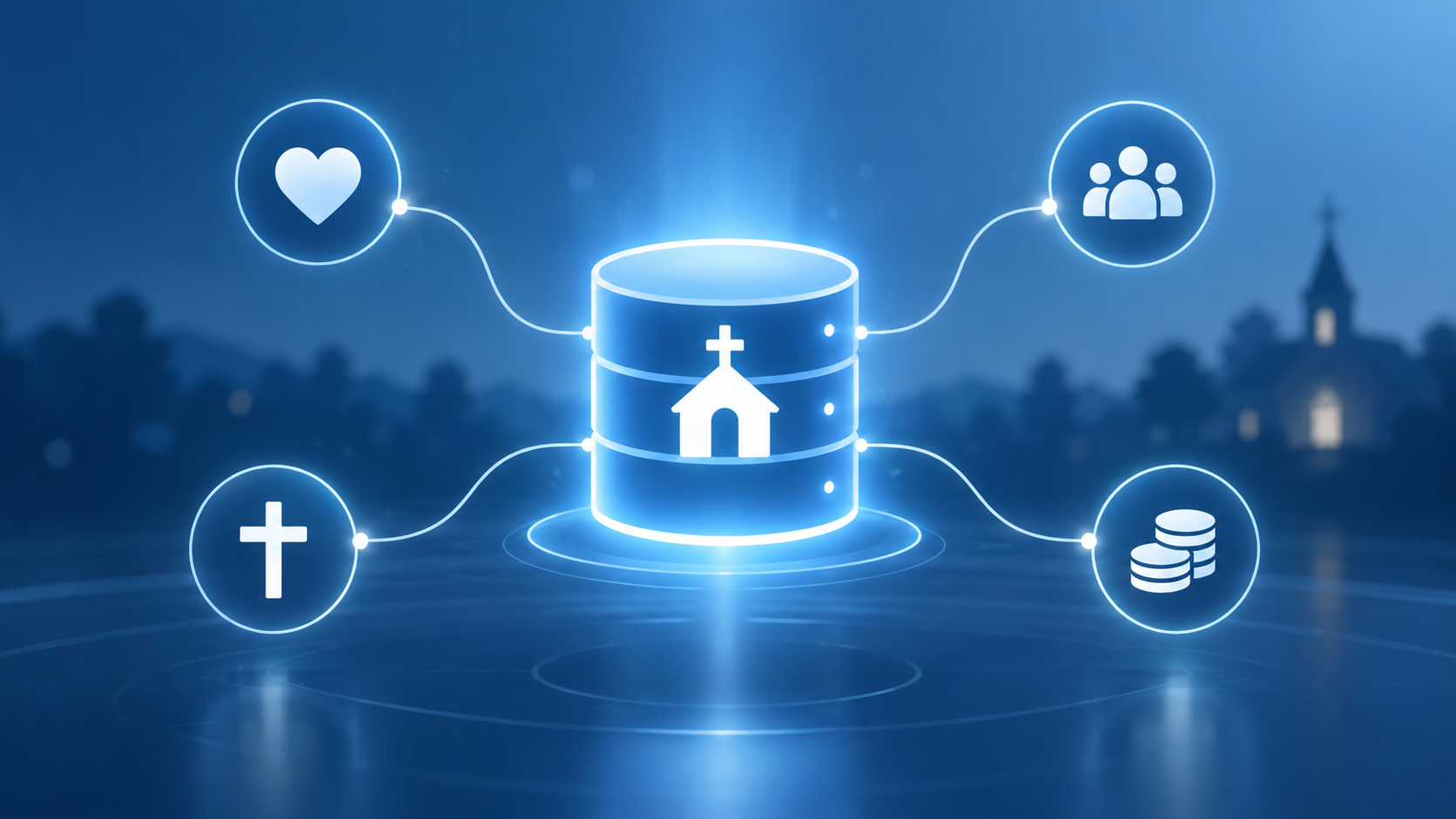
The solution is not more software, but a more integrated architecture. To move from a collection of disconnected apps to a truly scalable ministry, church leaders must embrace the concept of a "Unified Data Ecosystem." This ecosystem serves as the technological "central nervous system" of the church, ensuring that every interaction—whether physical or digital—is captured, contextualized, and leveraged to foster deeper spiritual growth.
This guide will walk you through the strategic architecture of a unified data ecosystem, providing a step-by-step roadmap for church technologists and administrative leaders to build a foundation that scales with their mission.
The Foundation: Understanding the Unified Data Mandate
Before diving into the hardware and software, it is crucial to understand the "why" behind data integration. Scalability in church management is not about treating people like numbers; it is about ensuring that every "number" represents a name, a story, and a soul that is known and cared for.
A unified data ecosystem allows a church to:
- Maintain Personal Proximity at Scale: As a church grows from 200 to 2,000, it becomes impossible for the lead pastor to know everyone. Data allows the system to alert leaders when someone’s engagement drops, triggering a personal reach-out.
- Eliminate Administrative Friction: When data flows seamlessly between systems, staff spend less time on data entry and more time on ministry.
- Enable Data-Informed Decision Making: Instead of guessing where to plant a new campus or start a new ministry, leaders can use geographical and engagement data to make strategic moves.
Step 1: Mapping the Current Data Landscape (The Audit)
The first step in architecting a unified ecosystem is identifying where your data currently lives. Most churches have data scattered across four primary domains:
- ChMS (Church Management System): Membership, attendance, and giving.
- Digital Engagement: Website analytics, email marketing, and social media.
- Financial Systems: Accounting software and payroll.
- Operational Tools: Room reservations, project management, and volunteer scheduling.
Create a "Data Map" that lists every platform, what data it holds, and who has access to it. You will likely find significant overlap and inconsistency. For example, a member might be listed as "John Smith" in the ChMS but "Johnny Smith" in the volunteer scheduling tool. These discrepancies are the primary barriers to scalability.
Step 2: Selecting the "Single Source of Truth"
A unified ecosystem requires a "hub"—a single platform that serves as the definitive source for all member data. In most cases, this should be your Church Management System (ChMS).
When selecting or optimizing your hub, look for the following "Scalability Pillars":
- API-First Architecture: The platform must have a robust, well-documented API (Application Programming Interface) that allows other tools to talk to it.
- Modular Customization: Can you add custom fields that are specific to your ministry’s unique discipleship markers?
- Cloud-Native Stability: The system must be able to handle traffic spikes, such as during Christmas or Easter registrations, without crashing.
Step 3: Implementing Secure Interoperability
Once the hub is established, you must build the "spokes"—the integrations that connect your other tools to the hub. There are three primary ways to achieve this:
- Native Integrations: Many modern tools offer "out-of-the-box" connections (e.g., Planning Center connecting to Mailchimp). These are the easiest to maintain.
- Middleware (Zapier/Make): Tools like Zapier allow non-technical staff to build "if-this-then-that" workflows between apps. This is excellent for simple tasks like adding a new website sign-up to a follow-up list.
- Custom API Development: For high-volume or complex workflows, you may need a developer to write custom code that syncs data between platforms. This is often necessary for connecting proprietary giving platforms or specialized mobile apps.
Pro-Tip: Focus on real-time sync rather than batch processing. A "once-a-week" sync is not sufficient for a church that wants to provide personal, timely follow-up.
Architecting Step-by-Step Engagement Workflows
The true power of a unified data ecosystem is realized through "Automation Workflows"—sequences of events triggered by specific data points. Here is how to build them effectively.
The First-Time Guest Workflow
When a guest fills out a digital connect card, the ecosystem should:
- Automatically create a record in the ChMS (checking for duplicates first).
- Tag the record as "First-Time Guest."
- Trigger an immediate "Welcome" email from the lead pastor.
- Assign a "Follow-up Task" to the hospitality team leader.
- Pause for three days, then send a specific invitation to a "Newcomers Lunch."
The Volunteer Onboarding Workflow
When someone expresses interest in serving:
- The system moves them into a "Volunteer Pipeline."
- It automatically sends the background check authorization link.
- Once the background check is cleared, it notifies the department head and invites the volunteer to a training session.
- It automatically adds them to the relevant communication channel (e.g., Slack or a specific email group).
The "Disengagement" Warning System
Scale often leads to "anonymity," where people drift away unnoticed. A unified system can identify this early:
- Trigger: A member who usually attends twice a month has not checked in for three consecutive weeks and has not donated.
- Action: The system flags this record for the small group leader or a pastoral care staff member.
- Result: A simple "We've missed you, is everything okay?" text is sent, creating a moment of personal care that would have been missed in a fragmented system.
Best Practices for Data Hygiene and Governance
A unified system is only as good as the data within it. To maintain a scalable sanctuary, you must implement strict data governance.
Standardize Entry Protocols
Create a "Style Guide" for data entry. Should phone numbers be (XXX) XXX-XXXX or XXX.XXX.XXXX? Should addresses use "Street" or "St."? Consistent formatting is essential for deduplication and searchability.
Regular Deduplication Cycles
Even with the best systems, duplicates will occur. Assign a staff member or a trusted volunteer team to run weekly deduplication reports. Searching for records with matching emails or phone numbers but different names is the most effective way to catch these.
Prioritize Sacred Privacy
Unified data means a lot of power. You must ensure that sensitive data (giving records, pastoral counseling notes) is restricted to only those who absolutely need it. Implement Multi-Factor Authentication (MFA) across all platforms to protect your congregation's information.
Conclusion: Data as a Servant of Discipleship
Architecting a unified data ecosystem is not an end in itself; it is a means to an end. It is the digital infrastructure that makes the "Small Church Feel" possible in a "Large Church Reality." By breaking down silos and building integrated workflows, you are not just managing information—you are stewarding the stories and spiritual journeys of the people entrusted to your care.
As you look toward the future of your ministry, ask yourself: Does our technology enable us to love our neighbors better, or does it get in the way? A scalable sanctuary is one where the systems serve the mission, ensuring that no one is forgotten and every person is empowered to take their next step toward Christ.
Ready to Scale Your Ministry?
Building a unified data ecosystem can feel overwhelming, but you don't have to do it alone. FaithBridge is designed to be the integrative anchor for your church's digital transformation. Our platform offers robust API capabilities and intuitive workflows that connect your ministry's disparate parts into a cohesive, scalable whole.
Join the movement of tech-forward churches. Visit FaithBridge.app today to schedule a demo and discover how we can help you architect a sanctuary that scales your impact without losing your heart.
Frequently asked questions
What is a Unified Data Ecosystem for a church?
It is a centralized technological framework where all ministry platforms (giving, attendance, volunteers) are integrated into a single source of truth, typically a ChMS.
Why do churches need data integration?
Integration eliminates administrative friction, prevents people from 'slipping through the cracks,' and allows for personal pastoral care at a larger scale.
Can small churches benefit from these systems?
Absolutely. Implementing unified data early prevents the build-up of technical debt and makes the transition to larger congregation sizes much smoother.
Is custom coding required to build this?
Not necessarily. Many modern platforms offer native integrations or can be connected using middleware like Zapier or Make.
Related articles

Church Technology
The Artificial Intelligence Advantage: 7 Strategic Use-Cases for Empowering Small-Team Ministry Operations

Church Growth
The Rural-to-Regional Rebound: A Case Study on Scaling Sustainable Church Growth Through Digital Integration at Northwood Community Church
Discipleship
The Discipleship Engine: A How-To Guide for Designing Scalable Micro-Group Ecosystems for Sustainable Spiritual Formation
Explore FaithBridge