The Digital Mesh: 10 Essential Connectivity Best Practices for High-Growth Faith Communities

Mastering the Digital Mesh: 10 Strategic Connectivity Best Practices for High-Growth Faith Communities
In the rapidly evolving landscape of the 21st century, the intersection of faith and technology has moved from the periphery to the pulse of church operations. For high-growth ministries, technology is no longer just a set of tools; it is the "digital mesh" that weaves together disparate departments, congregants, and missions into a unified, scalable ecosystem. As faith communities expand, the complexity of managing data, communication, and spiritual formation grows exponentially. Without a strategic approach to connectivity, churches risk technical debt, data silos, and a fragmented user experience that can hinder the very mission they seek to advance.
This article explores ten critical best practices for architecting a resilient, integrated, and mission-aligned technology infrastructure. By mastering the digital mesh, church leaders can ensure that their technical foundations support sustainable expansion while keeping the heart of ministry at the center.
1. Prioritize an API-First Integration Strategy
The modern church tech stack often resembles a patchwork quilt of specialized software: a Giving platform here, a Church Management System (ChMS) there, and a separate app for volunteer scheduling. The most common pitfall for scaling churches is the lack of communication between these systems.
An API-first strategy ensures that every piece of software you adopt can "talk" to the others. Instead of manually exporting CSV files or dealing with duplicate records, an integrated mesh allows data to flow seamlessly. When a new donor gives via your mobile app, their record should automatically update in the ChMS and trigger a personalized thank-you sequence in your email marketing tool. This connectivity reduces administrative friction and provides a holistic view of congregational health.
2. Implement a Unified Digital Identity (SSO)
As you introduce more digital touchpoints—from member portals to learning management systems—the "password fatigue" for congregants becomes real. Single Sign-On (SSO) is a best practice that allows users to access all church-related platforms with one set of credentials.
Beyond convenience, a unified identity system provides invaluable data consistency. It ensures that "John Smith" the volunteer is the same "John Smith" as the small group leader. This level of connectivity allows for deep personalization in ministry, enabling you to tailor content and opportunities based on a member's full engagement history within the digital mesh.
3. Architect for "Cloud-Native" Scalability
Scaling a church requires infrastructure that can handle sudden spikes in traffic, such as during Christmas or Easter services. Legacy on-premise servers are often expensive to maintain and difficult to scale.
Cloud-native solutions offer the elasticity required for modern ministry. By utilizing platforms like AWS, Google Cloud, or Azure, or choosing SaaS providers built on these backbones, you ensure that your systems remain responsive regardless of the load. This approach also enhances disaster recovery and data redundancy, protecting the sanctuary’s digital assets against hardware failures or local outages.
4. Deploy a Resilient and Ubiquitous Campus Network
High-growth churches are increasingly physical-digital hybrids. A robust on-campus network is the prerequisite for seamless hybrid experiences. This means more than just having "guest Wi-Fi."
Best practices for campus connectivity include segmenting networks for security (staff, production, and guest), ensuring full coverage across all ministry areas (including outdoor spaces), and prioritizing bandwidth for live-streaming and check-in systems. A "dead zone" in the children’s ministry area isn't just a technical annoyance; it's a breakdown in the safety and efficiency of your volunteer workflows.
5. Centralize Data Governance and Security
In the age of the digital mesh, data is one of your most sensitive assets. As you collect more information about giving, participation, and pastoral care, the risk of data breaches or misuse grows.
Centralizing data governance involves establishing clear policies on who can access what data and for what purpose. This includes implementing Multi-Factor Authentication (MFA) across all staff accounts, regular security audits, and ensuring compliance with data protection regulations (like GDPR or CCPA where applicable). Security is not a barrier to connectivity; it is the foundation of the trust required to maintain it.
6. Foster a Tech-Enabled Volunteer Culture
Technology should empower ministry, not just automate it. One of the best ways to scale your digital mesh is to train a team of tech-fluent volunteers.
Moving beyond the traditional "A/V booth," churches should create roles for data analysts, digital hosts, and software integrators. By decentralizing technical oversight to a qualified volunteer base, you prevent bottlenecks at the staff level and ensure that your technology infrastructure remains agile. Providing clear documentation and accessible training modules is key to sustaining this tech-enabled culture.
7. Optimize for Mobile-First Engagement
The primary screen for most congregants is the one in their pocket. A successful digital mesh prioritizes mobile-first design across every touchpoint—from the giving portal to the small group sign-up form.
This doesn't always mean having a custom mobile app, but it does mean ensuring every web experience is responsive and high-performing on mobile devices. Fast load times, intuitive navigation, and "one-tap" actions (like Apple Pay for tithing) are essential for maintaining engagement in an increasingly mobile world.
8. Utilize Data Analytics for Spiritual Formation Tracking
Connectivity allows you to see patterns that were once invisible. By aggregating data across the digital mesh, leadership can gain insights into the "spiritual health" of the congregation.
For example, if data shows that the majority of new visitors drop off after three weeks, you can architect a targeted, automated follow-up sequence to bridge that gap. Predictive analytics can even help identify signs of volunteer burnout by tracking sudden shifts in engagement. The goal is not "surveillance" but rather a data-driven approach to pastoral care and discipleship.
9. Standardize Hardware and Software Procurement
As a church scales, the diversity of devices and software can lead to "shadow IT"—where different departments use unapproved tools that don't integrate with the core mesh.
Standardization involves creating a pre-approved list of hardware and software vendors. This simplifies support, reduces licensing costs, and ensures that every new acquisition is compatible with your existing API integrations. It also makes onboarding new staff and volunteers much faster, as they are entering a consistent and predictable technical environment.
10. Commit to Continuous Technical Innovation
The digital mesh is never "finished." Technology will continue to evolve, and the needs of your congregation will change. Best practice for high-growth churches is to treat technology as a living ecosystem that requires ongoing investment.
This includes setting aside a budget for regular upgrades, staying informed about emerging trends (like AI-driven personalization), and fostering a culture that is not afraid to sunset legacy systems that no longer serve the mission. An innovative church is one that is always looking for ways to use the digital mesh to reach more people more effectively.
Conclusion: Building the Connected Sanctuary
Mastering the digital mesh is not about building a high-tech monument; it’s about architecting a seamless environment where technology fades into the background, leaving only the mission and the community. For the scaling modern church, strategic connectivity is the bridge between a local gathering and a global impact. By implementing these ten best practices, your ministry can build a resilient infrastructure that is ready to support the spiritual growth and community flourishing of tomorrow.
FaithBridge: Your Partner in Digital Transformation
Ready to take your church’s connectivity to the next level? FaithBridge offers the unified digital infrastructure you need to scale your ministry without the technical headache. Join thousands of high-growth churches that are leveraging our integrated platform to bridge the gap between their physical and digital sanctuaries. Start your journey toward administrative excellence and spiritual multiplication today at FaithBridge.app.
Frequently asked questions
What is an API-first strategy for churches?
An API-first strategy ensures that all church software can communicate and share data seamlessly, reducing administrative friction and providing a holistic view of congregational engagement.
Why is Single Sign-On (SSO) important for ministry?
SSO improves user experience by allowing congregants and staff to access multiple platforms with one set of credentials, while also ensuring data consistency across the digital mesh.
How does technology support spiritual formation?
By integrating data across platforms, leaders can gain insights into engagement patterns, allowing for more personalized pastoral care and targeted discipleship pathways.
Related articles

Church Technology
The Artificial Intelligence Advantage: 7 Strategic Use-Cases for Empowering Small-Team Ministry Operations
Church Growth
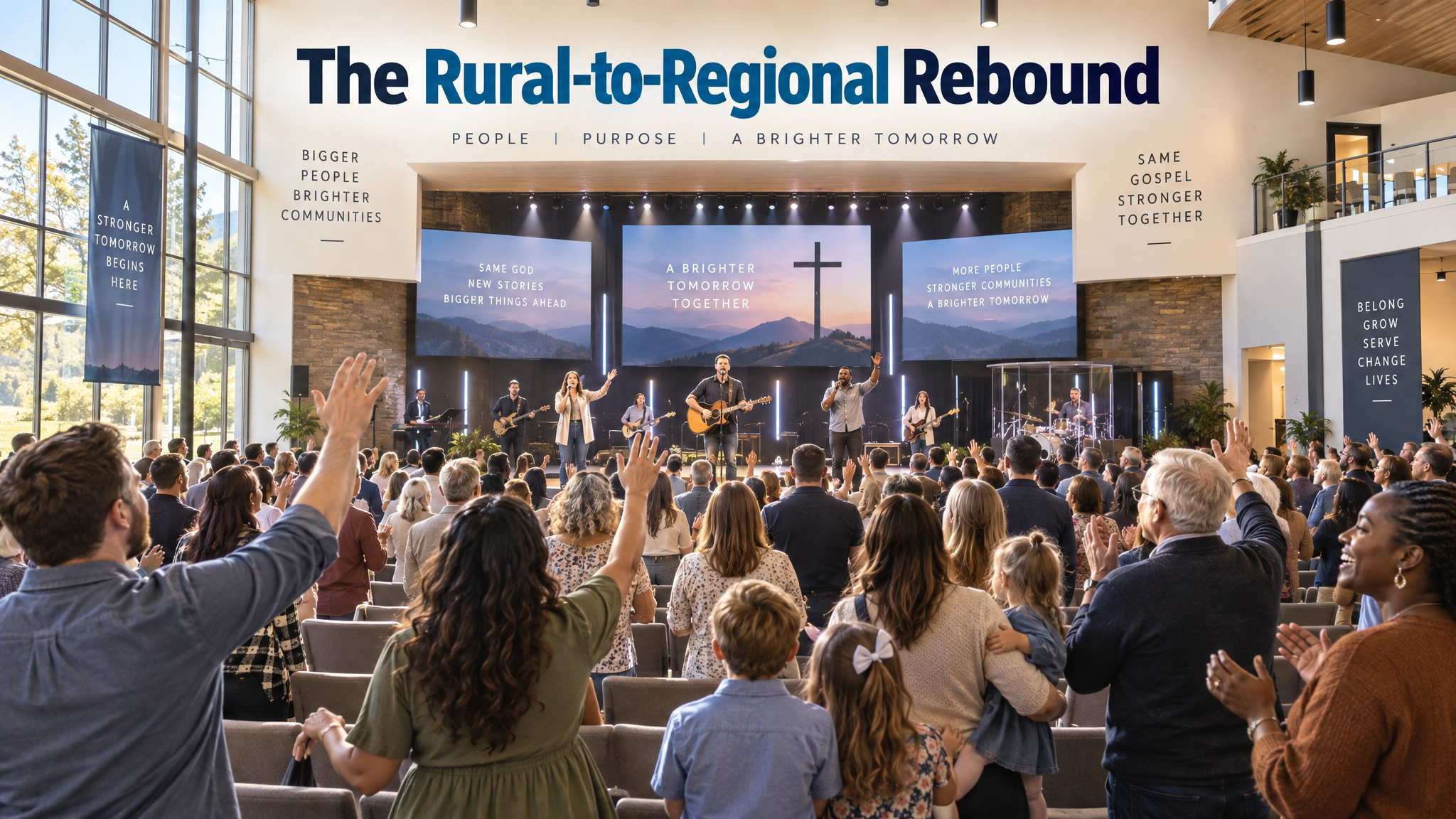
The Rural-to-Regional Rebound: A Case Study on Scaling Sustainable Church Growth Through Digital Integration at Northwood Community Church

Discipleship
The Discipleship Engine: A How-To Guide for Designing Scalable Micro-Group Ecosystems for Sustainable Spiritual Formation
Explore FaithBridge