The Digital Stewardship Blueprint: A Case Study on Scaling Sustainable Generosity at Redeemer City Church
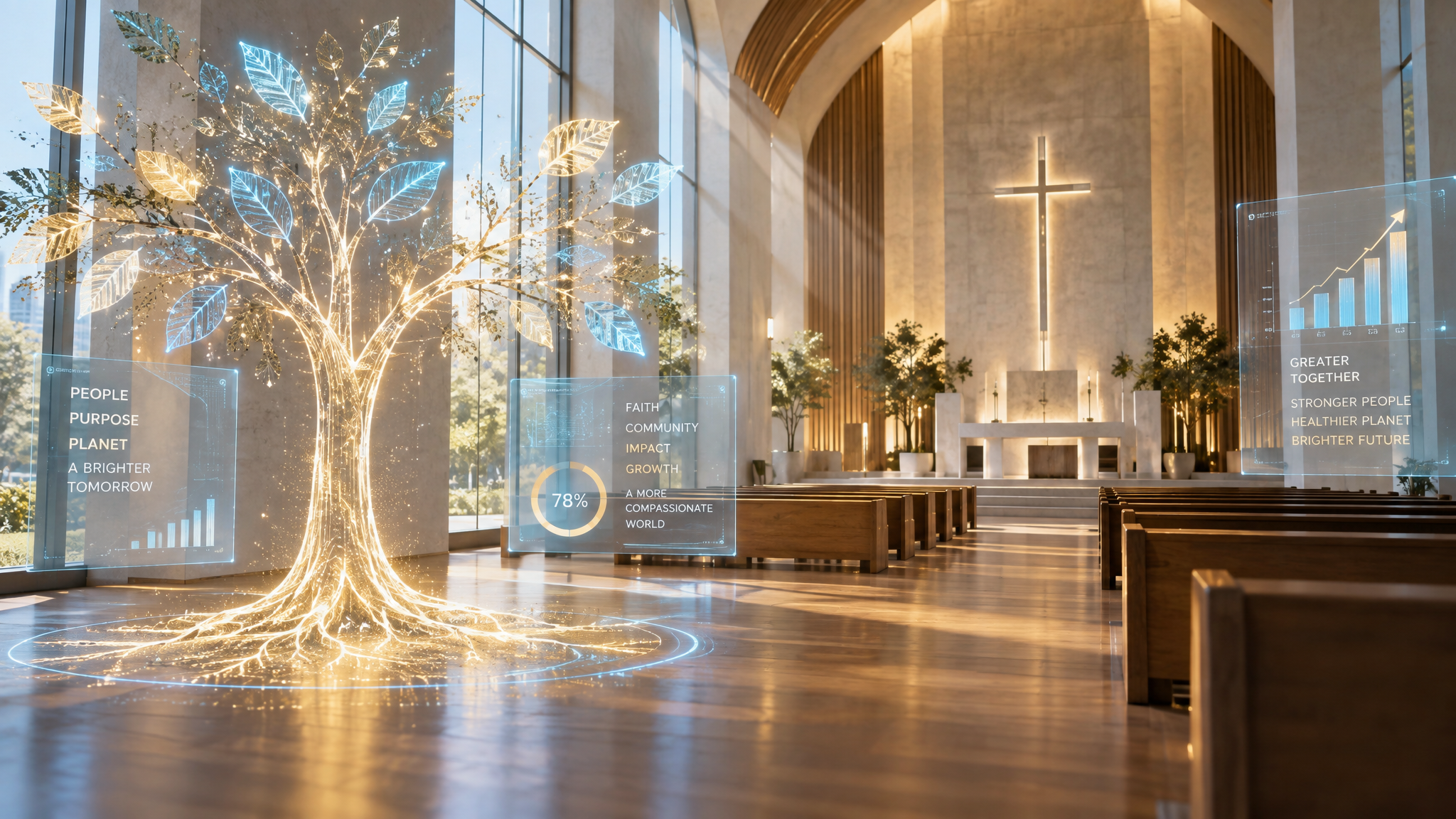
In the evolving landscape of modern ministry, the challenge of financial sustainability often looms as a barrier to fulfilling a church's mission. For many leaders, the "basket-only" approach to tithing belongs to a bygone era, yet transitioning to a resilient, systems-based model of generosity can be daunting. This case study examines the journey of Redeemer City Church, a mid-sized urban congregation that successfully architected a scalable stewardship ecosystem, resulting in a 40% increase in recurring generosity over an eighteen-month period.
The Challenge: Stagnation in a Digital Age
Three years ago, Redeemer City Church faced a common pastoral dilemma. While the congregation was growing in numbers and spiritual depth, the financial platform remained remarkably fragile. Giving was highly transactional, tied almost exclusively to physical attendance on Sunday mornings. This "attendance-contingent" model created significant volatility; a single holiday weekend or a winter storm could result in a 20% dip in monthly revenue, forcing leadership to adopt a defensive, scarcity-minded posture toward ministry expansion.
The Lead Pastor and the Board recognized that they didn't just have a "giving problem"—they had a "systems problem." Their approach to stewardship was reactive rather than proactive, and their technology stack was fragmented, preventing them from seeing the full picture of their community's engagement.
Architecting the Transformation: Three Strategic Pillars
Redeemer City's leadership embarked on a strategic overhaul focused on three core pillars: Cultural Alignment, Technological Integration, and Data-Driven Engagement.
1. Cultural Alignment: From Tithing to Stewardship
The first step was not technological, but theological. The leadership spent six months reframing the conversation around money. Instead of treating the "tithe" as a weekly requirement to keep the lights on, they began preaching on "stewardship" as a spiritual discipline for holistic neighborhood flourishing.
They introduced the concept of "The Generosity Pipeline," explaining to the congregation how consistent, planned giving allowed the church to commit to long-term community outreach projects that a month-to-month budget could never support. By connecting the dollar to the mission, they shifted the congregational mindset from one of obligation to one of partnership.
2. Technological Integration: The Multi-Channel Ecosystem
Once the cultural foundation was laid, the church audited its giving tools. They found that their existing platform was clunky, difficult to use on mobile devices, and lacked a robust "recurring gift" feature. They migrated to a unified church management system that integrated their member database with their giving portal.
Crucially, they implemented a multi-channel approach:
- Mobile-First Giving: They launched a dedicated app that allowed members to give in less than ten seconds.
- Automated Recurring Paths: They made "set it and forget it" the default option for new givers.
- Physical-Digital Hybrid: They placed digital giving kiosks in the lobby and included QR codes in the bulletin, bridging the gap between physical liturgy and digital convenience.
3. Data-Driven Engagement: Identifying the "Generosity Gap"
The most significant shift came when the church began leveraging analytics to understand giving patterns. By viewing giving not just as a total number but as a collection of individual journeys, they identified different segments within the congregation.
They discovered a "generosity gap" among young professionals who were highly engaged but gave sporadically. By creating specifically tailored communication for this group—highlighting the direct impact of their gifts on local missions—they were able to move many from "occasional givers" to "sustaining partners."
The Results: A New Era of Financial Resilience
The impact of these changes was both immediate and durable. Within the first eighteen months, Redeemer City Church saw metrics that fundamentally altered their ability to do ministry:
- 40% Increase in Recurring Donations: By making automation the primary "call to action" for new members during their onboarding process, the church successfully shifted the majority of its budget to predictable, automated giving. This reduced the "summer slump" and "holiday dip" by over 75%.
- 15% Rise in Overall Annual Giving: As the friction to entry was lowered through mobile-first tools, the church saw a surge in "micro-donations" from younger members who previously found the traditional basket approach inaccessible.
- A 90% Accuracy Rate in Financial Forecasting: The leadership could now plan mission initiatives, such as church plants and long-term community leases, with nearly two years of forward-looking confidence.
- Increased Member Retention: Interestingly, the church found a direct correlation between those who utilized the new stewardship systems and those who stayed active in small groups and volunteer service. Generosity, it turned out, was a leading indicator of congregational health.
The Role of Technology in Spiritual Formation
A common concern among church leaders is that moving to digital systems might "depersonalize" the act of worship. However, Redeemer City found the opposite to be true. By automating the administrative side of tithing, they created more room for high-touch pastoral care.
The "Stewardship Dashboard" provided by their integrated system allowed the pastoral team to see when someone's giving pattern shifted—often a signal of a job loss, a family crisis, or a spiritual struggle. Instead of viewing the data as "revenue," they viewed it as a "pastoral pulse." This enabled them to reach out with support and prayer before a member drifted away.
Furthermore, the technology enabled a level of transparency that was previously impossible. Every month, the church published a digital "Impact Report" that allowed members to see exactly how their contributions were being used. They could click a link and see photos of the new youth center, watch a video of the local food bank they supported, and read testimonies from those who had been helped. This "feedback loop" of generosity served to deepen the congregation's trust in leadership and their commitment to the shared vision.
Practical Steps for Implementation
For churches looking to replicate this success, the leadership at Redeemer City suggests the following phased approach:
Phase 1: The Systems Audit (Months 1-3)
Begin by identifying every point of friction in your current giving process. Does your website load slowly on a phone? Is it hard to find the "Give" button? Do you have a way for people to set up recurring gifts without filling out a paper form? Use this time to consolidate your data into a single, unified platform.
Phase 2: The Theological Reset (Months 4-6)
Launch a teaching series that connects financial stewardship to the church's unique mission. Avoid "budget-focused" messaging and focus on "impact-focused" messaging. Train your volunteer leaders and small group hosts to model the new systems, ensuring that the shift is led from the middle out, not just from the top down.
Phase 3: The Multi-Channel Launch (Months 7-9)
Roll out your new tools with a focus on simplicity. During services, take two minutes to walk the congregation through the new app or QR code process. Celebrate the first few "wins"—such as the launch of a new mission project funded by the initial surge in recurring gifts—to build momentum.
Phase 4: The Engagement Loop (Months 10-18)
Begin utilizing your analytics to identify "lapsed givers" or "unrealized givers." Reach out with empathy and mission-updates rather than requests. Use the data to refine your communication strategy, ensuring that every member feels seen and appreciated for their partnership in the gospel.
Lessons for Church Leaders
The Redeemer City story offers several vital takeaways for any lead pastor or administrator seeking to scale their church's impact:
Systems Beat Willpower
Individual generosity is a spiritual fruit, but a church's financial health is a systems design. You cannot simply "preach harder" to solve a structural deficit. You must provide the infrastructure that makes generosity easy, consistent, and mission-aligned.
Information Drives Inspiration
Don't just tell people to give; show them the results. Redeemer City used their new platform to send automated "impact reports"—short updates showing exactly how stewardship dollars were being used in the community. When people see the fruit of their sacrifice, they are more likely to increase their commitment.
Prioritize Recurring Over Seasonal
Special offerings and end-of-year campaigns are helpful, but the bedrock of a healthy church is the recurring gift. Focus your systems on making automation the most honored and easiest path for your members.
Building Your Own Blueprint with FaithBridge
The transition from a fragile financial model to a scalable stewardship ecosystem requires the right partner. FaithBridge provides the unified infrastructure that churches like Redeemer City use to architect their future. From integrated giving portals and mobile apps to deep-dive analytics that help you identify your next generation of leaders, FaithBridge is built for the sustainable growth of the modern church.
By combining theological depth with technological excellence, FaithBridge allows you to spend less time managing the "basket" and more time shepherding the flock.
Conclusion: Architecting for the Future
The story of Redeemer City Church is not an anomaly; it is a blueprint. In an age of digital distraction and economic uncertainty, the churches that flourish will be those that treat stewardship as a design challenge rather than just a spiritual one. By implementing robust systems and fostering a culture of radical transparency, your church can move from surviving to thriving, ensuring that your mission is limited only by your vision, not your bank account.
Ready to transform your church's giving culture? Explore how FaithBridge can help you architect a sustainable future at FaithBridge.app.
Frequently asked questions
What is a multi-channel stewardship ecosystem?
It is a unified framework that integrates various giving methods—including mobile apps, web portals, automated recurring gifts, and traditional in-person contributions—into a single, data-driven system for better tracking and engagement.
How long does it take to see results from a new stewardship strategy?
While initial shifts can happen within months, most churches see significant, sustainable growth in recurring giving within 12 to 18 months of implementing robust digital systems.
Can small churches implement these types of systems?
Absolutely. Modern church management software like FaithBridge is designed to scale, offering entry-level tools that help smaller congregations build professional giving pipelines from day one.
Related articles
Giving & Stewardship
Restoring Trust: A Strategic How-To Guide for Architecting Radical Financial Transparency in Modern Ministry

Church Growth
The Rural-to-Regional Rebound: A Case Study on Scaling Sustainable Church Growth Through Digital Integration at Northwood Community Church

Discipleship
The Discipleship Engine: A How-To Guide for Designing Scalable Micro-Group Ecosystems for Sustainable Spiritual Formation
Explore FaithBridge