The Disciple-Maker's Engine: A Case Study on Scaling Sustainable Leadership Multiplication at Fellowship Bible Church
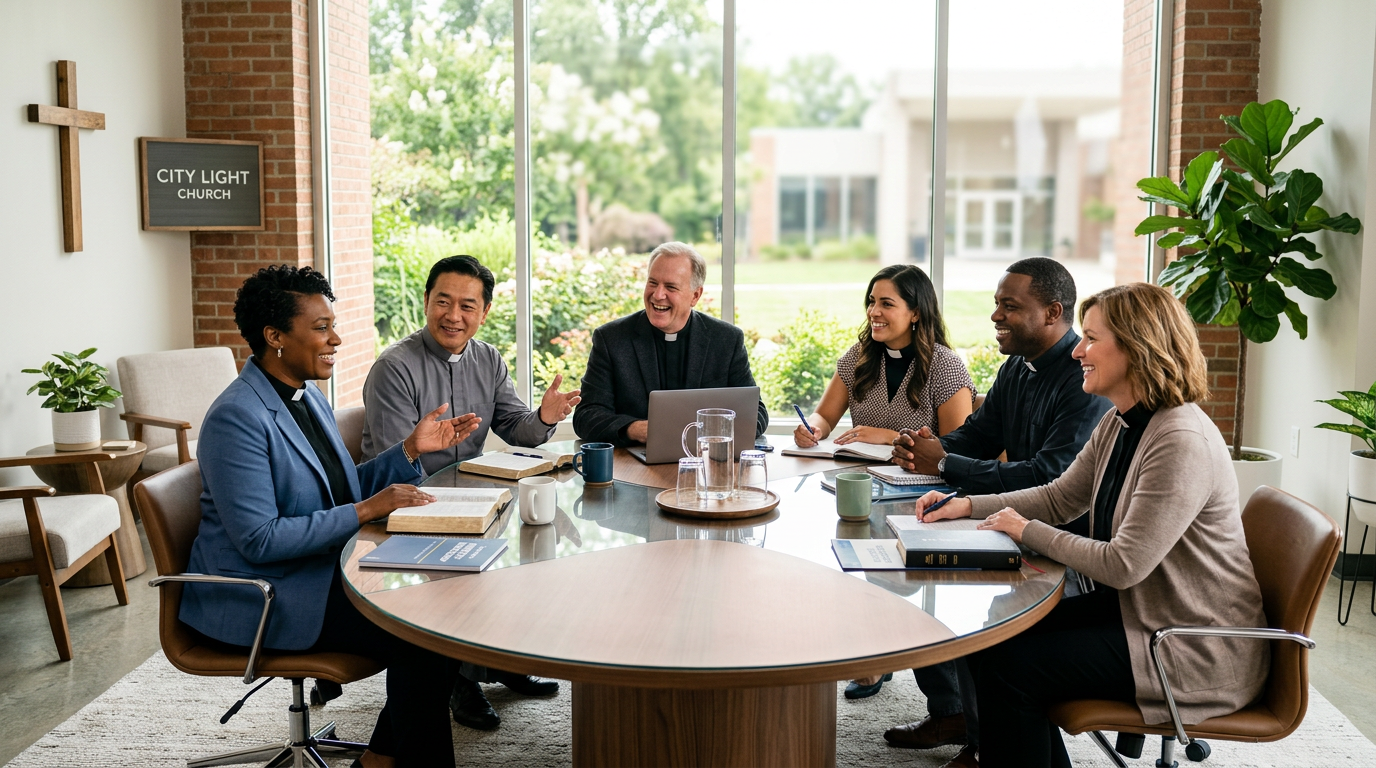
The Disciple-Maker's Engine: A Case Study on Scaling Sustainable Leadership Multiplication at Fellowship Bible Church
The challenge of modern church growth is often less about attracting a crowd and more about deepening the core. As congregations expand, the traditional model of a single pastor—or even a small team of pastors—providing direct oversight to every member becomes a bottleneck. This is the story of Fellowship Bible Church (FBC), a multi-site congregation that faced a critical plateau. Despite a thriving weekend attendance, their internal leadership pipeline was running dry. The "Shepherd-to-Sheep" ratio was stretching to a breaking point, leading to burnout among staff and stagnant spiritual growth among the laity.
To address this, FBC embarked on a three-year journey to architect what they now call the "Disciple-Maker’s Engine." This wasn't just a new program; it was a fundamental shift in their ecclesial architecture. By moving from a centralized authority model to a decentralized leadership multiplication system, FBC was able to scale their discipleship efforts across four campuses without diluting the quality of care or the integrity of their mission. This case study explores the strategic frameworks, the cultural shifts, and the technological integrations that made this transformation possible.
The Bottleneck: Identifying the Limits of Centralized Discipleship
Before the implementation of the Engine, Fellowship Bible Church relied on a "Hub and Spoke" model. The senior staff acted as the central hub, with all discipleship initiatives, leadership training, and pastoral care radiating from the center. While effective for a church of 500, it became a liability as FBC crossed the 2,500-member threshold.
The symptoms of the bottleneck were clear:
- Leadership Stagnation: Potential leaders were waiting for "official" permission or training from the top, which never came because the staff was too busy.
- Inconsistent Maturity: Discipleship was happening in pockets, but there was no unified framework for what it meant to "make a disciple."
- Staff Burnout: The pastoral team was spending 80% of their time on maintenance and 20% on development, which is a recipe for long-term decline.
FBC realized that if they wanted to sustain their growth, they had to stop being the primary "doers" of ministry and become the "architects" of a system that empowered others to do it.
The Architecture: Designing the Disciple-Maker’s Engine
The goal was to create a system that was both high-accountability and high-autonomy. FBC landed on a three-tier framework that integrated relational mentorship with structured milestones.
Phase 1: The Relational Foundation
The engine began with a shift in vocabulary. FBC stopped talking about "members" and started talking about "potential multipliers." Every individual who joined a small group was viewed through the lens of their future capacity to lead others. This required a rigorous vetting and onboarding process that prioritized character over competency.
The church implemented a "Life-on-Life" rhythm, where every leader was required to be mentored by someone more senior while simultaneously mentoring two others. This created a continuous chain of investment that ensured no one was leading in isolation.
Phase 2: The Milestone Framework
One of the biggest hurdles in discipleship is ambiguity. FBC addressed this by creating the "Discipleship Trellis"—a visual and digital roadmap that outlined the core competencies of a follower of Christ. This included:
- Theology and Doctrine: A baseline understanding of the Gospel.
- Spiritual Disciplines: Habit-forming practices like prayer, fasting, and scripture meditation.
- Relational Intelligence: Conflict resolution and biblical community.
- Missionary Living: Local and global outreach.
By using FaithBridge to track these milestones, leaders could see at a glance where their mentees were thriving and where they needed more support. This data-driven approach didn't replace the relationship; it empowered it by highlighting specific needs.
Implementation: Scaling Across the Multi-Site Context
The true test of the Engine was its scalability. Could a system born in a suburban campus work in an urban multi-site environment? FBC’s Central Campus (Suburban) and North Side Campus (Urban) were the first to pilot the full integration.
Centralized Quality, Decentralized Execution
FBC established a "Central Discipleship Lab" that produced the curriculum and training resources. However, each campus had the autonomy to adapt the delivery of those resources to fit their local context. This "Interoperable" approach ensured that the core values were consistent while the cultural expression was localized.
The Role of Integrated Technology
Scaling a relational system requires a robust digital backbone. FBC utilized the FaithBridge platform to manage the leadership pipeline. The system provided:
- Automated Check-ins: Reminders for mentors to meet with their mentees.
- Resource Libraries: Instant access to training videos and discussion guides.
- Analytics Dashboards: Real-time visibility into the "Health Score" of every small group.
As the Executive Pastor of FBC noted, "Technology doesn't make disciples, but it does remove the friction of administration. By automating the tracking of who is being mentored by whom, we freed up our staff to focus on the heart-level conversations that really matter."
Results: Data-Backed Multiplication
Within 24 months of launching the Engine, Fellowship Bible Church saw a dramatic shift in their internal metrics.
- Leadership Capacity: The number of qualified small group leaders increased by 140%.
- Engagement Depth: The "Maturity Rate" (as measured by milestone completion) rose from 22% to 58% across the congregation.
- Retention: New visitor retention increased by 30%, as every newcomer was immediately funneled into a "Discovery Mentor" relationship.
Most importantly, the staff reported a significant decrease in burnout. By shifting their role from "Primary Shepherd" to "System Architect," they were able to focus on high-level strategy and high-impact mentorship, trusting the Engine to handle the daily rhythms of discipleship.
Conclusion: The Path Forward for Your Church
The story of Fellowship Bible Church is not an anomaly; it is a blueprint. Many churches remain stuck in the "Hub and Spoke" model, wondering why their growth has plateaued and their staff is exhausted. The solution is not more programs, but better architecture.
Scaling discipleship requires the courage to let go of control and the wisdom to build systems that empower the many. It requires a commitment to relational integrity and a strategic use of technology to sustain the rhythms of multiplication.
Is your church ready to move from a pastor-led model to a disciple-maker’s engine? The transition isn't easy, but it is the only way to ensure that your ministry remains sustainable for the generations to come.
Try FaithBridge Today
Building a scalable discipleship pipeline shouldn't be an administrative nightmare. FaithBridge provides the integrated tools you need to track leadership milestones, manage mentorship relationships, and gain real-time visibility into the health of your congregation.
Stop fighting your data and start fuelling your mission. Learn more about FaithBridge and start your free trial today.
Frequently asked questions
What is the Disciple-Maker’s Engine?
It is a decentralized leadership multiplication system that moves away from a pastor-led model to a peer-to-peer mentorship framework, enabling scalable discipleship in growing churches.
How does technology help in discipleship?
Technology like FaithBridge removes administrative friction by tracking milestones, managing mentorship chains, and providing real-time analytics on congregational health.
Why is decentralized leadership important for church growth?
Centralized models often become bottlenecks as churches grow. Decentralization empowers the laity, prevents staff burnout, and ensures that spiritual growth is not limited by the capacity of a few leaders.
What are the core competencies of the Discipleship Trellis?
Fellowship Bible Church focuses on four areas: Theology and Doctrine, Spiritual Disciplines, Relational Intelligence, and Missionary Living.
Related articles
Discipleship
The Discipleship Engine: A How-To Guide for Designing Scalable Micro-Group Ecosystems for Sustainable Spiritual Formation

Discipleship
The Maturity Matrix: A Deep-Dive into Architecting Data-Informed Discipleship Pathways for High-Growth Churches
Church Growth
The Rural-to-Regional Rebound: A Case Study on Scaling Sustainable Church Growth Through Digital Integration at Northwood Community Church
Explore FaithBridge