The Discipleship Flywheel: A Deep-Dive into Architecting Feedback Loops for Continuous Spiritual Formation
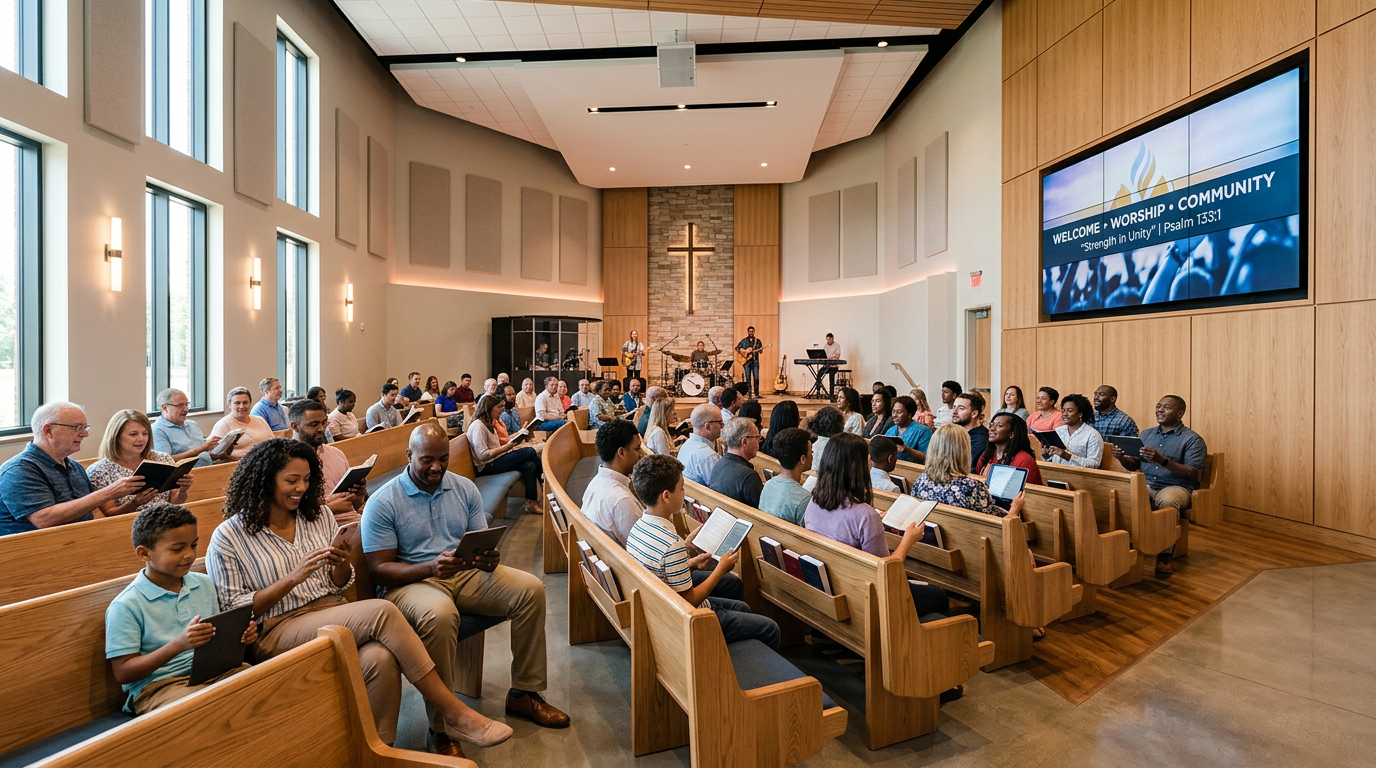
Scaling the Sanctuary: 12 Best Practices for Sustainable Church Growth in the Digital Era
The desire for growth is inherent in the mission of the Church. We are called to make disciples of all nations, a mandate that naturally leads to expansion. However, in the modern landscape, growth is often a double-edged sword. When a church scales too quickly without the proper infrastructure, it can lead to volunteer burnout, administrative chaos, and a dilution of the very community that made it special in the first place. Sustainable church growth is not just about increasing the numbers on a Sunday morning; it’s about architecting a ministry that can support and nurture those numbers over the long haul.
In this deep dive, we explore 12 best practices for scaling your sanctuary sustainably. These are not just tactical hacks, but strategic frameworks designed to build a resilient foundation for your ministry's future.
1. Prioritize Leadership Multiplication Over Management
As a church grows, the lead pastor cannot be the primary point of contact for every need. The first best practice for sustainable growth is shifting the focus from managing people to multiplying leaders. This means moving away from a "heroic" leadership model where one individual carries the weight, to a "hub" model where leadership is distributed.
Sustainable growth requires a robust leadership pipeline. You must identify, train, and empower leaders at every level—from small group hosts to department heads. By investing in others, you create a scalable structure that isn't dependent on a single personality.
2. Implement Data-Driven Ministry Rhythms
In the digital era, intuition is no longer enough. To grow sustainably, you need to understand the "why" behind your numbers. Data-driven ministry involves tracking key engagement metrics beyond just attendance and giving.
Are your first-time guests returning? What is the "stickiness" of your small groups? By using a platform like FaithBridge, you can gain real-time insights into your congregation's health. This allows you to make informed decisions about where to allocate resources and which programs to prune.
3. Design a Seamless Digital-Physical Integration
The "phygital" (physical + digital) reality of the modern church is not a temporary trend; it is the new baseline. Sustainable growth requires a strategy that bridges the gap between your online presence and your physical campus.
Your website and app should not just be brochures; they should be the front door to your community. Best practices include offering online-to-offline pathways, such as digital check-ins for new families or online sign-ups for in-person serving opportunities. A seamless integration ensures that no one falls through the cracks, regardless of how they first encounter your church.
4. Architect Relational-First Onboarding
As you scale, the risk of people feeling like "just a number" increases exponentially. To counter this, your onboarding process must be designed for relationship, not just information.
Instead of a generic "Newcomers Class" that focuses on church history, try a "Welcome Home" experience that focuses on connection. Assign "buddies" or "mentors" to new attendees to help them navigate their first few months. When people feel seen and known, they are far more likely to stay and serve.
5. Build Scalable Communication Ecosystems
Communication is often the first thing to break as a church grows. What worked for 100 people will not work for 1,000. Sustainable growth requires a multi-layered communication strategy that uses the right tools for the right audience.
Move away from relying solely on stage announcements. Utilize targeted email newsletters, push notifications through your church app, and personalized SMS updates. By segmenting your communication, you ensure that people receive relevant information without feeling overwhelmed by noise.
6. Foster a Culture of Radical Generosity
Financial sustainability is the fuel for ministry expansion. However, scaling giving isn't about asking for more; it's about fostering a culture of generosity.
Modern stewardship involves providing multiple, easy-to-use giving channels. Recurring digital tithing is the backbone of predictable revenue. Beyond the "how," focus on the "why." Share "impact stories" that show exactly how tithes are being used to change lives. When people see the fruit of their giving, they are inspired to be even more generous.
7. Optimize the Volunteer Experience
Your volunteers are the engine of your church. If that engine is overworked, it will eventually seize. Sustainable growth requires a volunteer strategy that prioritizes health over efficiency.
Implement "serving rhythms" that include built-in rest periods. Provide high-quality training and clear job descriptions so volunteers feel equipped and confident. Most importantly, ensure that every volunteer role has a clear connection to the church's vision. When people know their work matters, they serve with joy rather than obligation.
8. Leverage Automated Systems for Routine Tasks
Administrative overhead can kill growth. To scale sustainably, you must automate the routine to prioritize the relational.
Automate follow-up sequences for first-time guests, reminder emails for volunteer shifts, and giving statements. By letting technology handle the repetitive tasks, your staff and volunteers are freed up to do what they do best: care for people. FaithBridge's automation tools are specifically designed to handle these burdens, ensuring your operations scale with your attendance.
9. Cultivate Inter-Generational Connectivity
A growing church often faces the challenge of "siloing"—where different age groups never interact. Sustainable growth requires a deliberate effort to keep the generations connected.
Create opportunities for multi-generational serving and worship. Encourage older members to mentor younger ones. A church that is unified across generations is more resilient and possesses a depth of wisdom that a mono-generational church lacks.
10. Stay Ruthlessly Focused on the Mission
As you grow, opportunities for new programs and ministries will multiply. It’s easy to suffer from "vision creep." Sustainable growth requires a ruthless focus on your core mission.
Every new initiative should be evaluated against your primary goal: making disciples. If a program doesn't serve that goal, don't do it—no matter how good it sounds. Keeping the main thing the main thing prevents resource fragmentation and ensures your growth is purposeful.
11. Invest in Digital Infrastructure
Just as you would invest in a new building as your congregation grows, you must invest in your digital "building." This includes your church management software (ChMS), your website, and your security protocols.
A fragmented tech stack—where your giving is on one platform, your database on another, and your communications on a third—is a recipe for data silos and frustration. A unified platform like FaithBridge ensures that your data is clean, your systems are integrated, and your ministry is scalable.
12. Prioritize the Health of the Shepherd
Finally, the most critical factor in sustainable church growth is the health of the leaders. A church cannot outgrow the health of its leadership.
Build systems of accountability and rest. Encourage your staff to take their sabbaths and vacations. Create a culture where it’s okay to say "I’m not okay." When the leadership is healthy, the church has a much better chance of growing in a way that is life-giving rather than life-draining.
Conclusion: The Path Forward
Scaling your sanctuary is a journey of faith, strategy, and perseverance. By implementing these 12 best practices, you aren't just building a bigger church; you are building a better one. You are creating a sanctuary that can welcome the many while still caring for the one.
At FaithBridge, we are committed to providing the tools and insights you need to navigate the complexities of modern church growth. Our unified platform is designed to handle the heavy lifting of administration, so you can focus on the heart of ministry.
Ready to Scale Your Ministry Sustainably?
Join thousands of forward-thinking church leaders who are using FaithBridge to architect the future of their ministry. Whether you are looking to streamline your operations, increase your engagement, or foster radical generosity, FaithBridge has the solutions you need.
[Try FaithBridge Today – Your Partner in Sustainable Church Growth]
Frequently asked questions
What is a 'Discipleship Flywheel'?
A Discipleship Flywheel is a self-sustaining system of spiritual formation where initial momentum—from teaching, service, and community—creates a virtuous cycle of growth, feedback, and multiplication.
How do feedback loops improve spiritual formation?
Feedback loops allow leaders to see where congregants are struggling or thriving in real-time, enabling more personalized and effective mentorship and curriculum adjustments.
Can technology really help with discipleship?
Yes. Platforms like FaithBridge provide the data infrastructure needed to track engagement, identify growth patterns, and automate the logistical side of discipleship, freeing leaders for relational work.
How do we start implementing this flywheel?
Begin by identifying your current discipleship 'inputs' and finding ways to measure their 'outputs.' Use that data to refine your next steps, creating a loop of continuous improvement.
Related articles

Discipleship
The Discipleship Engine: A How-To Guide for Designing Scalable Micro-Group Ecosystems for Sustainable Spiritual Formation

Discipleship
The Maturity Matrix: A Deep-Dive into Architecting Data-Informed Discipleship Pathways for High-Growth Churches
Church Growth
The Rural-to-Regional Rebound: A Case Study on Scaling Sustainable Church Growth Through Digital Integration at Northwood Community Church
Explore FaithBridge