The Empowerment Blueprint: 10 Best Practices for Scaling Distributed Leadership in Volunteer Teams

Scaling a church’s mission often feels like a balancing act between maintaining momentum and avoiding organizational collapse. As ministries grow, the traditional model of a single leader—or a tiny, central core of staff—managing every detail of the volunteer experience becomes a bottleneck. The solution isn't just to recruit more volunteers; it’s to fundamentally rethink how those volunteers are led.
Sustainable growth requires a shift from centralized command-and-control to a model of distributed leadership. This means empowering volunteers to not just execute tasks, but to own outcomes, mentor others, and scale the culture of the church from the ground up. In a distributed model, leadership is less of a position and more of a decentralized function that flows through every level of the organization.
In this guide, we explore the "Empowerment Blueprint"—ten comprehensive best practices for architecting a distributed leadership model that allows your volunteer teams to flourish as you scale your impact.
1. Shift from 'Doers' to 'Developers'
The most significant hurdle in scaling volunteer leadership is the mindset of the leader. Many high-capacity volunteers are stuck in the "doer" phase—they are the most reliable people on the team, so they do the most work. They are efficient, effective, and often indispensable. However, to scale, these individuals must undergo a radical shift into "developers."
A developer’s primary goal isn't the task at hand; it is the person performing the task. By focusing on identifying, training, and releasing others, a single leader can effectively multiply their impact. This shift requires a cultural commitment to apprenticeship: every leader should always be training their replacement. This ensures that when a leader steps up or steps away, there is no vacuum left behind. The mark of a great leader in a scaling church isn't how much they can do, but how many people they have empowered to lead alongside them.
2. Define the 'Safe Zone' for Autonomy
Empowerment without boundaries is chaos; boundaries without empowerment is micromanagement. The key to distributed leadership is defining a clear "safe zone" where volunteers have total autonomy to make decisions. This "safe zone" acts as a sandbox for leadership development, providing enough room for creativity while maintaining the integrity of the mission.
This involves establishing clear guardrails—the non-negotiables of your church’s theology, culture, safety protocols, and financial stewardship. Once these boundaries are set, give your team leaders the freedom to innovate within them. When a volunteer knows exactly where their authority ends, they feel much more confident exercising it where it begins. For example, a kids' ministry leader might have the autonomy to choose the game for the day, provided it aligns with the curriculum's theological goals and safety standards.
3. Implement the 'I Do, We Do, You Do' Model
Scaling distributed leadership requires a systematic and reproducible approach to training. The 'I Do, We Do, You Do' framework is a time-tested best practice for onboarding new leaders into a culture of excellence:
- I Do: The mentor performs the task while the apprentice observes. The mentor explains the "why" behind every action, ensuring the heart of the task is communicated alongside the mechanics.
- We Do: Both perform the task together. The mentor provides real-time coaching, correction, and encouragement. This is where the apprentice gains hands-on experience in a low-risk environment.
- You Do: The apprentice leads while the mentor observes from a distance. The mentor offers feedback afterward, focusing on both strengths and areas for growth.
This three-stage process ensures that leadership isn't just handed over in a moment of desperation; it is transferred with confidence, competence, and care.
4. Prioritize Relational Intelligence Over Functional Skill
While it’s tempting to promote the volunteer who is best at running the soundboard, checking in kids, or organizing the lobby, distributed leadership requires a different set of skills: relational intelligence. A team lead’s job is to care for the souls of their team members, not just manage the Sunday morning schedule.
When selecting leaders to scale your culture, look for people who are "people-first." A leader who can build a healthy, supportive team environment will naturally attract and retain more volunteers than one who is purely focused on functional excellence. In a scaling church, the limiting factor is rarely a lack of skill; it is more often a lack of relational connectivity. Invest in leaders who listen well, offer encouragement, and prioritize the spiritual health of their team.
5. Create Rhythms of 'High-Trust' Feedback
Distributed leadership only works if there is a consistent, two-way flow of communication. However, this shouldn't look like a traditional corporate reporting structure. Instead, create rhythms of high-trust feedback where leaders can share wins, confess struggles, and ask for the resources they need.
Regular Huddles—short, 15-minute energetic meetings before a service or event—are excellent for tactical alignment and prayer. Monthly or quarterly leadership "labs" are better for strategic alignment, personal development, and deeper connection. The goal is to create an environment where leaders feel they have permission to fail and space to grow. When feedback is frequent and focused on growth rather than critique, trust flourishes.
6. Standardize the 'What,' Decentralize the 'How'
To maintain a consistent experience across multiple teams, campuses, or even digital platforms, you must standardize the core requirements (the 'What'). This includes your brand standards, safety checks, theological core values, and the desired outcome of every ministry environment.
However, to foster true ownership, you must decentralize the 'How.' Allow your small group leaders to choose their own meeting locations or their own icebreaker activities. Give your hospitality teams the freedom to add their own creative touches to the welcome experience, whether it's the specific way they set up the coffee station or the way they interact with first-time guests. When volunteers contribute their own creativity and personality to the mission, they become stakeholders rather than just workers.
7. Invest in 'Lean' Documentation
As you scale, you cannot rely on tribal knowledge—the information that only lives in the heads of long-term staff or volunteers. You need a central repository of simple, accessible, and "lean" documentation. Think "checklists" rather than "50-page manuals."
Use tools like FaithBridge to store SOPs (Standard Operating Procedures) that are easy to update, search, and share. Documentation should be light enough to be useful in the heat of ministry but robust enough to prevent "reinventing the wheel" every time a new leader joins the team. A simple checklist for "Opening the Nursery" or "Setting Up the Lobby" can be the difference between a smooth morning and a chaotic one.
8. Build a 'Leadership Ladder' with Clear Rungs
Volunteers need to know where they are and where they can go. A clear "leadership ladder" helps individuals see their path of growth and development within the ministry. It provides clarity and motivation, showing that leadership isn't just for a select few. Rungs might include:
- Team Member: Executes specific tasks with excellence.
- Sub-Team Lead: Oversees a small group of 3-5 volunteers on a specific Sunday.
- Team Lead: Manages multiple sub-teams and oversees a specific area of ministry (e.g., Greeters).
- Coach: Mentors multiple Team Leads and focuses on leadership development and culture.
- Ministry director: Oversees entire departments and coordinates with staff for long-term strategy.
Having clear definitions and expectations for each role prevents ambiguity and provides a natural progression for high-capacity leaders to take on more responsibility as they grow in character and competence.
9. Celebrate 'Ownership' Above 'Execution'
What you celebrate, you duplicate. If you only celebrate the fact that the service started on time or the floor was swept, you are celebrating execution—doing what is expected. If you celebrate a volunteer who saw a need and fixed it without being asked, or a leader who mentored a new apprentice into a role, you are celebrating ownership.
Publicly highlight stories of leaders who exercised distributed leadership principles. Share these stories in your staff meetings, volunteer huddles, and even from the stage. When the rest of the team sees that initiative, empowerment, and leadership development are the highest values, they will be more likely to step into leadership roles themselves. This creates a self-sustaining cycle of leadership growth.
10. Foster a Culture of 'Healthy Sabbath'
The greatest threat to a scaling volunteer culture is burnout. When a church grows quickly, the pressure to "perform" can lead to exhausted volunteers and discouraged leaders. Distributed leadership is the functional antidote to burnout because it prevents any one person from carrying the entire weight of the ministry.
Model and mandate rest. Encourage leaders to take regular Sundays off to sit in the service, worship with their families, and be spiritually fed. A sustainable volunteer culture is one that priorities the long-term health of the volunteer over the immediate needs of the institution. Remember: the goal isn't just to get the job done today; it's to build a movement that lasts for generations.
The Pitfalls of Over-Centralization
While distributed leadership offers immense benefits, many churches fall back into centralization during times of stress. This often manifests as "crisis management," where a few staff members take back all control to ensure a specific outcome. While this might solve a problem in the short term, it destroys trust and demoralizes volunteer leaders in the long term.
To avoid this, build systems that are designed for resilience. Trust your leaders even when things aren't perfect. A slightly messy service managed by empowered volunteers is better for the health of the church than a flawless service managed by a stressed-out, controlling staff. Focus on the long-game of leadership development, even when the short-game feels urgent.
Conclusion: Lead Like a Gardener, Not a Mechanic
Ultimately, the transition to distributed leadership is a shift in how we view the nature of the church. A mechanic fixes a machine, seeing parts as interchangeable and focus purely on output. A gardener, however, cultivates an ecosystem, understanding that growth comes through patience, nourishment, and empowerment. As your church scales, you must stop trying to "fix" every problem yourself and start "cultivating" the leaders who will solve them.
By following this Empowerment Blueprint, you can build a resilient, scalable, and relationship-first volunteer culture. You’ll find that when you stop being the bottleneck and start being the bridge, your ministry will grow far beyond what you could ever manage alone. The future of your church is hidden in the leadership potential of your volunteers—it’s time to release it.
Ready to Scale Your Ministry?
Building a sustainable volunteer culture is easier with the right tools. FaithBridge provides the infrastructure you need to manage distributed leadership, from task tracking and SOP documentation to relational check-ins and leadership development pipelines. Don't let your systems be the ceiling to your growth. Try FaithBridge today and start scaling your impact.
Frequently asked questions
What is distributed leadership in a volunteer context?
Distributed leadership is a model where decision-making and responsibility are shared across multiple levels of the organization, rather than being concentrated in a single leader or small committee. In volunteer teams, this means empowering team leads to own their areas of ministry.
How do you maintain quality while giving volunteers more autonomy?
Maintaining quality is achieved through clear frameworks, shared values, and ongoing mentorship rather than rigid micromanagement. By defining the 'why' and the 'what,' you allow leaders to innovate on the 'how.'
What are the first steps to scaling distributed leadership?
The first step is identifying high-capacity volunteers and shifting them from 'doers' to 'developers' of others. This requires a cultural commitment to apprenticeship and regular feedback loops.
How does this approach prevent volunteer burnout?
By distributing the load and empowering others, you prevent the bottleneck and exhaustion that occurs when a few central leaders try to manage everything. It fosters a sense of ownership and joy in service.
Related articles

Volunteer Engagement
Application-Based vs. Invitation-Only: A Strategic Comparison of Volunteer Recruitment Models for High-Growth Churches

Volunteer Engagement
The Volunteer Velocity Framework: 8 Best Practices for Scaling High-Impact Service Teams in a Digital-First Ministry
Church Growth
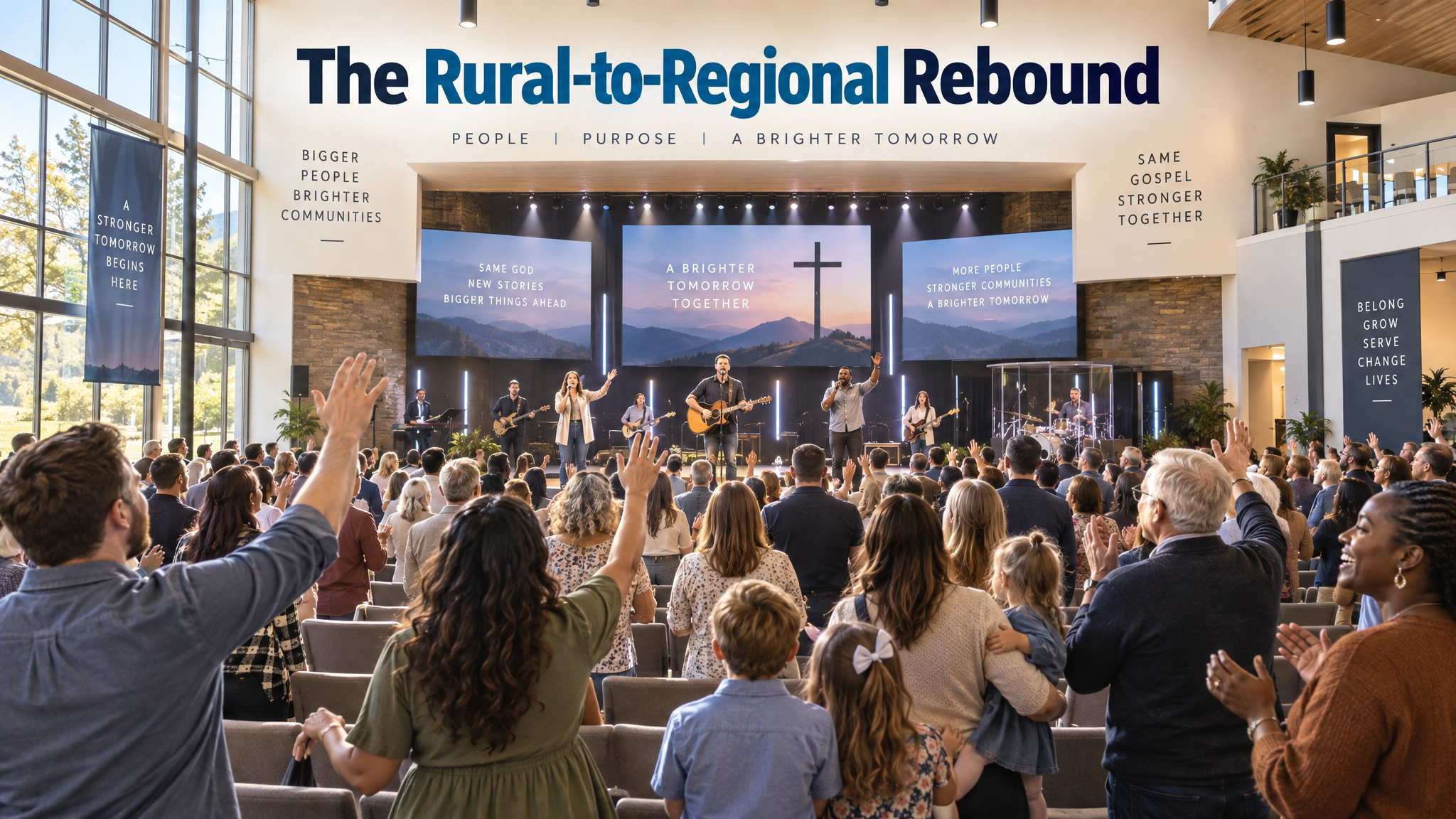
The Rural-to-Regional Rebound: A Case Study on Scaling Sustainable Church Growth Through Digital Integration at Northwood Community Church
Explore FaithBridge