The Future-Proof Church: A Case Study on Migrating to a Unified Digital Infrastructure
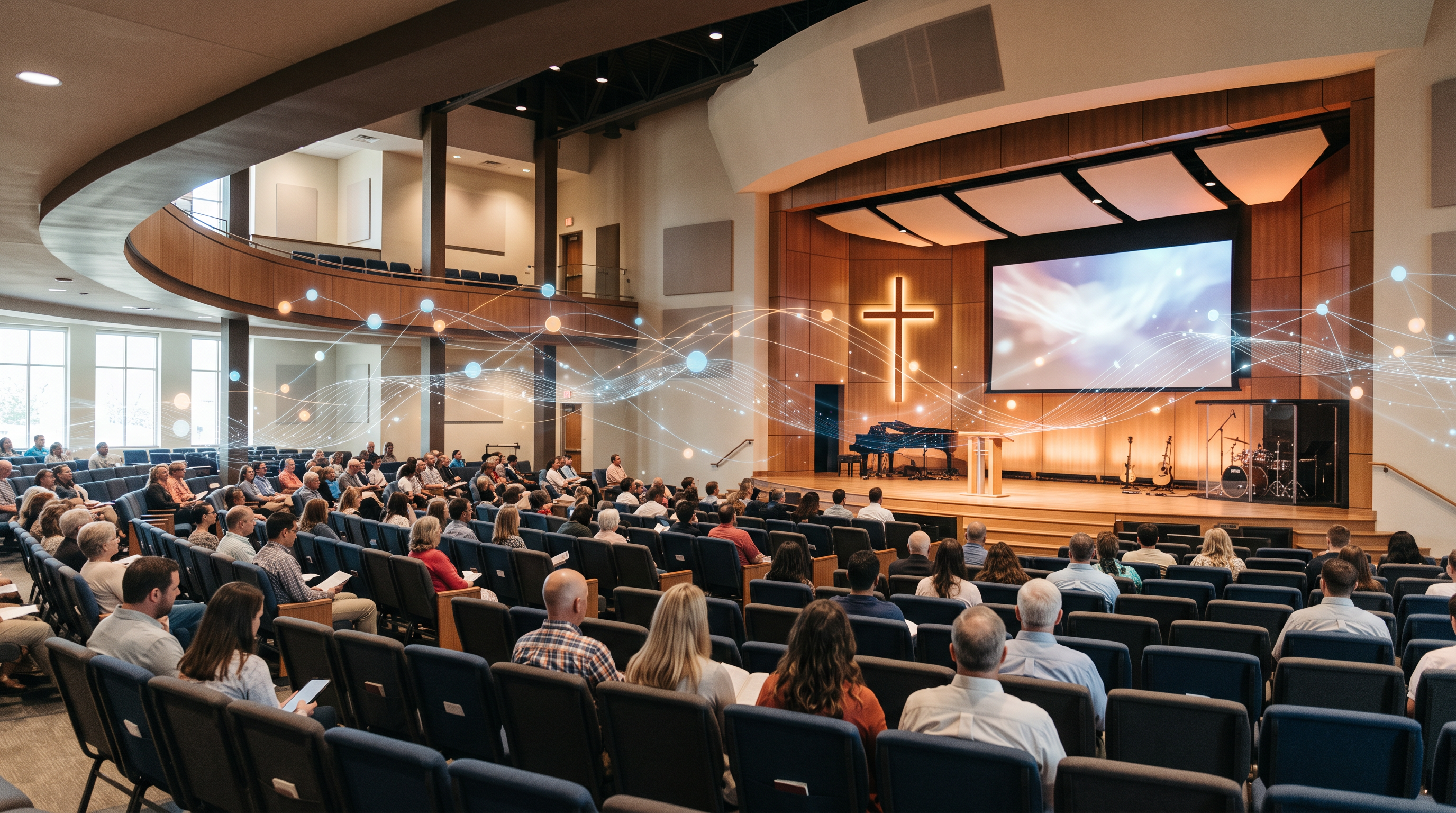
The Future-Proof Church: A Case Study on Migrating to a Unified Digital Infrastructure at Northway Community
Northway Community Church had a problem that many modern ministries face: "Technical Debt." For years, the church had added disparate systems to handle their growing needs. They used one platform for their database, another for giving, a third for email marketing, and a complex spreadsheet for volunteer scheduling. While each tool performed its specific function, they didn't speak to each other. This lack of integration created a fragmented experience for the staff and a disjointed journey for the congregants.
This case study explores Northway’s eighteen-month journey from a fragmented "Frankenstein" tech stack to a unified digital infrastructure. By centralizing their data and streamlining their operations, they didn't just save time; they unlocked new capacity for ministry and deeper community engagement.
The Crisis of Fragmentation: Why Change Was Non-Negotiable
By early 2024, Northway Community reached a breaking point. The administrative burden of manually syncing data between five different platforms was consuming over twenty hours of staff time per week. More importantly, the lack of a "single source of truth" meant that pastoral care was suffering. A family could stop attending or decrease their giving, but because those data points lived in separate silos, it often took months for the leadership to notice.
"We were tool-rich but information-poor," says Sarah Jenkins, Northway’s Executive Pastor. "We had all the data we needed to care for our people, but we couldn't see the forest for the trees. Every tool was a silo, and every silo was a barrier."
The decision to migrate was driven by three primary goals:
- Operational Efficiency: Reducing the manual overhead of data entry and synchronization.
- Relational Visibility: Creating a unified view of each member's engagement to provide better pastoral care.
- Scalable Stewardship: Building a foundation that could support the church’s ambitious five-year growth plan.
Phase 1: The Audit and the Vision for Unity
The first step wasn't buying a new tool; it was auditing the old ones. The Northway tech team spent three months mapping every data flow in the organization. They discovered that the same member profile existed in four different places, often with conflicting information.
Identifying the Core Needs
Through this audit, they identified three non-negotiable requirements for their new unified infrastructure:
- Bi-directional Integration: Any tool added to the ecosystem had to share data in real-time with the central database.
- User-Centric Design: The interface had to be intuitive enough for non-technical volunteers to use with minimal training.
- Privacy and Security: As they centralized more data, the need for robust, role-based access control became paramount.
Building the Roadmap
Northway decided on a "Hub and Spoke" model. The Hub would be a powerful, all-in-one Church Management Software (ChMS) that handled the core database, giving, and groups. The Spokes would be specialized tools for areas like high-end video production or complex project management, but they would only be implemented if they could integrate seamlessly with the Hub.
Phase 2: Execution and the Hurdle of Data Migration
The most challenging part of the project was the "Great Migration." Moving ten years of historical data from five different platforms into one was a gargantuan task. Northway chose to prioritize data hygiene over speed. They spent weeks deduplicating records, standardizing address formats, and cleaning up old tags.
The Cleanup Strategy
"We treated the migration like moving into a new house," Jenkins explains. "You don't want to bring your old junk with you. We used this as an opportunity to purge records for people who hadn't engaged in over five years and to verify the contact information of our active members."
Training for Transformation
Simultaneous with the data move, Northway launched a comprehensive training program. They didn't just teach the staff how to click buttons; they taught the why behind the change. They created "Tech Champions" in every department—early adopters who could provide peer-to-peer support.
Phase 3: The Results—A Ministry Unchained
Six months after the full rollout, the results were undeniable. The administrative workload related to data management dropped by 85%. But the real victory was in the "Ministry Metrics."
Real-Time Pastoral Insights
With a unified infrastructure, Northway implemented "engagement triggers." If a regular giver missed three weeks of giving or if a small group leader stopped logging attendance, an automated notification was sent to the relevant pastor. This allowed for proactive care rather than reactive crisis management.
Enhanced Congregant Experience
For the members, the change was subtle but powerful. They now had a single login for the church app, their giving history, and their group registration. They no longer received redundant emails asking for information the church already had. The "friction" of belonging to the community had been significantly reduced.
Financial Stewardship
The consolidation of tools saved Northway over $12,000 annually in software licensing fees alone. More importantly, the unified giving platform, with its integrated recurring gift options, led to a 15% increase in consistent, predictable revenue within the first year.
Practical Lessons for Your Church Technology Journey
Northway’s success wasn't due to a massive budget or a team of IT professionals. It was due to a strategic commitment to unity. Here are the practical takeaways for any church looking to future-proof their infrastructure:
Start with Strategy, Not Software
Before you look at a feature list, define your ministry goals. Technology should serve your vision, not dictate it. If your goal is discipleship, your tech stack should prioritize group connectivity and curriculum delivery.
Prioritize Integration Over "Best-in-Breed"
A tool that is 10% better in its niche but doesn't integrate with your database is actually a net negative for your organization. The "tax" of manual data entry will eventually outweigh the marginal benefit of that specific feature.
Focus on Data Hygiene
Your systems are only as good as the data inside them. Establish clear protocols for how data is entered and who is responsible for keeping it clean. Regular audits are essential for maintaining a healthy digital ecosystem.
Invest in Change Management
People, not platforms, are the hardest part of any migration. Budget as much time for training and communication as you do for the technical implementation. Celebrate the wins and be patient with the learning curve.
Conclusion: The Architecture of Connection
In the digital age, a church's technology infrastructure is the "plumbing" of its ministry. When it works well, no one notices, and the mission flows freely. When it's broken or fragmented, it creates blockages that hinder spiritual growth and pastoral care.
Northway Community Church proved that by moving toward a unified digital infrastructure, a church can move from a state of "survival" to a state of "thriving." They stopped managing data and started managing relationships. They stopped maintaining silos and started building bridges.
The future-proof church isn't the one with the most expensive gadgets; it's the one with the most integrated systems. By simplifying your tech, you amplify your impact.
Experience the Power of a Unified Tech Stack with FaithBridge
Are you tired of managing a "Frankenstein" tech stack? Is your ministry suffering from data silos and administrative friction? FaithBridge was designed to be the "Hub" for the modern, scaling church. Our all-in-one platform integrates everything from giving and groups to child check-in and volunteer management into a single, intuitive ecosystem.
Stop wasting time on data entry and start investing more in your people. [Click here to schedule a demo of FaithBridge today] and see how a unified digital infrastructure can transform your ministry.
Frequently asked questions
What is technical debt in a church context?
Technical debt refers to the long-term cost of using disparate, non-integrated systems that require manual workarounds and create data silos.
How long does a full digital migration usually take?
For a medium-sized church, a full migration to a unified infrastructure typically takes between 6 to 18 months, depending on data complexity.
Why is data hygiene important before migration?
Cleaning your data ensures that you don't bring 'junk' records or duplicates into your new system, which preserves the integrity of your reporting and pastoral care.
Can small churches benefit from a unified tech stack?
Yes. Even for small churches, the time saved on administrative tasks can free up significant capacity for actual ministry and community building.
Related articles

Church Technology
The Artificial Intelligence Advantage: 7 Strategic Use-Cases for Empowering Small-Team Ministry Operations
Church Growth
The Rural-to-Regional Rebound: A Case Study on Scaling Sustainable Church Growth Through Digital Integration at Northwood Community Church
Discipleship
The Discipleship Engine: A How-To Guide for Designing Scalable Micro-Group Ecosystems for Sustainable Spiritual Formation
Explore FaithBridge