The Growth Architecture: A Deep-Dive into Designing Interoperable Systems for Sustainable Ministry Expansion
The Growth Architecture: A Deep-Dive into Designing Interoperable Systems for Sustainable Ministry Expansion
Growth is a primary objective for nearly every ministry. Whether it is measured by numeric attendance, spiritual depth, or community impact, the desire to reach more people with the Gospel is intrinsic to the Great Commission. However, many churches find that the very success of their growth becomes the catalyst for their eventual stagnation. This phenomenon occurs when a church’s "organic" methods of operation fail to scale. When the relational networks and informal processes that supported a congregation of 200 are applied to a congregation of 500 or 1,000, the result is often leader burnout, administrative chaos, and a dilution of the church’s core mission.
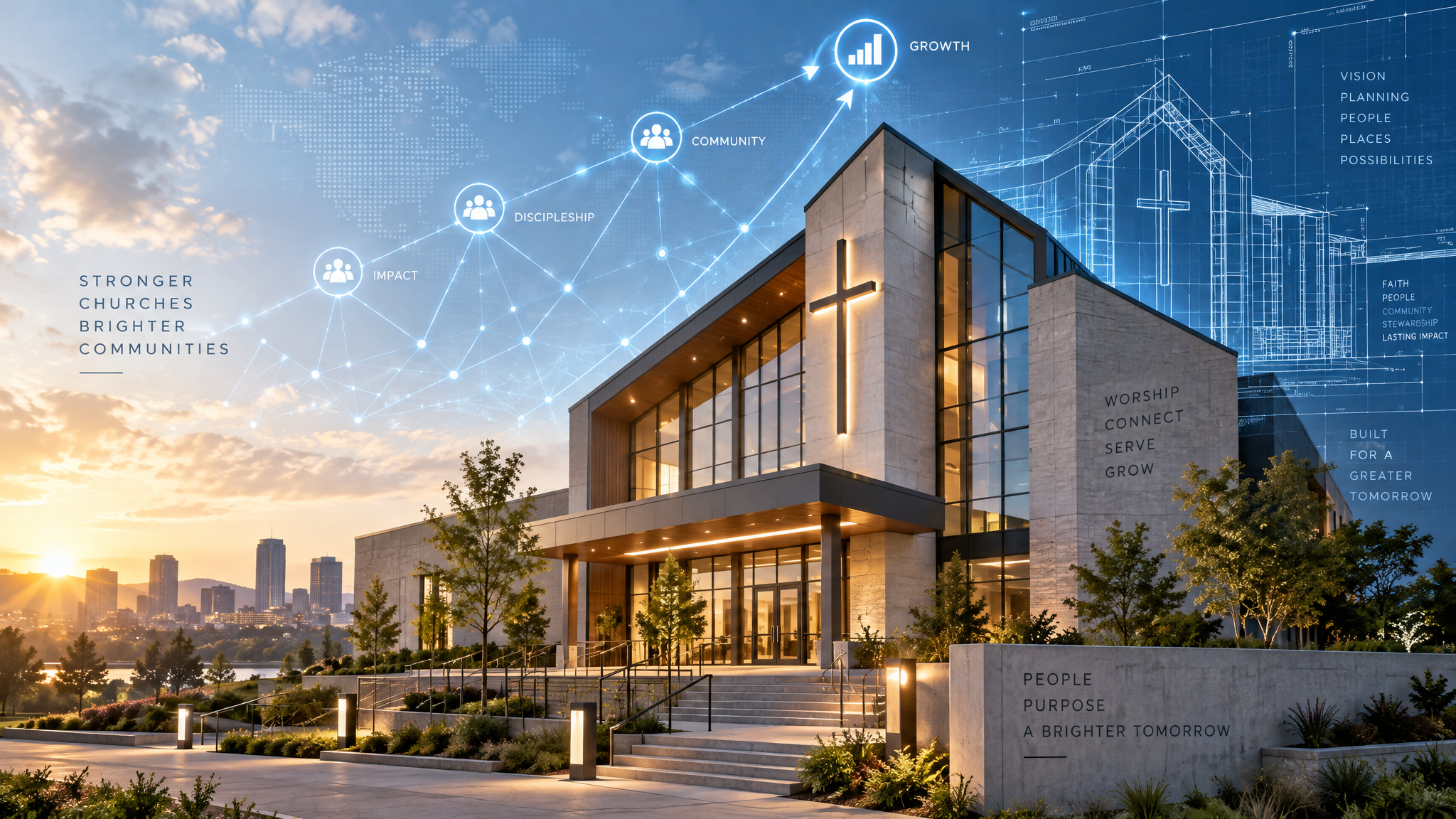
To move beyond these plateaus, leadership must shift from a mindset of "doing more" to "building better." This requires the design of a Growth Architecture—a set of interoperable systems that allow the church to expand its reach while maintaining its relational integrity. In this deep-dive, we will explore the foundational pillars of growth architecture and how your ministry can implement these systems to sustain long-term expansion.
The Shift from Organic to Orchestrated Growth
In the early stages of a church's life, growth is almost entirely relational. The lead pastor and a core group of volunteers handle everything from preaching to parking. Communication happens naturally through proximity and shared passion. This "organic" phase is beautiful, but it has a low ceilings. It relies on the personal capacity of a few individuals.
Orchestrated growth, by contrast, is built on systems. A system is simply a repeatable process that produces a consistent result. When we speak of a "Growth Architecture," we are referring to the integration of these systems so that they work together—what we call "interoperability." Just as a building's electrical, plumbing, and structural systems must be designed to work in harmony, a church’s discipleship, volunteer, and technological systems must be interoperable to support the weight of a growing congregation.
Pillar 1: The Integration Engine (Data Interoperability)
The most common bottleneck in growing churches is siloed information. When the children's ministry uses one spreadsheet, the giving department uses another software, and the small groups team keeps track of attendance on a whiteboard, the church lacks a "single source of truth." This lack of data interoperability prevents leaders from seeing the whole person.
To architect for growth, you must implement a unified data ecosystem. This means moving toward an integrated Church Management System (ChMS) like FaithBridge, where data flows seamlessly between modules. When a visitor checks their child into Sunday school, that data should immediately inform the hospitality team's follow-up process. When someone starts giving regularly, it should trigger a discipleship pathway check-in. Interoperable systems ensure that no one falls through the cracks as the crowd gets larger.
Pillar 2: Scalable Leadership Pipelines
Growth requires more leaders. If the lead pastor remains the primary decision-maker for every ministry detail, the church will eventually hit a "leadership lid." A growth architecture must include a formal system for identifying, training, and deploying leaders.
This system should not be a one-time class but a continuous "conveyor belt." It starts with service (the invitation to help), moves to leadership (the responsibility for a task), and eventually to "leader of leaders" (the responsibility for a team). By defining these rungs on the leadership ladder and providing the necessary resources for each step, you create a self-sustaining engine for expansion. The goal is to move from a "hero" model of leadership to a "hub" model, where authority is distributed across a network of capable shepherds.
Pillar 3: The Relational Network (Micro-Communities)
One of the greatest fears of a growing church is that it will become "corporate" or "cold." To prevent this, the Growth Architecture must prioritize micro-communities. As the church grows larger, it must simultaneously grow smaller.
Interoperable systems support this by automating the "matching" process. By using data to understand a member’s stage of life, geographic location, and spiritual maturity, the system can suggest the most appropriate small group or serving team. These micro-communities serve as the relational "glue" of the church. When the architecture handles the administrative heavy lifting of group placement and attendance tracking, group leaders are freed to focus on what matters: the spiritual health of their members.
Pillar 4: The Strategic Giving Ecosystem
Sustainable growth requires resources. However, traditional stewardship models often fail in a digital-first, multi-site environment. A growth architecture must transition from "transactional" giving (passing a basket) to an "integrated giving ecosystem."
This involves offering multiple, friction-less pathways for generosity—mobile apps, recurring digital pledges, and transparent impact reporting. When giving is integrated into the church’s overall technology stack, it allows for more personalized stewardship. For example, a system can automatically send a "thank you" video to a first-time giver or provide a year-end impact report that shows exactly how their contributions fueled specific ministry successes. This transparency builds trust, which is the currency of any growing ministry.
Furthermore, an integrated giving ecosystem allows for better financial forecasting. When leaders can see trends in recurring giving and understand the correlation between engagement and generosity, they can make more informed decisions about future expansions, such as launching a new campus or investing in a significant community outreach project. This data-driven approach removes the guesswork from stewardship and replaces it with strategic clarity.
Pillar 5: The Digital Front Door (Hybrid Integration)
In the modern era, the "first visit" to your church almost always happens online. Whether it’s through your website, a social media stream, or a search engine result, your digital presence is the initial point of contact. A Growth Architecture must therefore treat the digital front door with as much intentionality as the physical lobby.
Interoperability is critical here. Your online engagement should feed directly into your visitor integration systems. If someone watches a sermon online and signs up for a newsletter, the system should recognize them as a "digital seeker" and provide a tailored pathway that eventually invites them into a physical or virtual micro-community. This hybrid integration ensures that your church is reaching people where they are, rather than waiting for them to walk through a set of physical doors. It expands the "reach" of the church beyond geographic boundaries, creating a truly scalable ministry model.
Pillar 6: Measuring Success (Data-Driven Metrics)
Sustainable growth cannot be managed if it is not measured. However, many churches fall into the trap of only tracking "noses and nickels" (attendance and giving). While these are important indicators, they do not tell the whole story of spiritual health or systemic scalability.
A Growth Architecture incorporates a broader set of metrics that measure "engagement velocity." This includes tracking how long it takes for a first-time visitor to join a small group, the percentage of the congregation currently serving in a volunteer capacity, and the retention rate of new members over a 12-month period. By using an integrated data system to monitor these KPIs, leadership can identify exactly where the "leaks" are in the growth pipeline. If attendance is growing but small group participation is stagnant, the architecture needs adjustment in its integration systems. Data provides the diagnostic tools necessary to maintain a healthy growth trajectory.
Designing Your Growth Architecture: A Practical Roadmap
Implementing these systems can feel overwhelming, but it is a journey of increments. Start by auditing your current workflows. Where are the silos? What processes rely entirely on human memory?
- Audit for Silos: Identify the three biggest administrative bottlenecks in your church. Is it visitor follow-up? Volunteer scheduling? Financial tracking?
- Choose Interoperable Tools: Evaluate your tech stack. Do your tools talk to each other? If not, consider a unified platform that brings your ministries under one digital roof.
- Draft the Pathways: Literally draw the journey of a new visitor. What happens at 24 hours, 7 days, and 30 days? Then, build the automated systems to support that journey.
- Empower the "Architects": Assign leaders to be the "owners" of these systems. Their job is not just to do the work, but to maintain the "health" of the system itself.
Conclusion: Sustaining the Mission
At the end of the day, systems are not the mission. The mission is the transformation of lives through Christ. However, without a resilient growth architecture, the mission will eventually be choked out by the weeds of administrative complexity.
By designing interoperable systems today, you are clearing the path for tomorrow’s growth. You are ensuring that when the next wave of seekers walks through your doors—or logs into your stream—your ministry is ready to welcome them, shepherd them, and integrate them into a healthy, thriving community.
If you are ready to move from organic chaos to orchestrated growth, we invite you to see how FaithBridge can help you architect your ministry's future. Schedule a demo today and discover the power of integrated systems designed for the modern church.
Frequently asked questions
How do we know when our church needs a more formal growth architecture?
Typical signs include leader burnout, communication breakdown, and a stagnation in newcomer integration despite high attendance.
Can systems really support relational ministry?
Yes, systems are designed to remove administrative friction, freeing up leaders to focus on deeper relational discipleship.
What is the first step in building a growth architecture?
The first step is auditing your current workflows to identify "bottleneck" processes that rely too heavily on a single individual.
Related articles

Church Growth
The Rural-to-Regional Rebound: A Case Study on Scaling Sustainable Church Growth Through Digital Integration at Northwood Community Church

Church Growth
The Data-Driven Expansion: A How-To Guide for Using Predictive Analytics to Identify High-Impact Locations for New Church Campuses

Discipleship
The Discipleship Engine: A How-To Guide for Designing Scalable Micro-Group Ecosystems for Sustainable Spiritual Formation
Explore FaithBridge