The Hybrid Connection: A How-To Guide for Designing a Scalable Virtual Lobby to Bridge Physical and Digital Congregants
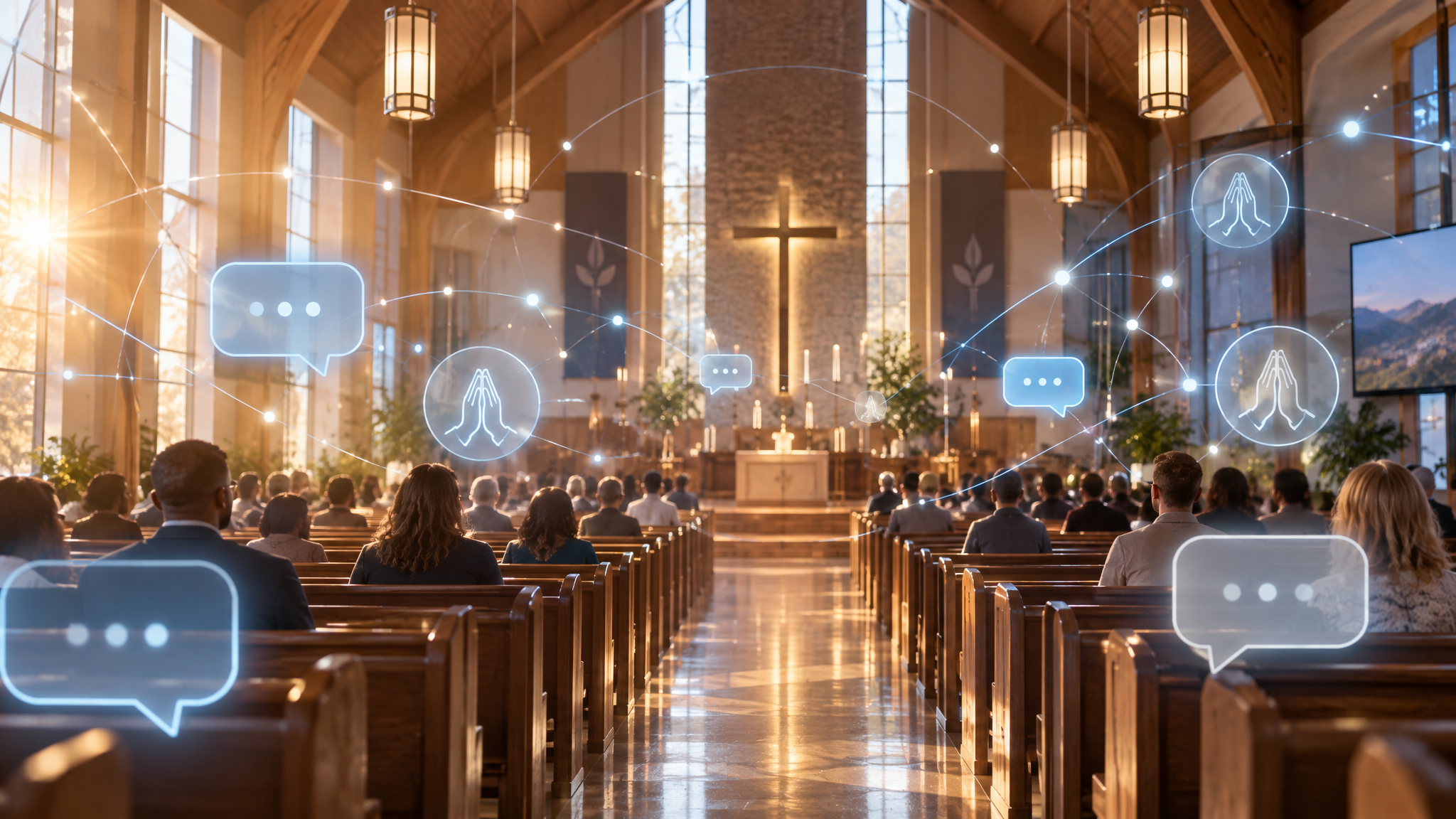
The Digital Gap: Why Your Livestream Isn't Enough for a Scaling Church
In the modern ecclesiastical landscape, "hybrid ministry" has shifted from a pandemic-driven necessity to a strategic foundation for sustainable growth. However, many churches find themselves stuck in a "broadcast bottleneck." They successfully stream their services to hundreds or thousands of viewers, but the engagement remains one-way. The digital congregant is often a consumer rather than a participant, a spectator rather than a member of the body.
As your ministry scales, the distance between the physical sanctuary and the digital device can begin to feel like an insurmountable chasm. This is where the concept of the Virtual Lobby becomes essential. A Virtual Lobby is not just a landing page with a video player; it is an architected digital space designed to facilitate real-time connection, prayer, hospitality, and integration before, during, and after a service.
For churches seeking to scale without losing the intimacy of their mission, designing a scalable Virtual Lobby is the logical next step. It bridges the gap between physical and digital congregants, ensuring that every person—regardless of their location—experiences the same warmth and welcome as they would walking through your front doors.
Defining the Virtual Lobby: Beyond the Broadcast
A Virtual Lobby is the digital equivalent of your church’s "foyer" or "atrium." In a physical building, the lobby serves as the transition point where a visitor moves from the outside world into the community of faith. It is where they are greeted, where they find information, where they share a cup of coffee, and where they receive prayer.
In the digital realm, the Virtual Lobby serves these same functions. It is a persistent, interactive environment that lives alongside your service stream. Key characteristics include:
- Real-Time Interactivity: Instead of passive viewing, the lobby encourages active participation through chat, live polls, and shared prayer requests.
- One-to-One Connection: It provides pathways for digital ushers to engage directly with individuals, facilitating private ministry moments in a public space.
- Persistent Hospitality: The lobby opens before the service starts and remains open after it ends, providing the "hang out" time that is so often missing from digital church.
By architecting this space, you move your digital audience from a "viewing party" to a "gathering of the saints."
Core Components of a Scalable Virtual Lobby
To build a Virtual Lobby that can scale from 50 digital attendees to 5,000, you must focus on modularity and integration. You cannot simply rely on a single volunteer to "watch the chat." You need a system that supports a distributed hospitality team.
1. Real-Time Interactive Surface
The foundation is the platform where the conversation happens. This should be more than a YouTube chat sidebar. You need a surface that allows for structured engagement—tags for prayer requests, pinned announcements for newcomers, and a clear distinction between public chat and private ministry.
2. Deep Data Integration
A scalable lobby must be connected to your Church Management System (ChMS). When a digital visitor fills out a "Connection Card" in the Virtual Lobby, that data should flow seamlessly into your workflows. If your tech stack is siloed, you will lose the momentum of that initial connection.
3. Ministry Management Tools
Digital ushers need tools to manage the crowd. This includes moderation features to keep the environment safe, but more importantly, it includes ministry features: the ability to "pull someone aside" into a private video or text chat for prayer, or to trigger a follow-up email sequence with a single click.
The Tech Stack: Choosing the Right Tools for Integration
Architecture is only as good as the materials used to build it. When selecting tools for your Virtual Lobby, prioritize API-first solutions. You need a tech ecosystem that talks to itself.
The Video Layer
While YouTube and Facebook are great for reach, you may want to host your Virtual Lobby on a proprietary or specialized platform (like Church Online Platform or a custom Next.js application). This allows you to control the environment, remove distractions, and own the data.
The Engagement Layer
Leverage tools that allow for rich interaction. Integrating a solution like FaithBridge’s engagement API allows you to embed prayer request buttons, Bible reading plans, and live transcriptions directly into the lobby experience. This ensures that the digital congregant isn't jumping between tabs but staying immersed in the service.
The Communication Layer
For high-capacity interaction, consider using a dedicated chat API or a real-time messaging service that handles high concurrency. As you scale, low-latency communication becomes the difference between a frustrating experience and a fruitful one.
Architecture for Scale: Managing High-Capacity Digital Attendance
Scaling a Virtual Lobby requires moving from a "Generalist" model to a "Specialized" model. When your digital audience is small, one person can handle the chat, prayer, and tech support. As you hit 500+ attendees, you must architect your team and technology to handle volume.
- The Multi-Room Strategy: Just as a large physical church has different spaces, a large digital church can have different "rooms" or "channels" based on specific interests or life stages. This breaks a massive crowd into manageable communities.
- Automated Triage: Use simple automation to sort engagement. A "First-Time Guest" tag in the chat can alert a specific team member to provide a personalized welcome, while a "Prayer Need" button can trigger a notification to a trained prayer team.
- Global Distribution: As your church scales digitally, you may attract congregants from different time zones. Designing a scalable lobby means having a "follow-the-sun" hospitality team—volunteers in different time zones who can manage the lobby during their local daytime, ensuring that "Digital Hospitality" never sleeps.
The Hospitality Workflow: Training Your Digital Usher Team
Technology facilitates connection, but people provide the hospitality. Training a Digital Usher Team is fundamentally different from training physical ushers.
- Digital Discernment: Digital ushers must learn to "read the room" through text. They need to identify the difference between a troll, a curious seeker, and a hurting believer in a fast-moving chat.
- Strategic Small Talk: The goal isn't just to say "Welcome!"; it's to start a conversation. Ushers should be trained to ask open-ended questions that invite engagement (e.g., "What are you joining us from today?" or "How can we be praying for your week?").
- The Hand-off: The most critical part of the hospitality workflow is the hand-off. When an usher identifies a deep need, they must know how to transition the congregant from a casual chat to an intentional follow-up with a pastor or small group leader.
Measuring Success: KPIs for Digital-Physical Integration
You cannot manage what you do not measure. To ensure your Virtual Lobby is effectively scaling your ministry, track these "Hybrid Health" metrics:
- Lobby Engagement Rate: The percentage of stream viewers who interact with a feature (chat, prayer button, poll) in the lobby.
- The Conversion Lag: How long does it take for a digital visitor to move from "anonymous viewer" to "known participant" (filling out a form or requesting prayer)?
- Integrated Pathing: What percentage of your digital congregants are joining a small group (digital or physical)? This is the ultimate proof of bridge-building.
Conclusion: Transforming the "Stream" into a "Sanctuary"
The future of the scaling church is not found in bigger buildings alone, but in better bridges. By designing and launching a scalable Virtual Lobby, you are declaring that your digital congregants are not secondary; they are an essential part of the body of Christ. You are moving from a model of distributed content to a model of distributed community.
When a single mother can find prayer at 10:00 AM from her kitchen table, or a shut-in can feel the warmth of the community during a Sunday service, the Virtual Lobby has done its job. It has turned a digital stream into a sacred sanctuary.
Scale Your Ministry with FaithBridge
Building a scalable, integrated, and high-impact digital presence shouldn't require a Silicon Valley engineering team. FaithBridge is architected to provide the unified technology infrastructure churches need to grow in the digital age. From API-first integrations to automated guest follow-up and robust engagement analytics, FaithBridge empowers your team to focus on ministry while we handle the complexity of the tech stack.
Ready to bridge the gap and scale your impact? Explore FaithBridge today and see how we can help your church flourish in the hybrid era.
Frequently asked questions
What is a Virtual Lobby in a church context?
A Virtual Lobby is an interactive digital space that facilitates real-time connection, hospitality, and prayer alongside a livestreamed service, moving the digital experience from passive viewing to active participation.
Why is a Virtual Lobby important for scaling churches?
As a church grows, maintaining personal connection becomes harder. A Virtual Lobby provides a scalable way to welcome and integrate digital congregants, ensuring they feel like members rather than spectators.
What technology do I need to start a Virtual Lobby?
You need an interactive landing page, a real-time chat or engagement platform, and deep integration with your Church Management System (ChMS) to track and follow up with visitors effectively.
How do you scale digital hospitality?
By breaking large audiences into smaller digital "rooms," using automated guest triage, and training a distributed team of digital ushers to handle different types of engagement.
Related articles

Church Technology
The Artificial Intelligence Advantage: 7 Strategic Use-Cases for Empowering Small-Team Ministry Operations
Church Growth
The Rural-to-Regional Rebound: A Case Study on Scaling Sustainable Church Growth Through Digital Integration at Northwood Community Church

Discipleship
The Discipleship Engine: A How-To Guide for Designing Scalable Micro-Group Ecosystems for Sustainable Spiritual Formation
Explore FaithBridge