The Hybrid Ministry Blueprint: A How-To Guide for Designing Interoperable Physical-Digital Tech Stacks for a Distributed Congregation
The Hybrid Ministry Blueprint: A How-To Guide for Designing Interoperable Physical-Digital Tech Stacks for a Distributed Congregation
Introduction: The New Frontier of Church Operations
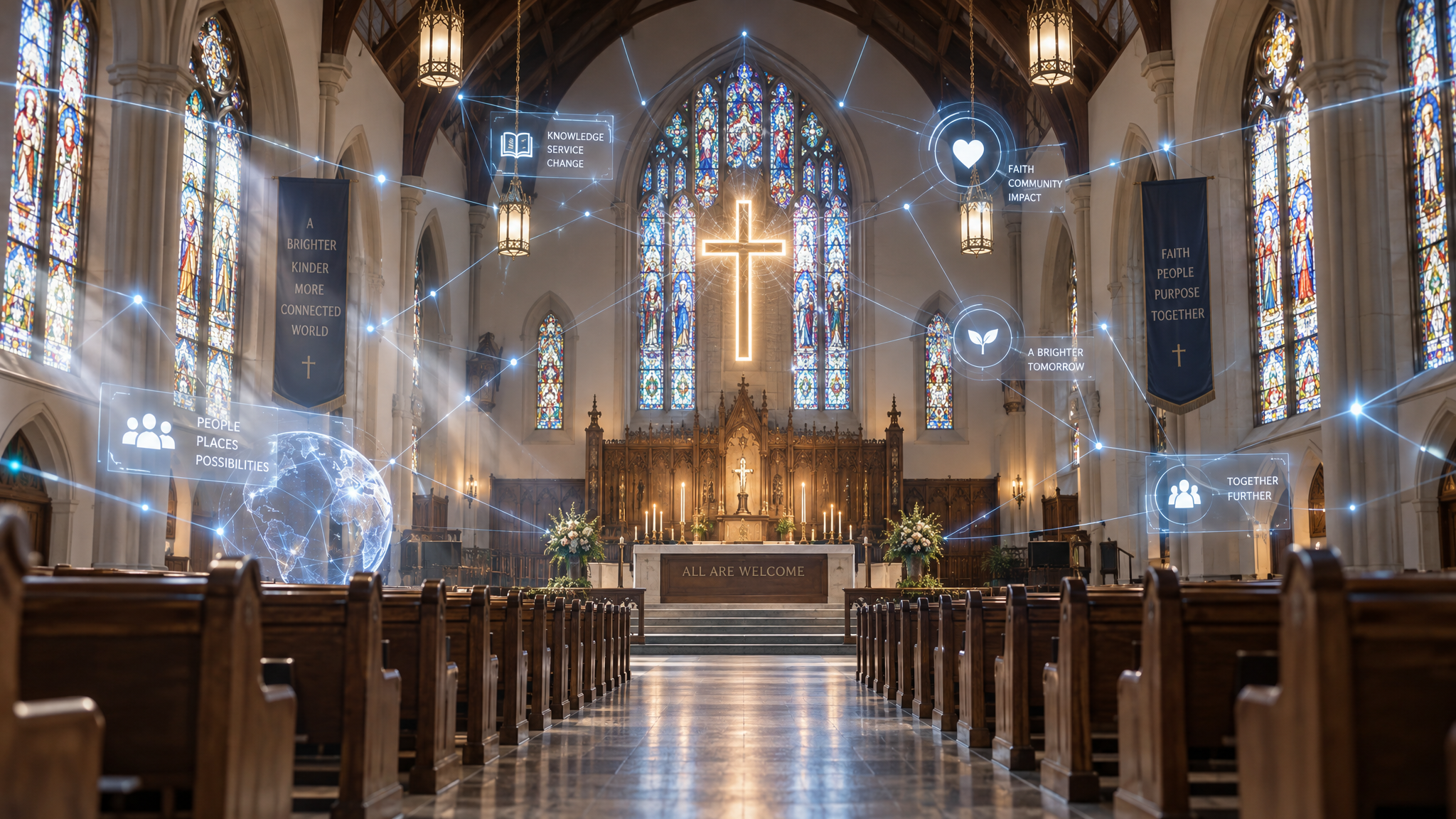
The landscape of the modern church has shifted fundamentally. No longer is "ministry" confined to the four walls of a physical building or restricted to a specific hour on Sunday morning. We have entered the era of the distributed congregation—a community that interacts in person, online, and through a myriad of digital touchpoints throughout the week. For church leaders and administrative teams, this shift presents a significant challenge: how do you build a technology infrastructure that supports this hybrid reality without creating fragmented silos of data and experience?
The answer lies in the "Hybrid Ministry Blueprint"—a strategic framework for architecting interoperable tech stacks. This guide will walk you through the essential components of a modern church infrastructure, ensuring that your physical sanctuary and digital presence work in harmony to foster deep spiritual engagement and operational excellence.
Section 1: The Core Philosophy of Interoperability
Before diving into specific tools, we must understand the core principle of interoperability. In a church context, interoperability means that your Church Management System (ChMS), your live-streaming platform, your mobile app, and your financial tools all "talk" to one another.
Avoiding the Data Silo Trap
The biggest hurdle for growing churches is the data silo. When your volunteer coordinator uses one spreadsheet, your youth pastor uses another app, and your finance team uses a legacy desktop program, the church loses a cohesive view of its members. Interoperability ensures that a new visitor who signs up via a QR code in the lobby is automatically added to the digital onboarding sequence in your ChMS.
Scalability Through API-First Design
A robust blueprint relies on API-first platforms. Application Programming Interfaces (APIs) are the glue that connects modern software. When selecting technology, prioritize platforms that offer open APIs or robust integrations with tools like FaithBridge. This allows your ecosystem to grow and evolve as new technologies emerge.
Section 2: The Physical Sanctuary – Smart Hardware for Real-Time Presence
The physical church building remains a vital hub, but it must now function as a broadcast-ready environment and a data-rich space.
Advanced A/V and Integrated Capture
Your sanctuary’s audio and video gear are no longer just for the people in the room. They are the inputs for your global congregation. A unified tech stack captures high-fidelity audio and 4K video, routing it simultaneously to physical screens, online platforms, and archival storage. Professional-grade switchers that integrate with your streaming software are non-negotiable for a seamless experience.
Furthermore, consider the implementation of AI-driven camera systems. These automated cameras can track a speaker without the need for a dedicated volunteer operator, ensuring a dynamic viewing experience for those at home while allowing your volunteer teams to focus on higher-level creative tasks like live-switching and audience engagement moderation. Integrating these cameras directly into your network infrastructure allows for remote control and real-time monitoring, creating a truly global production environment from a single local sanctuary.
IoT and Interactive Lobby Tech
Consider the "physical-to-digital" bridge in your lobby. Smart kiosks, digital signage, and IoT-enabled check-in stations provide a touchless, efficient experience for families. By using NFC or QR-based check-ins that sync instantly with your central database, you reduce administrative friction and capture valuable engagement data in real-time.
Additionally, the use of Beacon technology or geolocation within your church app can trigger "Welcome" notifications to members as they cross the threshold of your building. This small digital touchpoint can provide them with the day’s digital bulletin, sermon notes, and a link to the kids' check-in tag, creating a frictionless transition from the parking lot to the pew. By capturing this attendance data automatically, your church leadership gains a more accurate picture of weekend participation trends without the need for manual headcount sheets.
Section 3: The Digital Backbone – Cloud Infrastructure and Data Flow
The "brain" of your hybrid ministry lives in the cloud. It must be resilient, secure, and accessible from anywhere.
Unified Church Management Systems (ChMS)
Your ChMS is the single source of truth. A modern ChMS should manage member profiles, groups, giving, and communications in one place. When this system is cloud-native, your staff can manage operations from a laptop at a coffee shop just as easily as they can from their office desk.
The Content Delivery Pipeline
Hybrid ministry generates an immense amount of content. Your tech stack needs a streamlined pipeline to move video from the sanctuary to a Content Delivery Network (CDN) and then to your church app and social media channels. Automated workflows that transcode and distribute content save hundreds of staff hours every month.
Section 4: Bridging the Gap – Platforms for Distributed Engagement
How do you make an online attendee feel as much a part of the family as someone sitting in the third row? You build interactive bridges.
The Specialized Church Mobile App
A custom mobile application is the primary interface for your distributed congregation. It should provide more than just a link to the live stream. Integrate features like "Digital Prayer Wall," "Small Group Chat," and "In-App Giving." When the app is interoperable with your ChMS, the data from these interactions helps you understand which members are growing in their discipleship journey.
Synchronous and Asynchronous Discipleship
Interoperable tech allows for hybrid discipleship models. A Bible study might meet in person on Wednesday night while simultaneously hosting a Zoom contingent, all while recording the session for those who need to watch it asynchronously on the church’s LMS (Learning Management System).
This approach ensures that spiritual growth is not limited by geography or schedule. A young professional who works late on Wednesdays can still participate in the community by watching the recorded teaching on Thursday and participating in the group’s digital discussion board via the church app. By tracking these hybrid points of engagement, pastors can identify who is active in their spiritual journey—regardless of whether they stepped foot on campus that week.
Section 5: The Power of Unified Analytics – Measuring What Matters
In a hybrid ministry environment, traditional metrics like "butts in seats" are no longer sufficient. An interoperable tech stack provides you with a much deeper set of data points to measure the health of your congregation.
Holistic Engagement Scoring
By pulling data from your ChMS, your streaming platform, and your mobile app, you can create a "Holistic Engagement Score" for every member. This score doesn't just look at attendance; it looks at giving patterns, volunteer frequency, digital content consumption, and participation in small group chats. This data allows you to proactively reach out to members whose engagement might be slipping, transforming your church from a reactive organization to a proactive community of care.
Predictive Growth Modeling
When your tech stack is interoperable, you can use historical engagement data to predict future needs. For example, by analyzing the influx of new digital visitors and their subsequent conversion to in-person attendees, you can more accurately forecast when you’ll need to add a new service or hire additional staff. FaithBridge’s advanced analytics engine does this heavy lifting for you, turning raw data into actionable insights for your executive team.
Section 6: Data Security, Privacy, and Ethical Stewardship
With great data comes great responsibility. A scalable tech stack must be built on a foundation of trust.
Implementing Zero Trust Architecture
As your systems become more interconnected, security becomes paramount. Implementing a "Zero Trust" model—where every user and device must be verified regardless of their location—protects your members' sensitive information. Multi-factor authentication (MFA) and encrypted data transmission are standard requirements for modern ministry tech.
Data Privacy and Compliance
Ensure your stack complies with regional data protection laws (like GDPR or CCPA). Beyond legal compliance, ethical stewardship of data means being transparent with your congregation about how their information is used to support their spiritual growth.
The 7-Step Implementation Guide for Your Hybrid Blueprint
Ready to modernize? Follow these steps to build your interoperable stack:
- Audit Your Current Silos: Identify every piece of software and hardware currently in use and note where data is trapped.
- Define Your Integration Goals: Decide which systems must talk to each other first (e.g., ChMS and Giving).
- Prioritize API-Ready Tools: When replacing legacy tech, choose vendors that emphasize connectivity and open standards.
- Strengthen Your Network Infrastructure: Ensure your physical building has the bandwidth and Wi-Fi 6 capabilities to handle high-density hybrid traffic.
- Train Your Team on the Ecosystem: Technology is only effective if your staff and volunteers know how to use the integrated features.
- Create a Phased Rollout: Don't try to change everything at once. Start with the core database and expand to engagement tools.
- Monitor and Iterate: Use analytics from FaithBridge to see how your tech stack is impacting engagement and adjust your strategy accordingly.
Conclusion: Empowering the Mission Through Technology
Building a hybrid ministry tech stack is not about chasing the latest gadgets; it is about removing the technological barriers to spiritual connection. By designing an interoperable ecosystem that spans the physical and digital worlds, you empower your leaders to focus on what matters most: making disciples and serving your community. The distributed congregation is here to stay, and with the right blueprint, your church can thrive in this new era of ministry.
Ready to Scale Your Ministry?
Managing the complexity of a hybrid church requires tools designed for the future. FaithBridge offers the most comprehensive, interoperable platform for church management, growth, and engagement. From advanced data analytics to seamless mobile integration, we help you bridge the gap between your physical sanctuary and your digital congregation.
Experience the future of church operations today. Try FaithBridge and see how we can transform your ministry.
Frequently asked questions
What is an interoperable tech stack for a church?
It is an ecosystem of software and hardware (like ChMS, streaming, and apps) that sync data automatically.
Why is hybrid ministry tech important?
It ensures a cohesive experience for both in-person and online attendees, preventing data silos.
What does API-first mean in church tech?
It means choosing platforms that prioritize connectivity and integrations with other specialized tools.
How does hardware integration help in a hybrid model?
Integrated A/V and IoT devices (like smart kiosks) capture engagement data automatically.
Related articles

Church Technology
The Artificial Intelligence Advantage: 7 Strategic Use-Cases for Empowering Small-Team Ministry Operations

Church Growth
The Rural-to-Regional Rebound: A Case Study on Scaling Sustainable Church Growth Through Digital Integration at Northwood Community Church
Discipleship
The Discipleship Engine: A How-To Guide for Designing Scalable Micro-Group Ecosystems for Sustainable Spiritual Formation
Explore FaithBridge