The Momentum Matrix: A Deep-Dive into the Data-Driven Frameworks for Scaling Church Growth Sustainably
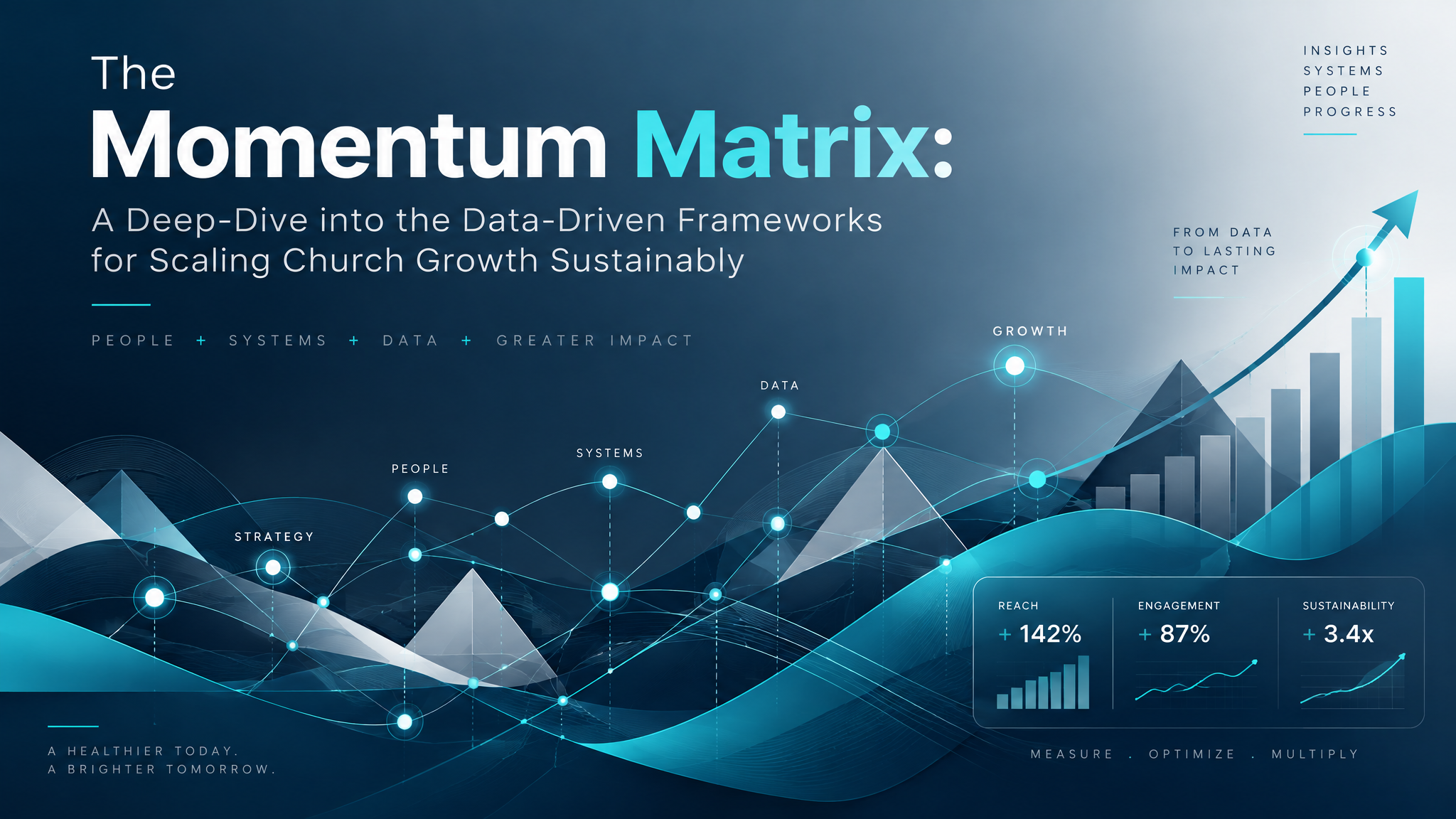
The Momentum Matrix: A Deep-Dive into the Data-Driven Frameworks for Scaling Church Growth Sustainably
Introduction: For many church leaders, "growth" is often viewed through the lens of Sunday attendance spikes or viral social media moments. However, true, sustainable church growth is not a series of one-off events; it is the result of a robust, data-integrated ecosystem that supports both spiritual depth and organizational scalability. In this deep-dive, we explore the "Momentum Matrix"—a strategic framework designed to move ministries beyond the growth plateau by focusing on the underlying systems that drive long-term health.
The Myth of the Silver Bullet in Church Growth
Many leadership teams fall into the trap of searching for a single programmatic solution to stagnation. Whether it’s a new worship style, a high-production capital campaign, or a trendy outward-focused initiative, these "silver bullets" often provide temporary momentum without the infrastructure to sustain it.
Sustainable growth requires a shift from event-based thinking to system-based thinking. This means moving from "How do we get more people here?" to "How do we build a house that can hold more people while keeping them connected to the mission?"
Why Most Growth Strategies Fail
The primary reason church growth initiatives stall is a lack of integration. When the outreach team is disconnected from the onboarding team, and the discipleship team is unaware of the latest engagement metrics, the result is a "leaky bucket" phenomenon. New visitors arrive in droves but exit through the back door just as quickly because the relational and administrative systems weren't prepared for the influx.
Pillar 1: Predictive Engagement Analytics
The first quadrant of the Momentum Matrix is dedicated to understanding who is at your door and how they are interacting with your community. In the modern era, "knowing the sheep" requires more than just a firm handshake at the exit; it requires data-informed insights.
Identifying the Lagging Indicators
Most churches track attendance and giving—two critical metrics, but they are lagging indicators. By the time attendance drops, the root cause (disengagement) has been active for months.
To scale sustainably, churches must transition to tracking leading indicators:
- First-to-Second Visit Conversion: What percentage of new visitors return within three weeks?
- Digital Engagement Depth: Are people consuming mid-week resources or only Sunday content?
- Volunteer Onboarding Velocity: How long does it take for a willing heart to become a deployed hand?
Leveraging a Unified Data Ecosystem
Sustainable growth happens when data is democratized across staff departments. A unified database allows the pastoral care team to see if a consistent giver has suddenly stopped attending, triggering a relational check-in before the person drifts away entirely.
Pillar 2: The Scalability of Spans and Layers
As a church grows from 200 to 500, and from 1,000 to multiple sites, the leadership structure must evolve. The "Spans and Layers" framework ensures that no single leader is an information bottleneck.
Decentralizing Pastoral Care
In a small church, the lead pastor is the primary care provider. In a scaling church, the lead pastor becomes the "shepherd of shepherds." This requires a deep-dive into the ratios:
- Small Group Leader to Member Ratio: Aim for 1:10.
- Coach to Small Group Leader Ratio: Aim for 1:5.
When these ratios are maintained through a robust discipleship pipeline, growth does not dilute the quality of care; it expands the reach of it.
Pillar 3: Modular Ministry Infrastructure
One of the greatest enemies of scalability is "customization." When every ministry department (Kids, Youth, Worship, Outreach) operates with different tools, processes, and branding, the organizational friction becomes a drag on momentum.
The Power of Standardization
Modular infrastructure means building repeatable playbooks for core operations.
- The Onboarding Playbook: A standardized way to welcome and train news staff and volunteers.
- The Communications Playbook: A unified voice and channel strategy that prevents "inbox noise."
- The Financial Playbook: Clear, transparent systems for resource allocation that build trust with donors.
By standardizing the how, you free up leadership to focus on the who and the why.
Pillar 4: The Relational Retention Engine
Growth without retention is just a expensive carousel. The final quadrant of the Momentum Matrix focuses on "closing the back door" through intentional relational pathways.
The First 90 Days
Research consistently shows that a visitor's long-term retention is largely determined in their first 90 days. A deep-dive into successful growth models reveals a common denominator: an intentional "Integration Path."
- Immediate Recognition (Day 1-7): A personal touchpoint that feels relational, not transactional.
- Community Connect (Day 8-30): An invitation into a smaller environment where names are known.
- Mission Alignment (Day 31-90): Helping the individual discover their unique role in the church's vision.
Case Study: From Plateau to Progress
Consider the example of Hillside Collective, a church that had been stuck at 400 attendees for five years. They implemented the Momentum Matrix by first unifying their data and then retraining their volunteer leaders on the "Spans and Layers" model.
Within 18 months, they didn't just grow to 700 attendees; they saw a 40% increase in small group participation and a 25% lift in recurring giving. The growth was sustainable because it was built on a foundation of operational excellence and relational integrity.
Conclusion: Preparing the Foundation for Future Harvest
Scaling a church is an act of stewardship. It is the courageous decision to prepare the "wine-skins" for the new wine that God is sending. By focusing on predictive analytics, scalable leadership structures, modular infrastructure, and relational retention, you move beyond the hype of temporary attendance spikes into the health of a growing Kingdom movement.
Growth is not the goal—health is the goal. And in the Kingdom of God, a healthy organism will naturally grow.
Ready to Scale Your Ministry Impact?
At FaithBridge, we provide the digital tools and strategic frameworks church leaders need to architect sustainable growth. From unified data ecosystems to automated engagement pathways, our platform is designed to help you focus on what matters most: making disciples.
[Try FaithBridge Today] and start building a foundation for a future without plateaus.
Frequently asked questions
What is the Momentum Matrix?
The Momentum Matrix is a strategic framework focused on four key pillars: predictive engagement analytics, scalable spans and layers, modular ministry infrastructure, and a relational retention engine.
How does data influence church growth?
Data provides leading indicators of engagement, such as first-to-second visit conversion rates and volunteer onboarding velocity, allowing leaders to address disengagement before it impacts attendance.
What are 'Spans and Layers' in a church context?
This refers to a leadership structure that ensures no single leader becomes a bottleneck by maintaining healthy ratios of leaders to members (1:10) and coaches to leaders (1:5).
Why is standardization important in ministry?
Standardization removes organizational friction by creating repeatable playbooks for core operations like onboarding and communication, freeing leaders to focus on relational ministry.
What is the 'leaky bucket' phenomenon in churches?
This occurs when a church successfullly attracts new visitors but lacks the administrative and relational systems to keep them, resulting in high churn rates.
Related articles
Church Growth
The Rural-to-Regional Rebound: A Case Study on Scaling Sustainable Church Growth Through Digital Integration at Northwood Community Church

Church Growth
The Data-Driven Expansion: A How-To Guide for Using Predictive Analytics to Identify High-Impact Locations for New Church Campuses

Discipleship
The Discipleship Engine: A How-To Guide for Designing Scalable Micro-Group Ecosystems for Sustainable Spiritual Formation
Explore FaithBridge