The Multi-Generational Ministry: 10 Best Practices for Building a Scalable Volunteer Culture

The Multi-Generational Ministry: 10 Best Practices for Building a Scallable Volunteer Culture
In the evolving landscape of the modern church, the heartbeat of ministry remains its people. However, as congregations grow and demographics shift, the traditional models of volunteer engagement are facing unprecedented challenges. We are no longer operating in a monolithic social environment; instead, we are navigating a beautiful but complex tapestry of generations—from the digital-native Gen Z to the experienced and wisdom-rich Baby Boomers. Building a volunteer culture that not only bridge these generational gaps but also scales with the intensity of your church’s growth is not just an administrative goal; it is a theological imperative.
When we talk about "scaling" volunteer engagement, we aren’t just talking about more names on a spreadsheet. We are talking about architecting systems of service that can handle increased complexity without losing the personal, relational touch that defines the Body of Christ. It requires a shift from "filling slots" to "empowering leaders." This transition is particularly critical when trying to engage multiple generations who value different things: Gen Z looks for social impact and authenticity; Millennials value flexibility and professional development; Gen X seeks efficiency and clear communication; and Boomers prioritize legacy and institutional stability.
To help your church navigate this transition, we have distilled ten essential best practices for architecting a multi-generational, scalable service culture.
1. Design Micro-Volunteering Opportunities
One of the greatest barriers to entry for younger generations is the perceived "forever commitment" of traditional ministry roles. To scale participation, you must lower the barrier to entry without lowering the standard of excellence. Micro-volunteering refers to short-term, low-commitment tasks that can be completed in a few hours or even minutes.
By breaking down large ministries into smaller, "bite-sized" tasks—such as a social media post, a one-time greeting shift, or a specific data entry project—you allow busy professionals and students to step in. These micro-roles serve as an "on-ramp" to deeper engagement. Over time, as these volunteers experience the joy of service, they are more likely to commit to more significant responsibilities.
2. Implement a "Leader-to-Leader" Mentorship Model
Scaling requires a shift in the hierarchy. In a traditional model, a staff member manages all volunteers. This creates a bottleneck. To scale, you must implement a "Jethro model" (Exodus 18), where you empower volunteer coordinators to lead small teams of volunteers.
Specifically, aim for a multi-generational pairing. Encourage Boomers to mentor Gen Z volunteers in the wisdom of ministry, while inviting Gen Z to "reverse mentor" older leaders on digital culture and contemporary engagement. This cross-pollination ensures that wisdom is preserved while innovation is embraced.
3. Leverage Asynchronous Training Systems
As you scale, the ability to gather every volunteer for a Saturday morning training session becomes nearly impossible. Different generations have different schedules and learning styles. To ensure consistency and safety across the board, move your training to a digital-first, asynchronous model.
Use a platform—like FaithBridge’s integrated learning modules—to host short, engaging video trainings. This allows a busy parent to watch a safety training after the kids are in bed, or a college student to catch up between classes. By providing on-demand training, you remove the "time-cost" of volunteering, making it more accessible to a wider demographic.
4. Optimize the Digital Onboarding Pipeline
First impressions are everything. If a potential volunteer fills out a card on Sunday and doesn’t hear back for two weeks, you have likely lost them. A scalable culture requires a responsive, automated onboarding pipeline.
From the moment a person expresses interest, they should enter a workflow that guides them through a background check, a spiritual gifts assessment, and an initial interview. Automation doesn't replace the relationship; it secures it by ensuring no one falls through the cracks. By the time you meet for coffee, the administrative work is done, and you can focus on their heart and vision for ministry.
5. Prioritize Clear, Multi-Channel Communication
Communication is the glue of volunteer culture, but "one size fits all" no longer works. While older generations may prefer a phone call or a detailed email, younger volunteers often lean toward text, Slack, or in-app notifications.
To scale effectively, you must communicate across multiple channels simultaneously. Ensure your volunteer management system allows for segmented communication. This ensures the right person gets the right message in their preferred format at the right time. Clarity in communication reduces volunteer burnout caused by confusion or last-minute changes.
6. Foster a Culture of Radical Appreciation
Volunteers don't want to be "used"; they want to be "valued." In a high-growth environment, it is easy to forget the "thank you." A scalable culture builds appreciation into the system.
Move beyond the once-a-year volunteer dinner. Implement a "culture of honor" where leadership regularly shares stories of volunteer impact. Use digital platforms to send personalized notes of encouragement. When a volunteer sees the tangible fruit of their labor—a life changed, a child comforted, a community fed—their commitment shifts from duty to delight.
7. Create Roles Based on Spiritual Gifts, Not Just Needs
One of the fastest ways to burn out a volunteer is to place them in a role they are not gifted for. A scalable ministry asks, "What has God put in you?" rather than just "Where do we have a hole?"
Utilize spiritual gifts and personality assessments (like DISC or Enneagram) during the onboarding process. When a Millennial professional is asked to use their marketing skills for the church, or a retired accountant is asked to help with the benevolence fund, they feel a sense of purpose that transcends mere labor. Proper placement is the key to long-term volunteer retention.
8. Build in Rhythms of Rest and Rotation
Sustainability is the foundation of scalability. A volunteer who serves 52 weeks a year will eventually burn out. To build a healthy culture, you must normalize rest.
Implement "serving terms" (e.g., three months on, one month off) or create a "substitute pool" of volunteers who can step in when others need a break. By building these rhythms into your ministry architecture, you signal to your congregation that you value their spiritual health more than their productivity. This attracts more people to serve, knowing they won't be "trapped."
9. Democratize Data for Ministry Leaders
In a scaling church, information cannot be siloed at the top. Your volunteer team leads need access to the data that helps them lead effectively. Whether it’s tracking attendance, monitoring background check renewals, or seeing who hasn’t served in three weeks, this data empowers them to provide better pastoral care.
By giving team leads the tools to manage their own small groups of volunteers, you distribute the weight of leadership. This "distributed management" is the only way a church can grow from 200 to 2,000 without the staff losing their minds.
10. Invite Volunteers into the "Why," Not Just the "What"
Finally, to scale a culture, you must scale the vision. People will work for a "what," but they will die for a "why." Every volunteer role, no matter how small, must be connected to the overall mission of the church.
During every huddle and in every training, remind the parking team that they are the first face of Jesus people see. Remind the tech team that they are removing the barriers to the Gospel. When the "why" is clear, the "what" becomes a joy. A vision-drenched culture is naturally attractive and inherently scalable.
Conclusion: Architecting for the Future
Building a multi-generational, scalable volunteer culture is not an overnight task. It requires intentionality, the right technological tools, and a deep love for the people God has entrusted to your care. By implementing these best practices, you move from a model of individual effort to a model of collective impact.
As you look at your ministry landscape, remember that every system you build is an opportunity to empower someone else to use their God-given gifts. That is the true essence of church growth.
Take the Next Step with FaithBridge
Are you ready to transform your church's volunteer engagement? FaithBridge offers the unified digital infrastructure you need to architect these systems today. From automated onboarding workflows to multi-channel communication tools, our platform is designed to help your ministry scale without losing its soul.
[Try FaithBridge Today] and discover how we can help you build the sustainable, high-impact volunteer culture your community deserves.
Frequently asked questions
How do I engage Gen Z volunteers?
Focus on social impact, authenticity, and micro-volunteering opportunities that don't require long-term commitments immediately.
What is the Jethro model of volunteering?
It involves empowering volunteer coordinators to lead small teams, distributing the management load and removing leadership bottlenecks.
Why is digital onboarding important for scaling?
Automation ensures consistency, speeds up the process (background checks, gift assessments), and prevents potential volunteers from falling through the cracks.
How can I prevent volunteer burnout?
Implement serving terms, rhythms of rest, and ensure volunteers are placed in roles that align with their spiritual gifts.
Related articles

Volunteer Engagement
Application-Based vs. Invitation-Only: A Strategic Comparison of Volunteer Recruitment Models for High-Growth Churches

Volunteer Engagement
The Volunteer Velocity Framework: 8 Best Practices for Scaling High-Impact Service Teams in a Digital-First Ministry
Church Growth
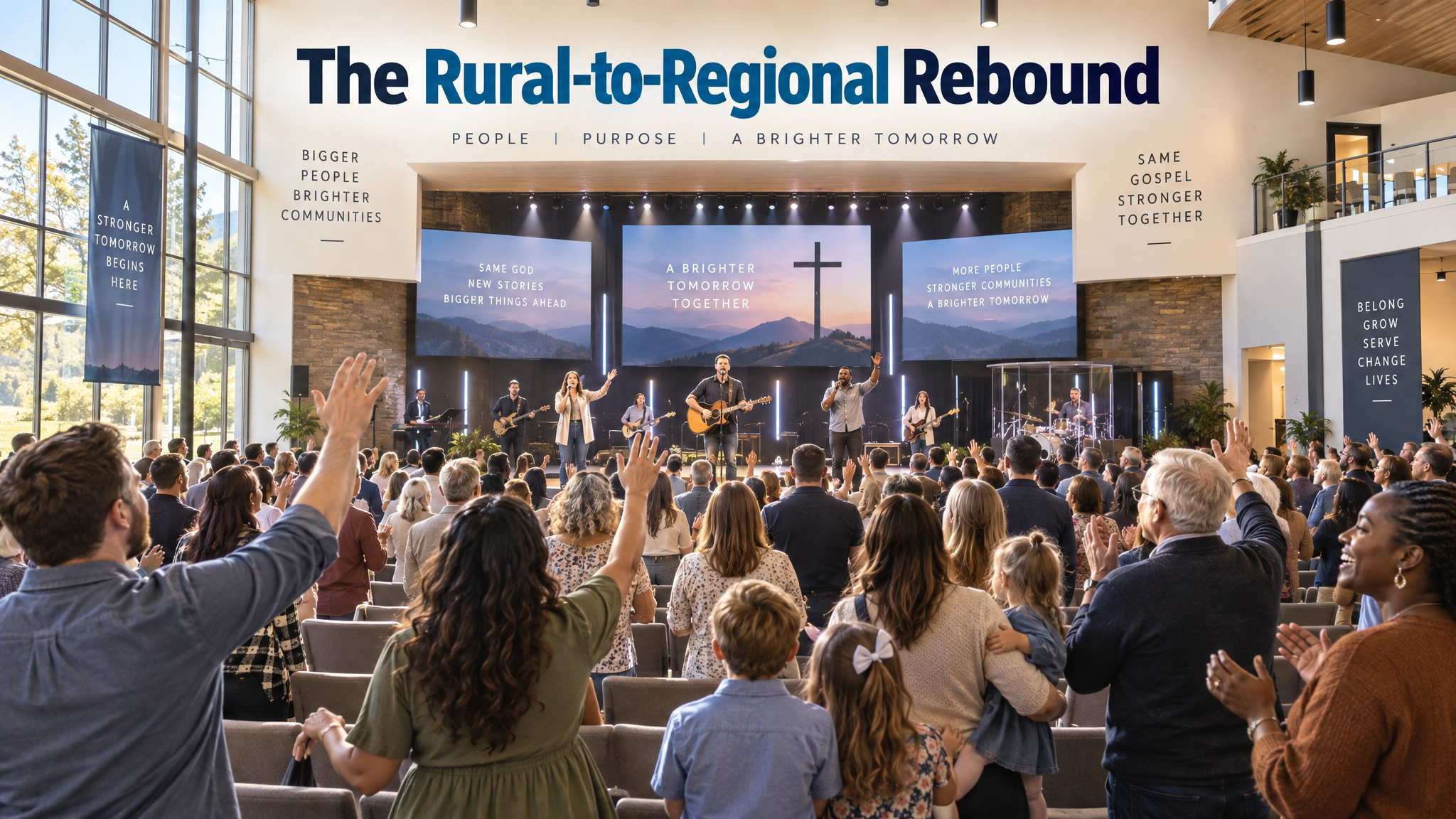
The Rural-to-Regional Rebound: A Case Study on Scaling Sustainable Church Growth Through Digital Integration at Northwood Community Church
Explore FaithBridge