The Operational Engine: 10 Essential Systems for Navigating the Complexity of Modern Church Management
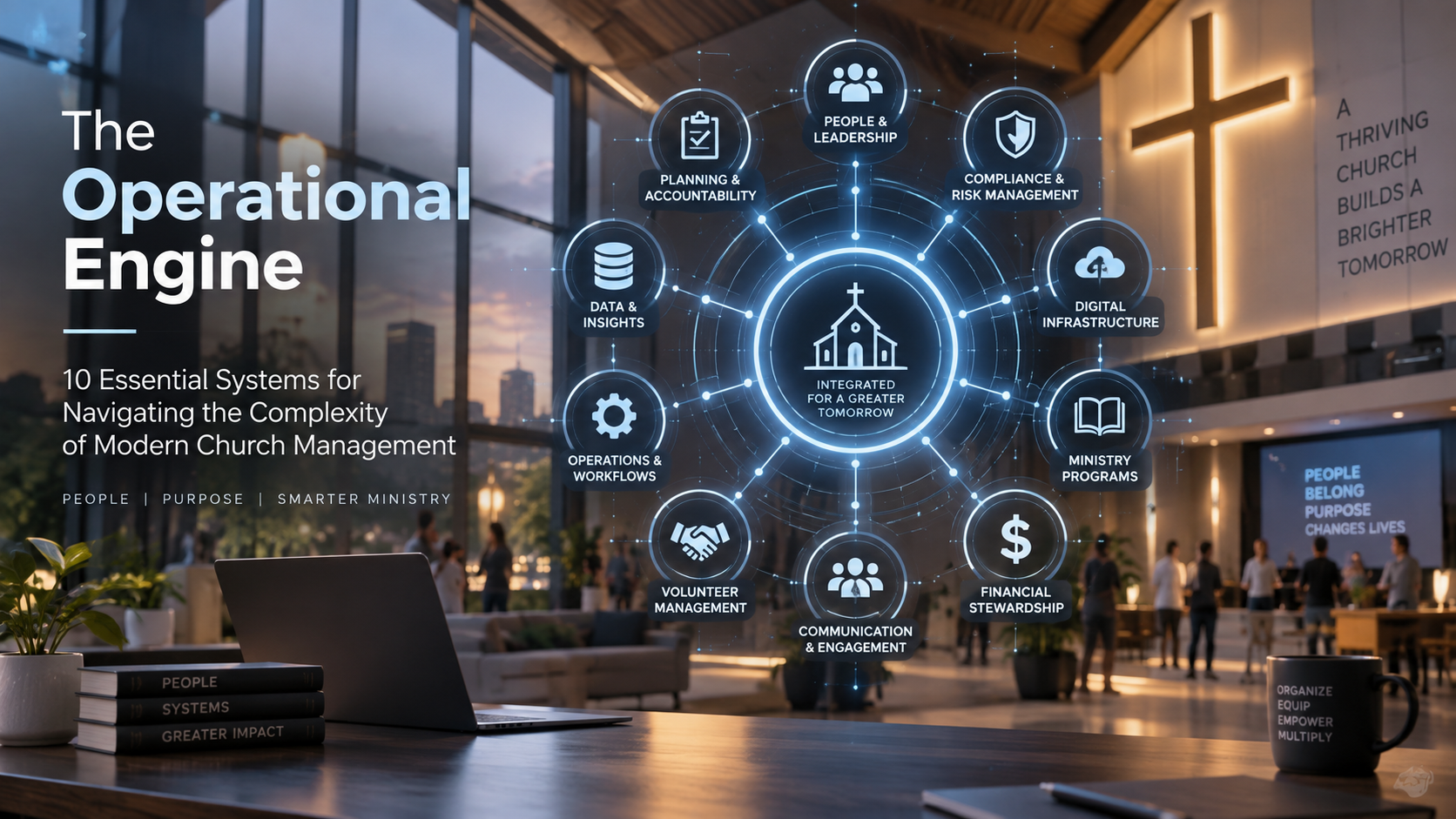
The Operational Engine: 10 Essential Systems for Scaling Sustainable Church Management
In the rapidly evolving landscape of modern ministry, the gap between a vision for growth and the reality of day-to-day operations can often feel insurmountable. Many church leaders find themselves caught in a cycle of reactive management, where urgent administrative tasks consistently overshadow the long-term strategic goals of the organization. However, the most successful and sustainable churches share a common secret: they view management not as a necessary evil, but as the operational engine that powers their ministry's mission.
To scale effectively without losing the heart of your ministry, you must transition from organic, person-dependent workflows to structured, interoperable systems. This shift is not about introducing bureaucracy; it is about creating a resilient framework that empowers your staff, protects your resources, and ensures that every administrative detail serves the greater purpose of making disciples.
In this guide, we explore the ten essential systems that every scaling church must architect to achieve operational excellence and long-term sustainability.
1. Integrated Financial Oversight and Transparency
Financial stewardship is the bedrock of church management. As a church grows, the complexity of its finances increases exponentially, moving from simple expense tracking to multi-departmental budgeting and restricted fund management.
The Power of Real-Time Reporting
A sustainable financial system must provide leaders with real-time visibility into the church's fiscal health. This requires moving beyond static spreadsheets to integrated accounting platforms that can track giving trends, payroll, and project-based spending in a single dashboard.
Radical Transparency as a Trust Builder
Transparency is not just about compliance; it is a powerful tool for building trust with your congregation. By implementing systems that allow for clear, regular reporting on how funds are utilized, you create a culture of accountability that encourages generous stewardship.
2. Scalable People Management and Staff Development
Your staff and volunteers are your most valuable assets. However, without a structured system for management and development, leadership can quickly become a bottleneck, leading to burnout and turnover.
Architecting a Distributed Leadership Framework
The goal of people management in a scaling church is to move from a solo-hero model to a distributed hub-and-spoke framework. This involves clearly defining roles, establishing clear lines of authority, and empowering department heads to make decisions within their domains.
Continuous Professional and Spiritual Formation
A sustainable church management system prioritizes the ongoing growth of its team. Implementing regular performance reviews that focus on both professional competency and spiritual well-being ensures that your team remains aligned with the church’s mission while feeling supported in their personal development.
3. Unified Digital Infrastructure and Data Pipelines
In the digital age, data is the lifeblood of ministry. Yet, many churches struggle with siloed information, where different departments use disconnected tools that don't communicate with each other.
The Importance of a Single Source of Truth
To manage effectively at scale, you need a unified digital infrastructure. This means integrating your Church Management System (ChMS) with your giving platforms, communication tools, and project management software. When your data flows seamlessly across these systems, you gain a 360-degree view of your congregation’s engagement.
Automating Administrative Rhythms
By leveraging automation within your data pipelines, you can eliminate the manual entry of information, reducing errors and freeing up your staff to focus on high-touch ministry. From automated follow-up sequences for new visitors to triggered notifications for volunteer scheduling, technology should be the silent partner in your operational success.
4. Proactive Facility and Asset Management
The physical campus of a church is a tool for ministry, but it can also be a significant drain on resources if not managed proactively.
Lifecycle Planning for Physical Assets
A scaling church must transition from reactive repairs to lifecycle-based asset management. This involves tracking the age and condition of everything from HVAC systems to AV equipment and budgeting for their eventual replacement.
Maximizing Stewardship through Smart Space Utilization
Effective facility management also includes optimizing how your space is used. By implementing robust room-scheduling systems and monitoring utility usage, you can ensure that your building is a productive asset that supports diverse ministry activities throughout the week, not just on Sundays.
5. Strategic Communications and Brand Governance
As your church grows, maintaining a consistent voice and message becomes increasingly difficult. Without a central system for communication, different ministries may end up competing for the congregation's attention.
Centralized Communication Planning
Implementing a centralized communications calendar ensures that all messaging is strategic, timely, and aligned with the overall vision of the church. This system helps prevent "announcement fatigue" and ensures that the most important initiatives receive the visibility they deserve.
Protecting the Church’s Identity
Brand governance is about more than just logos and colors; it’s about protecting the identity and reputation of the ministry. Establishing clear guidelines for how the church is represented across digital and physical channels ensures a unified and professional presence that builds credibility in the community.
6. Comprehensive Risk Management and Governance
Effective management requires a proactive approach to identifying and mitigating risks. This is especially true for churches, which handle sensitive data and work with vulnerable populations.
Architecting a Resilient Safety Framework
A robust risk management system includes clear protocols for child protection, background checks for all volunteers, and emergency response plans. By prioritizing safety, you create an environment where families feel secure and the church’s mission can flourish without the shadow of liability.
Board Governance and Accountability
Sustainability also depends on healthy relationships between the pastoral staff and the governing board. Implementing systems for regular reporting, clear decision-making processes, and external audits ensures that the church remains ethically and legally sound as it scales.
7. Data-Driven Ministry Metrics and Evaluation
How do you know if your ministry is truly effective? In a scaling church, intuition alone is not enough. You need a system for defining, tracking, and evaluating the metrics that matter.
Moving Beyond "Noses and Nickels"
While attendance and giving are important, a sustainable management system tracks a broader range of KPIs, such as volunteer retention rates, small group participation, and the movement of individuals through your discipleship pathways.
The Cycle of Continuous Improvement
By regularly reviewing these metrics, leadership can identify what is working and what needs to be adjusted. This data-driven approach fosters a culture of "fail-fast" innovation, where ministries are constantly refined to maximize their impact.
8. Holistic Volunteer Onboarding and Integration
Volunteers are the lifeblood of church operations. However, a fragmented onboarding process can lead to high attrition and a lack of alignment.
Designing the Volunteer Journey
A scalable volunteer system maps out the entire journey, from the first expression of interest to long-term placement and leadership development. This includes standardized training, clear role descriptions, and a structured "try-out" period.
Prioritizing the Volunteer Experience
Effective management means treating volunteers with the same care as staff. Implementing systems for regular appreciation, feedback loops, and spiritual support ensures that your volunteers feel valued and are motivated to serve for the long haul.
9. Strategic Outreach and Community Partnership Systems
Church management extends beyond the four walls of the building. To have a lasting impact, a scaling church must have systems in place for engaging with its local community.
Architecting Sustainable Outreach Pipelines
Instead of one-off events, focus on building long-term, resource-based pipelines for community empowerment. This involves identifying strategic partners—such as local schools, non-profits, and government agencies—and creating formal systems for collaboration.
Tracking Community Impact
By measuring the outcomes of your outreach efforts, you can ensure that your resources are being used effectively and that the church is truly a "good neighbor" that contributes to the resilience of the community.
10. Intentional Discipleship and Integration Pathways
Ultimately, all church management exists to support the mission of making disciples. A scaling church needs a clear, systemic way to move people from being "seekers" to "fully devoted followers of Christ."
Architecting the "Seamless Sanctuary"
Your integration system should ensure that no one falls through the cracks. From the moment a visitor first walks through the door (or logs on online), there should be a clear, automated, and person-to-person pathway for them to get connected, join a small group, and begin serving.
Personalizing the Discipleship Experience at Scale
With the help of integrated technology, you can personalize the discipleship experience even in a large congregation. By tracking individual milestones and spiritual growth markers, you can provide the right resources and encouragement at the right time, ensuring that every person feels seen and supported.
Conclusion: Building for the Future
Scaling a church is not just about doing more of the same; it’s about doing things differently. By implementing these ten essential systems, you move from the chaos of reactive management to the clarity of operational excellence. These systems provide the trellis upon which the vine of your ministry can grow, ensuring that your church remains healthy, sustainable, and impact-driven for years to come.
The journey toward operational maturity is an ongoing process of refinement. Start with the systems that are currently causing the most friction and build from there. Remember, every administrative improvement you make is an investment in the future of your ministry.
Experience the FaithBridge Advantage
Are you ready to take your church management to the next level? FaithBridge offers the unified digital infrastructure you need to scale your ministry with confidence. Our integrated platforms empower leaders with real-time data, automated workflows, and the tools to build a truly sustainable ministry.
Start your journey toward operational excellence with FaithBridge today.
Frequently asked questions
What are the most important systems for a growing church?
The most critical systems include integrated financial oversight, scalable people management, unified digital infrastructure, and comprehensive risk management.
How can technology help with church management?
Technology provides a single source of truth by integrating siloed data, automating administrative rhythms, and giving leaders real-time visibility into ministry health.
Why is transparency important in church management?
Transparency builds trust with the congregation and staff, encourages generous stewardship, and ensures ethical accountability as the ministry scales.
What is a 'Single Source of Truth' in ministry?
It is a unified digital infrastructure where all church tools (ChMS, giving, communication) are integrated, ensuring consistent and accessible data across all departments.
Related articles

Church Management
The Administrative Architecture: 10 Strategic Frameworks for Scaling Sustainable Operations in High-Growth Faith Communities
Church Growth
The Rural-to-Regional Rebound: A Case Study on Scaling Sustainable Church Growth Through Digital Integration at Northwood Community Church

Discipleship
The Discipleship Engine: A How-To Guide for Designing Scalable Micro-Group Ecosystems for Sustainable Spiritual Formation
Explore FaithBridge