The Operational Excellence Framework: A Case Study on Scaling Administrative Efficiency

The Operational Excellence Framework: A Case Study on Scaling Administrative Efficiency at Oak Haven Community Church
The Growing Pains of Modern Ministry
Oak Haven Community Church began with a simple vision: to be a beacon of hope in a rapidly expanding suburban neighborhood. For the first five years, that vision was fueled by passion, a handful of dedicated volunteers, and a "duct tape and spreadsheets" approach to administration. However, as the congregation swelled from 150 to over 1,200 attendees, the administrative seams began to burst.
The leadership team found themselves spending more time managing logistics than mentoring people. Staff meetings were dominated by discussions about scheduling conflicts, lost expense reports, and mismatched database records. It was clear that without a radical shift in operational strategy, the church’s growth would eventually be stifled by its own complexity. This case study explores how Oak Haven transitioned from organic chaos to a scalable "Operational Excellence Framework," providing a roadmap for other growing ministries facing similar challenges.
The Audit: Identifying the Administrative Bottleneck
Before implementing a single tool, Oak Haven’s leadership committed to a 30-day "operational audit." They tracked every minute spent on administrative tasks and identified three primary friction points:
- Data Fragmentation: Member information was scattered across three different platforms, leading to frequent errors in communication and giving records.
- Manual Workflows: Tasks like volunteer onboarding and event registration required manual data entry by paid staff, consuming roughly 15 hours per week.
- Lack of Financial Visibility: The legacy accounting system made it difficult to provide real-time budget updates to department heads, leading to hesitant decision-making and missed opportunities for outreach.
The goal was not just to fix these issues but to build an infrastructure that could support a multi-site expansion in the future. They called this new initiative the "Operational Excellence Framework" (OEF).
Phase 1: The Unified Data Ecosystem
The first pillar of the OEF was the consolidation of all member data into a single source of truth. Oak Haven moved away from segregated databases for giving, attendance, and small groups. By integrating their CRM with their financial and communication tools, they achieved a holistic view of each family’s engagement.
When a visitor fills out a digital connect card at Oak Haven today, their information automatically flows into the discipleship queue, registers them for the next "New to Oak Haven" lunch, and triggers a personalized welcome sequence. This eliminated the lag time between a first interaction and a staff follow-up, increasing their visitor retention rate by 22% in the first year alone.
Lessons in Data Integrity
For churches looking to scale, data is your most valuable administrative asset. However, data is only useful if it is clean. Oak Haven implemented strict data entry protocols, ensuring that every record included standardized fields. This allowed them to use behavioral data to identify when a long-term member had stopped attending, triggering a relational "well-check" from the pastoral team before the member slipped away.
Phase 2: Automating the "Friction points"
The second phase focused on workflow automation. The leadership team asked a critical question: "What tasks can a machine do so that our staff can focus on people?"
They focused on three key automation pathways:
- Volunteer Onboarding: Background checks, application forms, and orientation videos were moved into an automated pipeline. Potential volunteers are now guided through the entire process digitally, only meeting with a leader for a final "culture fit" interview.
- Resource Scheduling: Room bookings, childcare requirements, and AV needs for events were moved to a self-service internal portal. This removed the "calendar gatekeeper" role, freeing up the facilities manager to focus on preventative maintenance rather than emails.
- Giving Administration: By transitioning to a fully digital giving platform integrated with their ledger, the time required to reconcile weekly donations dropped from six hours to thirty minutes.
Phase 3: Radical Financial Transparency
One of the most profound shifts in Oak Haven’s culture came from their approach to financial management. Previously, department heads felt disconnected from the church’s overall financial health, often fearing they would overspend meager budgets.
Under the OEF, every department lead was given access to a real-time dashboard showing their specific budget vs. actual spend. This wasn't just about accountability; it was about empowerment. When the youth pastor could see exactly how much was remaining in the "Outreach" fund, they were able to pivot quickly and organize an impromptu community event that reached 200 local teens.
Building Trust Through Stewardship
Administrative excellence isn't just about efficiency; it's about trust. The transparency provided by the OEF extended to the congregation. By producing clear, data-driven annual reports that showed exactly how every dollar was used for local impact, Oak Haven saw a 14% increase in recurring giving within eighteen months. People give to what they can see and understand.
The Results: Metrics of a Healthy System
Three years after the implementation of the Operational Excellence Framework, the results at Oak Haven Community Church are measurable and significant:
- Staff Efficiency: The time spent on repetitive data entry decreased by 65%, allowing the church to grow into a multi-site model without hiring additional administrative staff.
- Engagement Growth: Small group participation increased by 40% as a result of better data tracking and automated follow-ups.
- Financial Health: The church eliminated $40,000 in annual waste by consolidating software subscriptions and negotiating vendor contracts through a centralized purchasing system.
Most importantly, the "stress levels" of the office staff plummeted. The culture shifted from being reactive to being proactive. Instead of putting out fires, the administrative team is now architecting the future.
Conclusion: Stewardship as a Strategy
The story of Oak Haven Community Church proves that administration is not a distraction from ministry; it is the platform upon which ministry scales. By investing in unified data, automated workflows, and financial transparency, they created a culture of excellence that honors God and serves people more effectively.
Scaling a church requires more than just a growing weekend attendance; it requires an operational engine that can handle the load. If your ministry feels stuck or overwhelmed by the details, it may be time to audit your systems and build your own framework for excellence.
Take the Next Step with FaithBridge
Are you ready to transform your church operations and reclaim your time for ministry? FaithBridge is the unified platform designed specifically for the needs of scaling churches like yours. From automated volunteer pipelines to integrated financial reporting, we provide the tools you need to build your own version of the Operational Excellence Framework. Start your journey toward administrative health today.
Metadata
- Title: The Operational Excellence Framework: A Case Study on Scaling Administrative Efficiency
- Excerpt: Discover how one church eliminated administrative bottlenecks and scaled their ministry impact through a unified data ecosystem and workflow automation.
- Category: Church Management
- Tags: church administration, administrative efficiency, case study, church operations, automated workflows
- Keywords: church management systems, scaling ministry, administrative excellence, church workflow automation, data-driven church ministry
- Meta Title: scaling Church Administration: Oak Haven Case Study
- Meta Description: Learn how Oak Haven Community Church achieved administrative excellence and scaled their impact through data integration and automation. A FaithBridge case study.
- FAQ:
- Question: What was the biggest challenge Oak Haven faced before implementing the framework? Answer: The primary challenge was data fragmentation, where member information was scattered across multiple platforms, leading to errors and staff burnout.
- Question: How did automation affect the staff's daily routine? Answer: Automation reduced repetitive administrative tasks by 65%, allowing staff to focus more on relational ministry and strategic planning.
- Question: Can smaller churches implement these strategies? Answer: Absolutely. While Oak Haven is a larger church, the principles of data unification and workflow automation are applicable and beneficial for ministries of any size.
- Question: How did financial transparency impact the congregation? Answer: It increased trust and resulted in a 14% rise in recurring giving as donors saw the clear impact of their contributions.
- Cover Image Alt: A modern church office setting featuring a collaborative team reviewing a digital dashboard on a large screen, symbolizing administrative excellence.
Frequently asked questions
What was the biggest challenge Oak Haven faced before implementing the framework?
The primary challenge was data fragmentation, where member information was scattered across multiple platforms, leading to errors and staff burnout.
How did automation affect the staff's daily routine?
Automation reduced repetitive administrative tasks by 65%, allowing staff to focus more on relational ministry and strategic planning.
Can smaller churches implement these strategies?
Absolutely. While Oak Haven is a larger church, the principles of data unification and workflow automation are applicable and beneficial for ministries of any size.
How did financial transparency impact the congregation?
It increased trust and resulted in a 14% rise in recurring giving as donors saw the clear impact of their contributions.
Related articles

Church Management
The Administrative Architecture: 10 Strategic Frameworks for Scaling Sustainable Operations in High-Growth Faith Communities
Church Growth
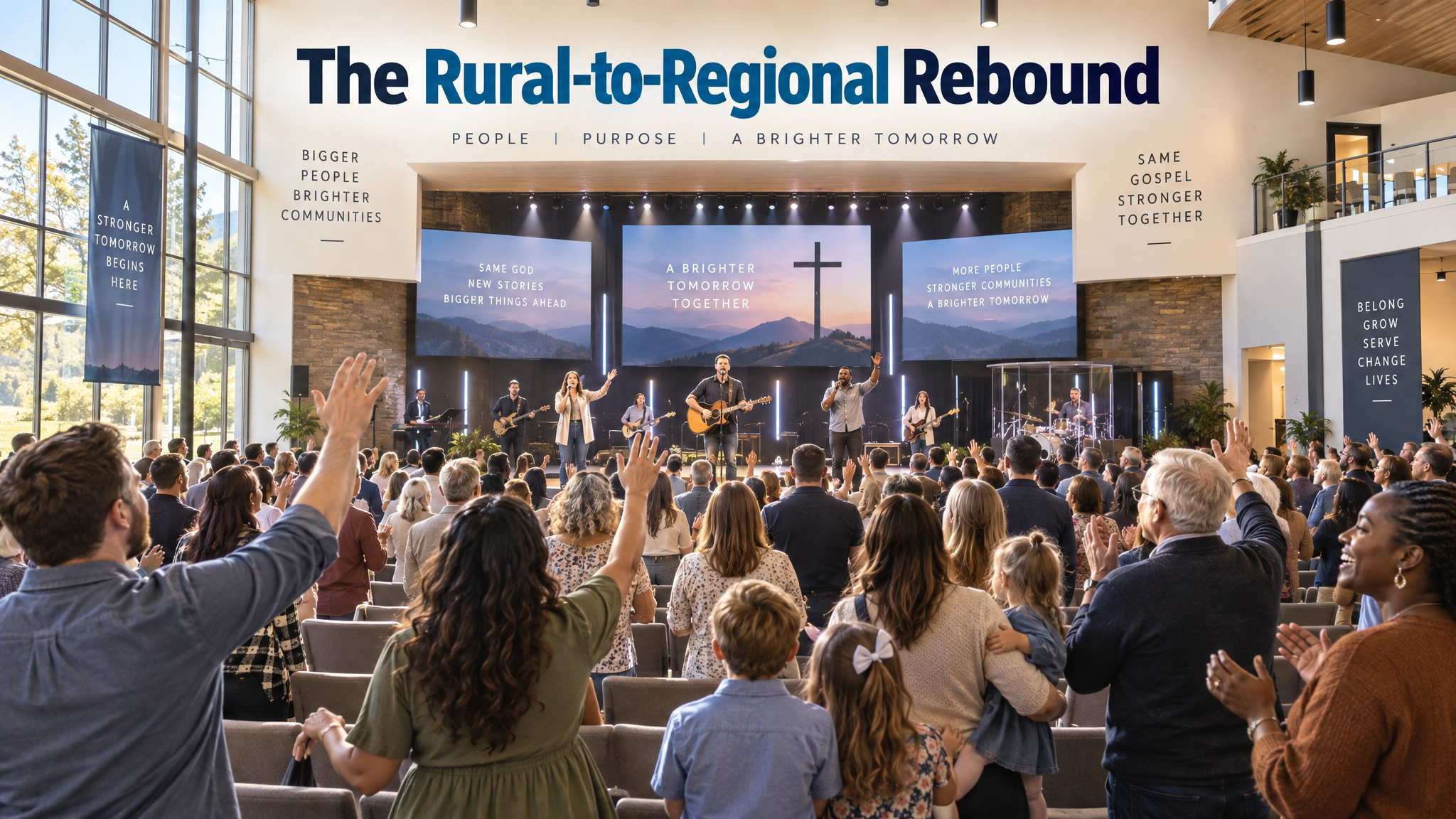
The Rural-to-Regional Rebound: A Case Study on Scaling Sustainable Church Growth Through Digital Integration at Northwood Community Church

Discipleship
The Discipleship Engine: A How-To Guide for Designing Scalable Micro-Group Ecosystems for Sustainable Spiritual Formation
Explore FaithBridge