The Servant Architect: 10 Strategic Frameworks for Scaling Sustainable Pastoral Leadership in the Digital Age

The Servant Architect: 10 Strategic Frameworks for Scaling Sustainable Pastoral Leadership in the Digital Age
In the rapidly evolving landscape of modern ministry, the traditional model of the "heroic" pastor—a single individual carrying the weight of vision, administration, and pastoral care—is increasingly unsustainable. As churches grow and the complexities of the digital age multiply, leaders must transition from being the primary doers to being the primary architects of systems that empower others. This shift is not about relinquishing the "shepherd’s heart" but about scaling it through strategic frameworks that ensure long-term health and impact.
Sustainable pastoral leadership today requires a unique blend of spiritual maturity and operational excellence. It demands a commitment to building pipelines, not just programs, and fostering a culture where leadership is distributed rather than centralized. By adopting the role of a "Servant Architect," pastors can build foundations that withstand the pressures of rapid growth and cultural shifts.
In this guide, we explore ten essential frameworks designed to help pastoral leaders scale their influence sustainably, ensuring that the mission of the church remains vibrant for generations to come.
1. The Distributed Shepherd Framework
The first step in scaling leadership is moving away from the "hub-and-spoke" model, where every decision and care request goes through the lead pastor. The Distributed Shepherd Framework decentralizes pastoral care by empowering lay leaders and associate staff to serve as primary caregivers within their specific spheres of influence.
This framework requires a robust training pipeline where the lead pastor invests heavily in the "shepherding skills" of others. By doing so, the pastor ensures that the congregation receives high-quality care without the bottleneck of a single leader’s schedule. This not only prevents burnout but also fosters a more connected and resilient community.
2. The Multi-Layered Vision Casting Pipeline
Vision is the lifeblood of any organization, but in a growing church, it can easily become diluted. The Multi-Layered Vision Casting Pipeline is a system for ensuring that the core mission and values of the church are communicated consistently across all levels—from the board to the weekend volunteer.
Instead of relying solely on the Sunday morning sermon, this framework utilizes various channels: digital newsletters, leadership huddles, and small group curriculum. By architecting a multi-layered approach, leaders ensure that everyone is aligned and moving in the same direction, regardless of how large the organization becomes.
3. The Digital-First Engagement Strategy
In the digital age, pastoral leadership extends beyond the four walls of the sanctuary. A Digital-First Engagement Strategy recognizes that the first point of contact for most people is online. This framework prioritizes digital communication, social media engagement, and virtual discipleship as core components of the pastoral mandate.
By leveraging technology, leaders can provide consistent encouragement and teaching throughout the week, not just on Sundays. This approach allows for a broader reach and more frequent touchpoints, which are essential for building deep relationships in a fast-paced world.
4. The Relational Rhythms Audit
Sustainability is impossible without intentional rest and reflection. The Relational Rhythms Audit is a framework for regularly assessing a leader’s "soul health." It involves setting non-negotiable boundaries for family time, sabbatical rhythms, and peer mentorship.
Pastors must lead from a place of overflow, not exhaustion. By implementing a formal audit process, leadership teams can hold one another accountable to these rhythms, ensuring that the most valuable asset of the church—its leaders—is protected and nurtured.
5. The Scalable Governance Model
Growth often outpaces governance. The Scalable Governance Model provides a framework for evolving the church’s decision-making structures as it scales. This involves moving from a "consensus-at-all-costs" model to one of "clear authority and high accountability."
By defining roles, responsibilities, and decision-making rights clearly, leaders can move faster and with greater confidence. This framework reduces friction and allows the church to remain agile even as its complexity increases.
6. The Innovation Sandbox
The digital age demands constant adaptation. The Innovation Sandbox is a framework for creating a safe space within the church where new ideas can be tested without the fear of failure. This might involve a seasonal experiment with a new service format, a digital outreach campaign, or a community partnership initiative.
By architecting a culture of experimentation, pastoral leaders can stay ahead of the curve and discover new ways to fulfill their mission. The Sandbox allows for learning and iteration, ensuring that the church doesn't become stuck in "the way we’ve always done it."
7. The Data-Informed Discernment Process
While ministry is always spiritually led, it should also be data-informed. The Data-Informed Discernment Process is a framework for using metrics—such as engagement rates, volunteer retention, and giving trends—to support the intuitive leading of the Holy Spirit.
By integrating data into the decision-making process, leaders can identify blind spots and opportunities that might otherwise be missed. This analytical approach provides an objective foundation for strategic planning and resource allocation.
8. The Mentor-Protégé Multiplier
Succession planning should be a daily rhythm, not an emergency event. The Mentor-Protégé Multiplier is a framework where every leader is expected to be mentoring a potential successor. This ensures a constant flow of fresh leadership and prevents the "leadership vacuum" that often occurs when a key person departs.
By making mentorship a core value, the church builds a deep bench of talent that is prepared to step up whenever needed. This framework scales leadership capability across the entire organization.
9. The Crisis Resilience Protocol
In an unpredictable world, every church needs a framework for navigating crisis. The Crisis Resilience Protocol is a pre-defined set of procedures for handling everything from financial downturns to public scandals or global emergencies.
Having a plan in place allows leaders to respond calmly and decisively when pressure is high. This framework protects the church’s reputation and provides a sense of security for the congregation during turbulent times.
10. The Unified Systems Integration
Finally, sustainable leadership requires that all systems be working in harmony. The Unified Systems Integration framework focuses on ensuring that the church’s technology, finances, and personnel are all aligned and interoperable.
A fragmented organization is an inefficient one. By architecting a unified stack—using tools like FaithBridge—leaders can reduce administrative overhead and free up more time for the actual work of ministry. This integration is the "engine" that powers all other frameworks.
Leading into the Future
Transitioning from a solo leader to a Servant Architect is a journey of humility and strategic intentionality. It requires a willingness to let go of control in order to gain greater influence. By implementing these ten frameworks, pastoral leaders can build a sustainable foundation that empowers their teams and scales their mission for the long haul.
The digital age offers unprecedented opportunities for the church to reach the world. But to seize these opportunities, we need leaders who are as committed to the systems of ministry as they are to the soul of ministry.
Ready to Scale Your Leadership?
Building sustainable systems doesn't have to be a solo endeavor. FaithBridge is designed to help pastoral leaders unify their operations, empower their teams, and scale their impact with ease. From donor management to volunteer coordination, our platform provides the tools you need to become the Servant Architect your church deserves.
[Try FaithBridge Today and Experience the Power of Integrated Ministry]
Frequently Asked Questions
How do I know if my leadership model is unsustainable?
Common signs include high staff turnover, constant personal burnout, a "bottleneck" in decision-making, and a sense that growth has plateaued despite hard work. If the church's health is tied entirely to your personal presence, it’s time to move toward a more scalable model.
Is "data-informed discernment" unspiritual?
Not at all. Stewardship requires us to use all the resources at our disposal, including information. Just as the early church counted their numbers and tracked their collections, modern leaders can use data to better understand the needs and trends of their flock. Data doesn't replace the Holy Spirit; it provides the context in which the Spirit leads us.
How do I start distributing leadership without losing quality?
Start small. Identify one area of responsibility and delegate it to a trusted leader. Provide them with a clear framework, the necessary resources, and the authority to make decisions. Focus on regular "calibration" meetings rather than micromanagement. Quality is maintained through clear standards and ongoing mentorship, not through central control.
Frequently asked questions
How do I know if my leadership model is unsustainable?
Common signs include high staff turnover, constant personal burnout, a 'bottleneck' in decision-making, and a sense that growth has plateaued despite hard work.
Is 'data-informed discernment' unspiritual?
Not at all. Stewardship requires us to use all the resources at our disposal, including information. Data provides context for the Holy Spirit's leading.
How do I start distributing leadership without losing quality?
Start small. Identify one area of responsibility and delegate it to a trusted leader with clear standards and ongoing mentorship.
Related articles

Pastoral Leadership
The Transition Engine: A Case Study on Successful Lead Pastor Succession and Cultural Continuity at Grace Collective
Church Growth
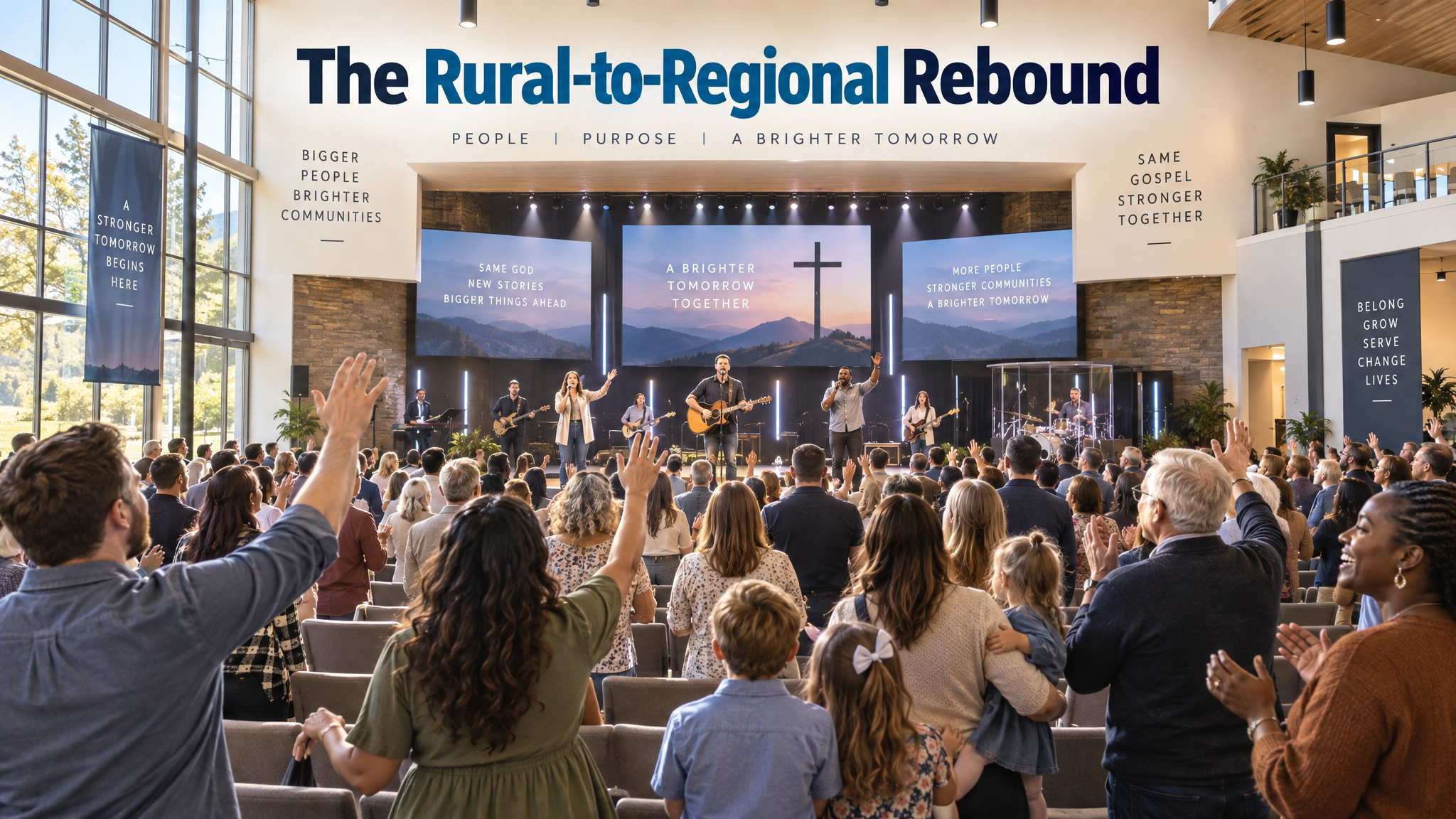
The Rural-to-Regional Rebound: A Case Study on Scaling Sustainable Church Growth Through Digital Integration at Northwood Community Church

Discipleship
The Discipleship Engine: A How-To Guide for Designing Scalable Micro-Group Ecosystems for Sustainable Spiritual Formation
Explore FaithBridge