The Visionary Vanguard: 10 Best Practices for Architecting a Sustainable Culture of Pastoral Innovation and Strategic Change Management

The Visionary Vanguard: 10 Best Practices for Architecting a Sustainable Culture of Pastoral Innovation and Strategic Change Management
In the rapidly evolving landscape of the 21st-century ministry, the only constant is change. For many pastors, the transition from maintaining a stable congregation to leading a scaling, innovative community can feel like navigating a storm without a compass. Yet, the call to reach new people and deepen spiritual impact often requires a fundamental shift in how we approach leadership. It requires becoming a "Visionary Vanguard"—a leader who not only sees the future but also architects the culture necessary to inhabit it.
Strategic change management is not merely a corporate buzzword; it is a biblical imperative for stewards of the Gospel who wish to remain effective in a shifting culture. When we look at the life of Nehemiah or the strategic shifts of the early church in Acts, we see leaders who were willing to innovate, adapt, and reorganize for the sake of the mission.
Here are 10 strategic best practices for architecting a sustainable culture of pastoral innovation and managing change with excellence.
1. Ground Innovation in Immutable Truth
The first step in any church innovation is to distinguish between the message and the method. A culture of innovation thrives when the "why" is anchored in the unchanging Word of God, while the "how" remains flexible. Before introducing change, clearly articulate how the proposed innovation serves the core mission of the Great Commission. When the congregation understands that the mission is the priority, they are more likely to embrace shifts in ministry models.
2. Cultivate a "Fail-Forward" Environment
Innovation requires risk, and risk inevitably leads to occasional setbacks. A Visionary Vanguard creates a culture where experimentation is celebrated rather than feared. When a new initiative doesn't yield the expected results, use it as a learning opportunity rather than a reason for reprimand. By de-stigmatizing failure, you empower your staff and volunteers to bring creative solutions to the table, knowing that their value isn't tied to the immediate success of every experiment.
3. Prioritize Relational Capital Over Positional Power
Change moves at the speed of trust. Leaders who rely solely on their title to push through changes often encounter "passive-aggressive" resistance. Instead, invest heavily in relational capital. Listen to the concerns of your long-term leaders, seek input from diverse generations, and build a "coalition of the willing" before making major announcements. When people feel heard and valued, they are more likely to follow you into the unknown.
4. Implement the "70/20/10" Rule for Ministry Resources
Sustainability in innovation requires a balanced approach to resource allocation (time, talent, and treasure).
- 70% should be dedicated to core ministry functions that are currently working well.
- 20% should be invested in improving and scaling existing successful models.
- 10% should be reserved for high-risk, high-reward "blue ocean" innovations. This framework ensures that you aren't "betting the farm" on a single idea, but rather building a diversified portfolio of ministry impact.
5. Master the Art of the "Pilot Program"
One of the most effective ways to manage change is to start small. Instead of a church-wide overhaul, launch a pilot program within a specific department or small group. Use this "beta test" to gather data, refine the process, and generate "quick wins." Success in a small, controlled environment builds the confidence and proof-of-concept needed to scale the innovation to the entire congregation.
6. Communication: Over-Communicate the "Why"
In the absence of information, people fill the void with fear. As you lead through change, remember the rule of seven: people need to hear a message seven times in seven different ways before it truly sinks in. Use every channel available—sermons, emails, social media, and town halls—to explain the vision. Focus 80% of your communication on the why (the problem being solved) and 20% on the how (the technical details).
7. Identify and Empower "Early Adopters"
In every congregation, there is a segment of people who naturally gravitate toward the new. These are your "Early Adopters." Identify them, resource them, and give them a platform to share their success stories. Their enthusiasm acts as a bridge for the "Early Majority" who are waiting to see if the new direction is viable.
8. Build a Data-Informed Feedback Loop
Innovation shouldn't be based on intuition alone. Establish clear metrics for success—what FaithBridge calls "Ministry Intelligence." Whether it’s tracking engagement in a new digital discipleship track or monitoring the growth of a local outreach initiative, data provides an objective lens to evaluate your innovations. Regularly review these metrics with your leadership team to make informed adjustments.
9. Practice "Pruning for Growth"
Every new innovation requires "stopping" something else to create capacity. You cannot keep adding new programs to an already overextended staff and volunteer base. A Visionary Vanguard is willing to prune "legacy" programs that have lost their effectiveness to make room for new growth. This is often the most difficult part of change management, but it is essential for the long-term health of the organization.
10. Invest in Your Own Strategic Oversight
You cannot lead others where you haven't gone yourself. As a pastor, your primary role in a scaling church shifts from "Doing" to "Designing." Invest time in your own leadership development, seek out mentors who have led through similar transitions, and use tools like FaithBridge to automate administrative tasks so you can focus on high-level strategic oversight.
Conclusion: The Path Forward
Leading a church through innovation is not about being the smartest person in the room; it’s about being the most courageous steward of the vision. By architecting a culture that values truth, trust, and strategic experimentation, you position your church to thrive regardless of what the future holds.
Ready to Scale Your Ministry Impact? Managing the complexity of a growing church requires more than just good intentions—it requires the right tools. FaithBridge is designed specifically for visionary leaders who want to move from administrative overwhelm to strategic clarity. From unified data pipelines to automated engagement systems, FaithBridge provides the infrastructure you need to sustain the innovation God has called you to lead.
Try FaithBridge today and start architecting your church's future.
Frequently Asked Questions
Q: How do we handle resistance from long-term members? A: Resistance is often rooted in a fear of losing something valuable. Address this by honoring the past while explaining how the change protects the church's future mission. Involve them in the process early and look for ways they can contribute their wisdom to the new initiatives.
Q: What if our innovation fails? A: Failure is simply feedback. If a pilot fails, analyze why, learn the lesson, and pivot. A culture that "fails forward" is much more resilient than one that stays stagnant out of fear.
Q: How do we balance innovation with spiritual health? A: Innovation should never come at the expense of your soul. Ensure that yours and your team's rhythms of rest and spiritual formation are prioritized. A healthy leader is the prerequisite for a healthy, innovative church.
Q: Where is the best place to start with change? A: Start with the areas of greatest friction. Where is your team struggling the most? Use that pain point as a catalyst for seeking a more innovative, efficient solution.
Frequently asked questions
How do we handle resistance from long-term members?
Resistance is often rooted in a fear of losing something valuable. Address this by honoring the past while explaining how the change protects the church's future mission.
What if our innovation fails?
Failure is simply feedback. If a pilot fails, analyze why, learn the lesson, and pivot. A culture that 'fails forward' is much more resilient than one that stays stagnant out of fear.
How do we balance innovation with spiritual health?
Innovation should never come at the expense of your soul. Ensure that yours and your team's rhythms of rest and spiritual formation are prioritized. A healthy leader is the prerequisite for a healthy, innovative church.
Related articles

Pastoral Leadership
The Transition Engine: A Case Study on Successful Lead Pastor Succession and Cultural Continuity at Grace Collective
Church Growth
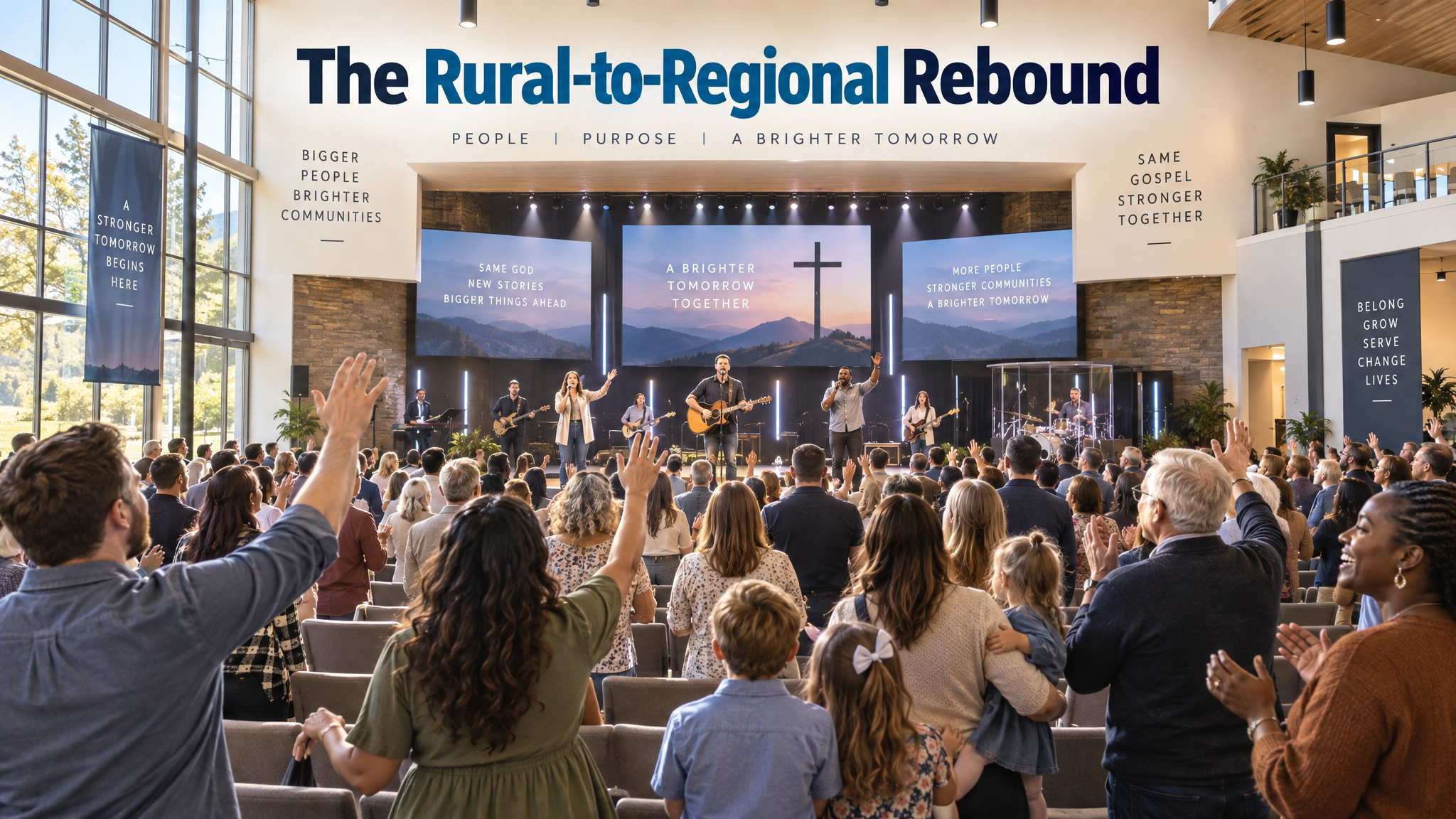
The Rural-to-Regional Rebound: A Case Study on Scaling Sustainable Church Growth Through Digital Integration at Northwood Community Church

Discipleship
The Discipleship Engine: A How-To Guide for Designing Scalable Micro-Group Ecosystems for Sustainable Spiritual Formation
Explore FaithBridge