Transactional Tasks vs. Relational Tracks: A Strategic Comparison for Scaling Sustainable Volunteer Engagement in the Modern Church

Transactional Tasks vs. Relational Tracks: A Strategic Comparison for Scaling Sustainable Volunteer Engagement in the Modern Church
Introduction: The Scalability Trap
In the landscape of modern ministry, the heartbeat of every flourishing church is its volunteer force. However, as churches scale from a single congregation into multi-site operations or large-scale community hubs, the traditional methods of "filling slots" often lead to a crisis of sustainability. Many leaders find themselves trapped in what we call the "Scalability Trap"—the faster the church grows, the more desperate the recruitment becomes, resulting in a culture of constant "volunteer burnout."
The root cause often lies in a fundamental strategic choice that leaders make, often unconsciously: are you building a system based on Transactional Tasks or one based on Relational Tracks? This isn't just about terminology; it's about the architectural foundation of your ministry. One model viewing growth as a labor problem to be solved with efficiency, while the other views growth as a community opportunity to be realized through discipleship.
This article provides a comprehensive deep-dive comparison between these two paradigms. We will explore how the shift from a task-oriented mindset to a relational track framework is not just a cultural preference, but a strategic necessity for any church looking to scale sustainable impact in the 21st century.
Understanding the Transactional Tasks Model
The Transactional Tasks model is the default setting for many growing churches. It is a linear, needs-based approach built on the immediate requirement for labor. In this world, the ministry is a machine, and the volunteers are the fuel.
The Mechanics of Transactions
In this model, the interaction between the church and the volunteer is primarily utilitarian. The church offers a "job description" or a "schedule vacancy," and the volunteer offers their "time" and "effort." The metrics of success are binary and purely operational: "Is the role filled, or is it not?"
Communication in this model is almost exclusively one-way—from the staff to the volunteer—focusing on logistics, schedules, and urgent needs. You see this in the frantic Sunday morning emails, the desperate pulpit announcements for "just three more people for the parking team," and the automated reminders that feel like a cold corporate memo. While this approach can keep the "trains running on time" in the short term, it creates a culture where volunteers feel like cogs in a machine rather than partners in a mission.
The Hidden Costs of Efficiency
Transactional systems are often praised for their efficiency, but they carry significant hidden costs that eventually bankrup a ministry's culture. Because the primary value is the task performed, the spiritual formation and personal growth of the volunteer are secondary. This leads to "deployment fatigue." High-capacity individuals—the very people you need to scale—eventually distance themselves because the relationship feels one-sided and draining.
Furthermore, a transactional culture is highly susceptible to "churn." When the only thing keeping a person in a role is their sense of duty to a task, they will leave as soon as their life becomes busy or the task becomes repetitive. This requires a constant, exhausting influx of new recruits simply to maintain the status quo, effectively capping the church's growth at the limit of the staff's recruitment energy.
The Paradigm Shift: Relational Tracks
Conversely, the Relational Tracks model views volunteering as a pathway for discipleship and community integration. Instead of asking "How can we fill this slot?", the question becomes "How can this person grow through this service?" It is an "inside-out" approach that starts with the individual and moves toward the mission.
Defining the "Track"
A "track" is a pre-designed journey that accounts for a volunteer’s spiritual gifts, personal calling, and social needs. It moves away from isolated tasks toward an integrated experience where service is the vehicle for belonging. In this model, every volunteer is placed within a leadership structure that prioritizes their wellbeing over their output. They aren't just "working in a nursery"; they are part of a "Family Ministry Team" with a lead who knows their children's names, their career struggles, and their spiritual dreams.
Relationship as the Retention Engine
The strength of the Relational Tracks model lies in its ability to foster deep community. When a volunteer feels that their team is their primary "small group" or "life group," their commitment to the ministry becomes an extension of their commitment to the people. This relational glue is what allows a church to scale without losing its soul. It shifts the internal motivation of the volunteer from "duty" to "delight," and from "doing" to "becoming."
Side-by-Side Comparison: Strategic Differences
1. Recruitment Focus: Vacancy vs. Vocation
In a transactional model, recruitment is an emergency. It's about the Vacancy. The messaging is characterized by urgency, guilt, and the "need" of the church. "We can't open the toddler room unless someone steps up."
In a Relational Track, recruitment is a calling. It's about the Vocation. The messaging is focused on opportunity, gifting, and the "spiritual contribution" of the individual. "We believe God has gifted you with leadership, and we want to help you steward that gift by leading a small group." This shift changes the "ask" from a burden to a blessing.
2. Leadership Structure: Management vs. Multiplied Coaching
Transactional systems rely on top-down management. Staff members act as direct supervisors who assign tasks. This structure is inherently unscalable because it creates a staff bottleneck. One staff member can only manage so many people before they hit their capacity.
Relational Tracks utilize a scalable leadership pipeline. The system is designed to "build leaders who build teams." Staff members transition from being "doers" to being "coaches" for volunteer coordinators, who in turn care for volunteer team leads, who then care for the front-line volunteers. This decentralized model allows care and coordination to scale exponentially.
3. Onboarding: Orientation vs. Integration
In the transactional world, onboarding is a brief orientation focused on "how to do the job." The goal is speed: get them in the vest and on the floor as fast as possible to solve the immediate gap.
In the Relational Track world, onboarding is a journey involving discovery, shadowing, and mentorship. It includes a "fit assessment" to ensure the role matches the person's passion. The focus is on finding the "right fit" for the individual’s long-term health, even if it take longer to fill the role. This "slow on, stay long" approach dramatically reduces turnover.
4. Recognition: Automation vs. Honor
Transactional models treat recognition as a checklist item. Thank-you notes are automated or sporadic. Feedback is generally negative—only given when something goes wrong or a shift is missed.
Relational Tracks foster a "Culture of Honor." Recognition is consistent, personal, and focused on impact rather than just effort. Feedback is part of a continuous loop of growth and empowerment, intended to help the volunteer become a more effective leader.
The Case Study: The "Sunday Morning Shutdown"
To illustrate the difference, imagine a scenario where three key volunteers on the production team call in sick on a Sunday morning.
In the Transactional Model: The Production Pastor panics. They spend two hours texting every name on their list, offering coffee or guilt trips to get someone to come in. They eventually fill the spots with people who don't want to be there and haven't been trained for those specific tasks. The service happens, but the atmosphere is stressed, the volunteers feel used, and the Pastor is one step closer to quitting.
In the Relational Track Model: The Production Pastor calls the three Team Leads responsible for those tracks. The Team Leads, who have been empowered and have deep relationships with their sub-teams, have already handled the situation. They reached out to their own "back-up" lists or adjusted their internal team flow because they have the autonomy to do so. The Pastor spends the morning encouraging the teams and praying with the leads. The service happens smoothly, the volunteers feel supported, and the system proved its resilience.
Scaling the Relational Track Framework
Scaling a relational model requires intentional systems. You cannot simply "do more" of the same thing; you must architect a system that multiplies care at every level.
Layered Oversight and the Rule of Five
A key strategic shift for scaling is the "Rule of Five." Every leader should focus their relational energy on no more than five people. A Lead Pastor coaches five Executive Pastors. An Executive Pastor coaches five Ministry Directors. A Director coaches five Volunteer Coordinators. A Coordinator coaches five Team Leads. A Team Lead cares for five Volunteers. This structure ensures that every single person in the organization—down to the newest volunteer—is "seen" and "known" by someone, even as the church reaches thousands.
Leveraging Data for Relational Health
Modern church technology should serve the relational goal, not the transactional one. One of the biggest mistakes growing churches make is using their database as a "labor roster." Instead, use a platform like FaithBridge to track "Engagement Health."
For example, your system shouldn't just tell you who worked on Sunday. It should flag if a volunteer has served three weeks in a row without their team lead checking in. It should alert a Coordinator if a Team Lead’s "care score" (based on personal interactions) is dropping. Data is the "check engine light" for your relational tracks, allowing for proactive care before burnout happens.
Designing Clear Pathways
Sustainability comes from clarity. A "Leadership Pipeline" gives volunteers a clear vision for their future. When a volunteer sees a path from "Front-line" to "Leader" to "Coach," they are no longer just filling a slot; they are on a career-track for spiritual leadership. This vision provides the motivation to push through difficult seasons and fosters long-term commitment.
Overcoming the Transition Friction
Moving from a transactional culture to a relational one is not easy. It requires a "deceleration to accelerate." You may have to leave some roles unfilled while you build the leadership tracks to support them. You will have to redirect staff energy from "managing tasks" to "mentoring people."
Practical Steps for the Shift:
- Audit Your Messaging: Remove urgent, guilt-based language from your stage announcements and emails.
- Invest in the Middle: Spend the next 90 days identifying and training "Mid-level" volunteer leaders (Coordinators) who will own the relational care of teams.
- Redesign Onboarding: Stop the "instant placement" fire-drill. Implement a three-step integration process: Discovery, Shadowing, and Commissioning.
- Implement Relational Tech: Move to a platform that prioritizes volunteer journeys over simple scheduling.
Conclusion: Designing for the Future
The choice between Transactional Tasks and Relational Tracks determines the ultimate ceiling for your church’s growth. A transactional system is limited by human effort and will eventually hit a wall where the cost of recruitment exceeds the capacity of the staff. However, a relational track system creates a self-sustaining ecosystem of empowerment, community, and multiplication.
By prioritizing the individual over the task and the relationship over the roster, church leaders can build a volunteer culture that is not only scalable but life-giving. The goal of ministry is not just to get things done, but to build up the Body of Christ. When we shift our focus to Relational Tracks, we ensure that our volunteers are growing while they are serving, creating a foundation for lasting, exponential impact.
Ready to Scale Your Volunteer Engagement?
Building a scalable, relational culture requires more than just good intentions—it requires the right infrastructure. FaithBridge is designed to help you move beyond spreadsheets and transactional management. With our integrated systems for leadership pipelines, automated volunteer health tracking, and seamless relational communication, you can architect a ministry that scales without losing its heart.
[Try FaithBridge Today] and discover how to transform your volunteer journey from a series of tasks into a thriving track of growth, impact, and spiritual maturity.
Frequently asked questions
What is the main difference between transactional and relational volunteering?
Transactional volunteering focuses on filling immediate labor gaps (tasks), while relational volunteering focuses on the spiritual growth and community integration of the individual (tracks).
How do relational tracks help prevent volunteer burnout?
Relational tracks place volunteers in a supportive community with layered leadership, ensuring they are 'known' and 'cared for' rather than just managed as cogs in a machine.
Can a small church implement a relational track model?
Yes, it is actually easier for small churches to start this way. By building the leadership pipeline early, the foundation is set to scale properly as the congregation grows.
How does technology support relational ministry?
Modern platforms like FaithBridge can track 'engagement health' and flag when a volunteer hasn't had a relational touchpoint, allowing leaders to be proactive rather than reactive.
Related articles

Volunteer Engagement
Application-Based vs. Invitation-Only: A Strategic Comparison of Volunteer Recruitment Models for High-Growth Churches

Volunteer Engagement
The Volunteer Velocity Framework: 8 Best Practices for Scaling High-Impact Service Teams in a Digital-First Ministry
Church Growth
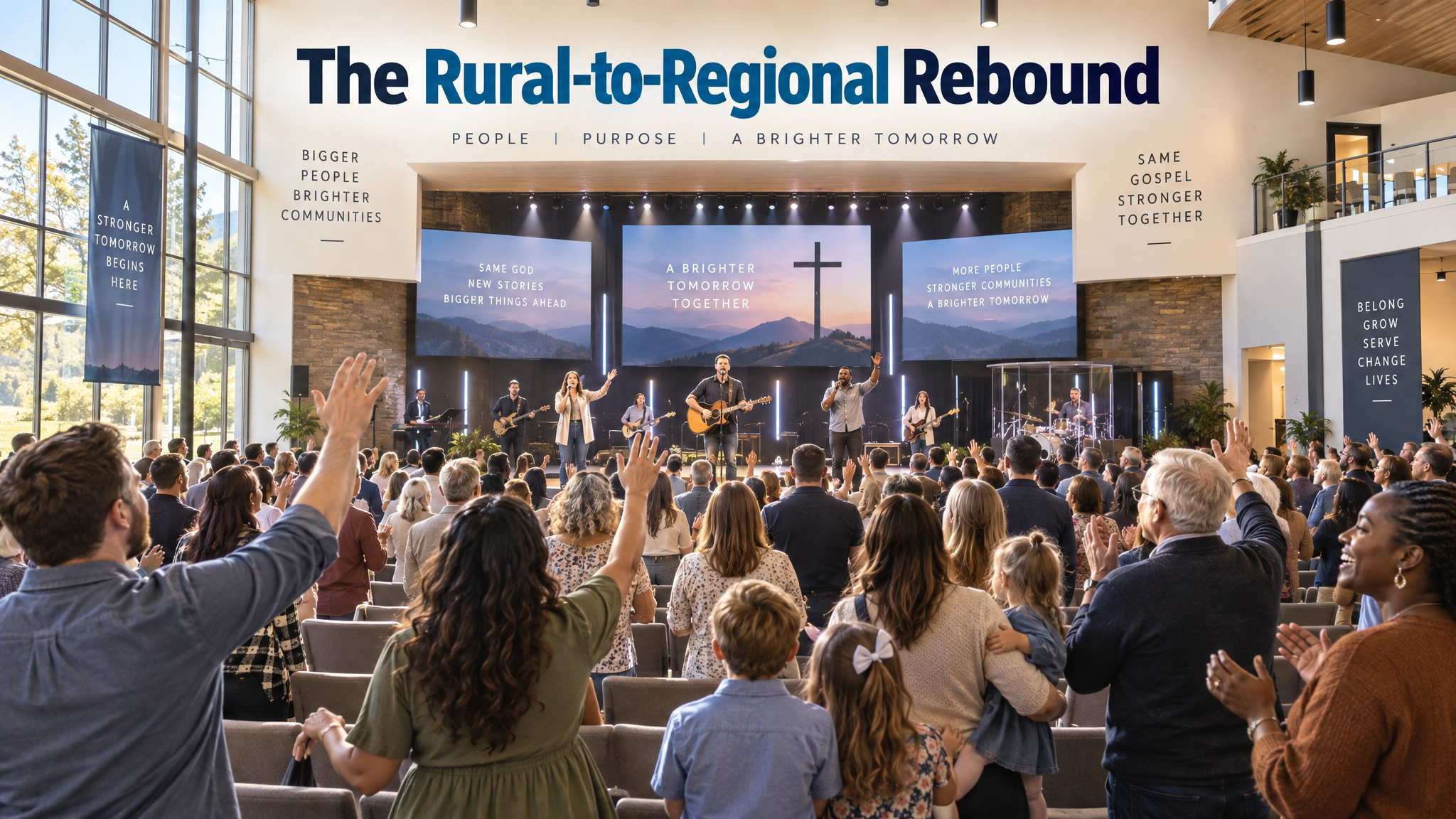
The Rural-to-Regional Rebound: A Case Study on Scaling Sustainable Church Growth Through Digital Integration at Northwood Community Church
Explore FaithBridge