Beyond the Soup Kitchen: A Deep-Dive into Architecting Long-Term, Resource-Based Community Empowerment Pipelines
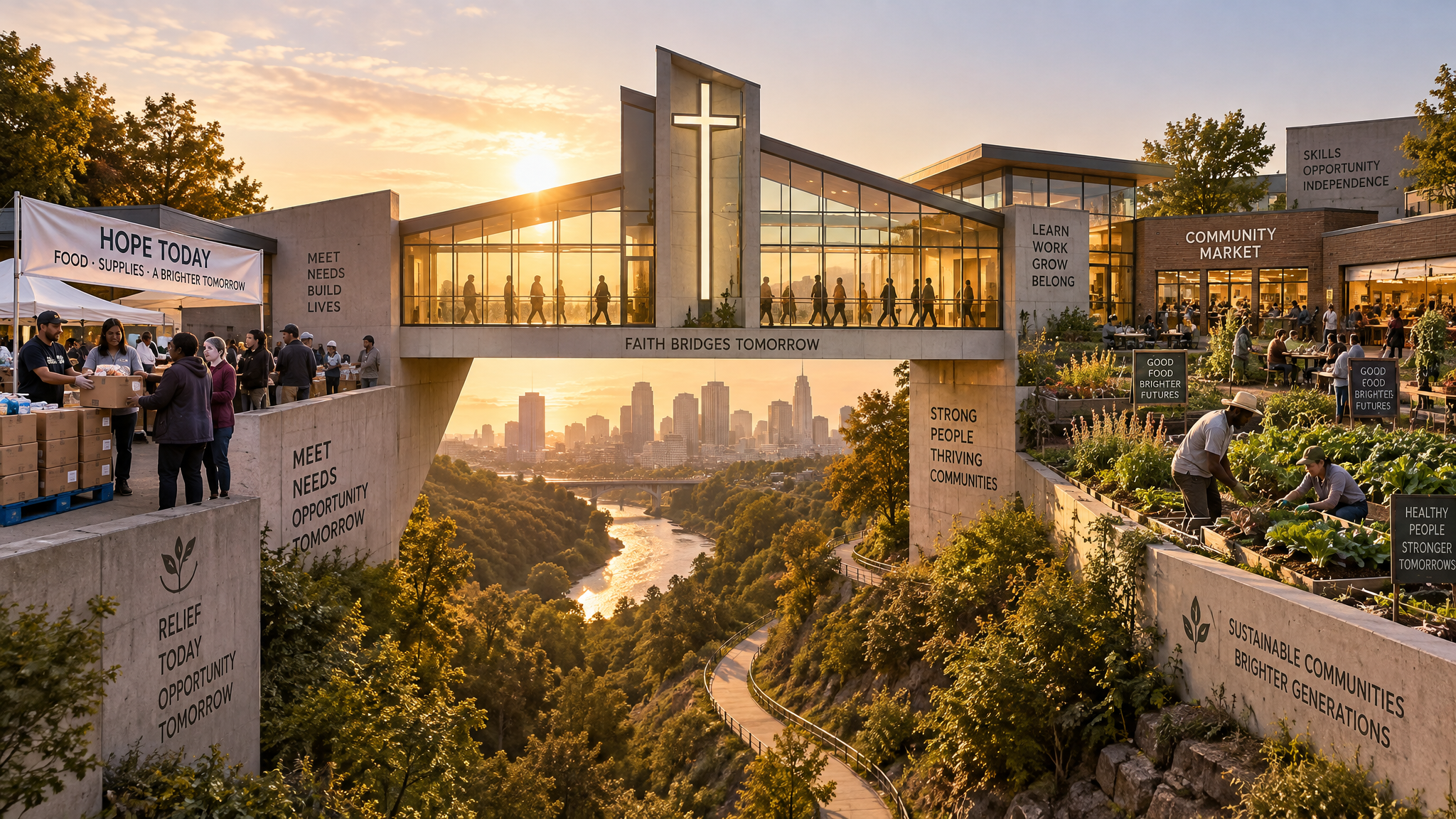
Beyond the Soup Kitchen: A Deep-Dive into Architecting Long-Term, Resource-Based Community Empowerment Pipelines
Introduction: The Shift from Relief to Development
For decades, the standard model for church community outreach has been built on the foundation of immediate relief. Soup kitchens, clothing drives, and seasonal gift giveaways have served as the "front door" of ministry, providing essential support to those in crisis. However, as the complexities of urban and suburban poverty continue to evolve, many church leaders are discovering a hard truth: while relief is necessary for survival, it is insufficient for transformation.
The modern church mandate is shifting from merely "helping" to actively "empowering." This transition requires a move away from transactional charity—give a man a fish—toward architecting sustainable, resource-based community empowerment pipelines—helping the community build the pond. For a scaling church, this shift isn't just a theological preference; it is an operational necessity. To achieve lasting local impact, outreach must be designed with the same systemic precision as any other core ministry function.
This deep-dive explores the architectural pillars of sustainable community outreach, focusing on how resource-based models can be scaled to create generational change without exhausting the church’s leadership or financial reserves.
The Problem with the Relief-Only Cycle
Relief is, by definition, temporary. It addresses a specific, time-sensitive emergency—hunger, cold, or sudden loss. In the context of church ministry, relief events are high-visibility and often provide a sense of immediate gratification for volunteers. However, when relief becomes the primary mode of engagement, several systemic failures occur:
- Dependencies vs. Dignity: Constant relief without a pathway to self-sufficiency can inadvertently create a culture of dependency. True empowerment respects the dignity of the recipient by offering them a role in their own transformation.
- Resource Volatility: Relief programs are often dependent on seasonal spikes in giving and volunteering. This leads to a "feast or famine" cycle for the programs, making it impossible to plan for long-term community impact.
- Lack of Measurable Transformation: While you can count the number of meals served, it is much harder to track how a soup kitchen leads to long-term economic stability or spiritual growth in the neighborhood.
To break this cycle, the church must build a "Proximity Pipeline"—a system that moves individuals from the crisis of relief into the stability of resource-based development.
Pillar 1: Asset-Based Community Development (ABCD)
The first step in architecting a sustainable empowerment pipeline is changing the lens through which we view the community. Traditional outreach focus on the needs and deficiencies of a neighborhood (the "needs-map"). Sustainable outreach focuses on the assets and capacities already present (the "asset-map").
Identifying Local Resources
Every community, regardless of its economic status, has assets. These include:
- Individual Assets: The skills, talents, and experiences of the residents (e.g., a grandmother who knows how to garden, a young man with tech skills).
- Institutional Assets: Local schools, libraries, small businesses, and other non-profits.
- Physical Assets: Vacant lots, community centers, and the church building itself.
The Role of the Church as a Connector
In an ABCD framework, the church acts as a "community quarterback." Instead of bringing in outside "experts" to solve problems, the church facilitates connections between local assets. For example, rather than simply giving out food, a church might host a community garden where local residents share knowledge and labor, building both food security and relational equity.
Pillar 2: The Multi-Stage Empowerment Pipeline
Transitioning to a resource-based model requires a structured journey for community members. This is not a single event, but a series of integrated stages designed to move people toward holistic health.
Stage 1: Dignity-First Relief
Relief is still the starting point. But in an empowerment model, relief is delivered in a way that preserves dignity. For a church, this might mean moving from a "handout" pantry to a "Choice Pantry" model, where families shop for their own items, or hosting a "Christmas Store" where parents can purchase discounted toys rather than receiving them as charity.
Stage 2: Capability Building
Once the immediate crisis is stabilized, the movement shifts to skill-building. This stage is focused on education and resource access. Examples include:
- Financial Literacy Workshops: Empowering families to manage debt and build savings.
- Job Skills Training: Partnering with local businesses to provide vocational training and placement.
- Mental Health Resources: Providing access to sustainable counseling and support groups.
Stage 3: Community Enterprise
The final stage of the pipeline is systemic change. This involves building local economic engines. Some churches have successfully launched social enterprises—businesses operated by the church or its members that employ local residents and reinvest profits back into the community. This creates a sustainable cycle of wealth and opportunity that outlives any individual ministry budget.
Pillar 3: Data-Informed Stewardship and Scaling
For a growing church, the ability to scale outreach is directly tied to the ability to manage data. Without structured systems, outreach becomes a collection of disconnected efforts that compete for the same resources.
Tracking Impact Beyond Numbers
To architect a scalable system, the church must use a Unified Data Ecosystem. This means tracking:
- Relational Depth: Are we seeing the same people at every event, or are they progressing through the stages of the pipeline?
- Outcome Tracking: Are family incomes rising? Is local school attendance improving? Are more residents engaging in the life of the church?
- Volunteer Sustainability: Are our volunteers being utilized effectively, or are they experiencing burnout from high-intensity, low-impact events?
Pillar 4: Overcoming Structural Obstacles to Scaling
Even with a perfect architectural blueprint, many churches hit structural barriers when moving from local relief to systemic empowerment. Scaling impact requires navigating complex legal, financial, and organizational hurdles.
Financial Sustainability and Funding Diversification
Long-term empowerment pipelines require more consistent capital than seasonal fundraisers. Successful churches lean into "Generosity Innovation," which includes:
- Social Enterprise Revenue: Creating business models that fund the ministry.
- Grant Partnerships: Aligning with city or private foundations that focus on economic development.
- Donor Restricted Funds: Allowing congregants to invest specifically in the long-term infrastructure of outreach.
Navigating Regulatory Complexity
As outreach becomes more resource-based (e.g., job training, housing assistance), it often enters the realm of government regulation. Architecting a scalable system means having the right administrative backbone to handle compliance, insurance, and local zoning requirements. Without this "Administrative Anchor," even the most visionary outreach can be derailed by bureaucratic friction.
Modular Outreach Models
Scaling outreach across multiple sites or neighborhoods requires a modular approach. Instead of a "one-size-fits-all" program, the church creates "Impact Modules"—tested, resource-based frameworks (like a job training kit or a community garden blueprint) that can be adapted to the specific assets of a new local context. These modules provide the "guardrails" for the ministry, ensuring consistency in values and methods while allowing for the necessary "localization" that makes empowerment authentic.
Conclusion: Bridging the Gap
The journey from "Beyond the Soup Kitchen" to a robust empowerment pipeline is not an overnight transformation. It requires a fundamental shift in mindset—from seeing the community as a "mission field" to be served, to seeing it as a "mission partner" to be empowered.
Architecting these pipelines is a commitment to the long-term health of our cities. It is a declaration that the church isn't just a place where people go to get help, but a hub where people go to find hope and the resources to build a better future. By building sustainable, resource-based systems, we ensure that our light doesn't just flicker during the holidays, but burns steady and bright, transforming our communities for years to come.
Call to Action: Start Architecting Your Impact
Building a sustainable outreach ecosystem doesn't have to be overwhelming. At FaithBridge, we provide the administrative and operational tools you need to transition from transactional charity to relational transformation. From data integration to volunteer management, our platform is designed to help your church scale its impact without losing its heart.
Frequently asked questions
What is the difference between relief and empowerment in outreach?
Relief addresses immediate, time-sensitive crises like hunger or cold, whereas empowerment builds long-term capabilities and systems like job skills or financial literacy to help individuals achieve self-sufficiency.
What is Asset-Based Community Development (ABCD)?
ABCD is a methodology that focuses on identifying and leveraging the existing strengths, skills, and resources within a community rather than focusing solely on its needs and deficiencies.
How can a scaling church manage multiple outreach sites?
Scaling churches can use modular outreach models—standardized blueprints for specific programs that can be localized and adapted to the assets of different neighborhoods while maintaining consistent core values.
Why is data important for community outreach?
Data allows churches to track outcomes beyond simple attendance, such as relational depth, economic progress, and volunteer sustainability, ensuring that resources are being used effectively for long-term impact.
Related articles
Community Outreach
Beyond the Breadline: 12 Best Practices for Architecting Sustainable Community Empowerment Ecosystems in High-Growth Churches
Community Outreach
Event-Based Outreach vs. Presence-Based Incarnation: A Strategic Comparison for Scaling Sustainable Neighborhood Transformation

Church Growth
The Rural-to-Regional Rebound: A Case Study on Scaling Sustainable Church Growth Through Digital Integration at Northwood Community Church
Explore FaithBridge