Event-Based Outreach vs. Presence-Based Incarnation: A Strategic Comparison for Scaling Sustainable Neighborhood Transformation
Event-Based Outreach vs. Presence-Based Incarnation: A Strategic Comparison for Scaling Sustainable Neighborhood Transformation
Neighborhood transformation is the goal of many church outreach programs. However, the methodology used can vary significantly between "Event-Based Outreach" and "Presence-Based Incarnation." This article compares these two frameworks, analyzing their effectiveness, scalability, and long-term impact on community flourishing.
The Outreach Spectrum: From Moments to Movements
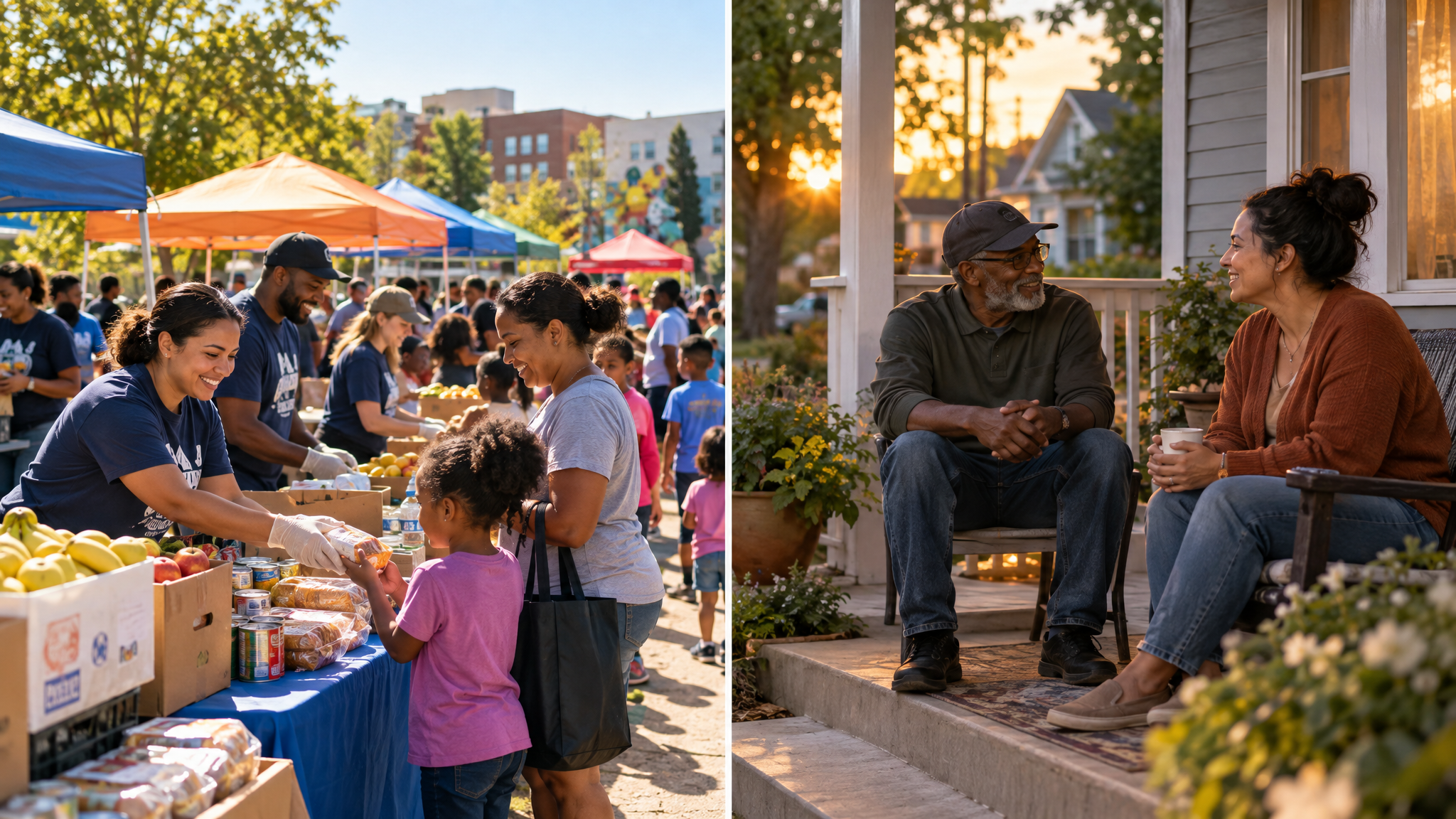
For decades, the "outreach event" has been the primary vehicle for church engagement with the local community. These high-energy, well-organized moments—be it a back-to-school fair, a Thanksgiving food drive, or a summer sports camp—are designed to bridge the gap between the church building and the neighborhood. They create immediate visibility and provide tangible services to those in need. In a culture of consumerism, events provide a product that is easily understood by both the provider and the recipient. They offer a clear beginning, middle, and end, making them highly compatible with the project-management structures of many modern church staffs.
On the other end of the spectrum lies "Presence-Based Incarnation." This model emphasizes long-term residency, deep relational integration, and the slow work of building trust within a specific geographic area. Inspired by the incarnational ministry of Jesus, this approach seeks to "move into the neighborhood," as Eugene Peterson famously paraphrased John 1:14. This is not about a "visit" to a community in need; it is about becoming a neighbor among neighbors. It involves shifting the identity of the church from a service provider to a co-inhabitant of the community's struggles and joys.
While both models aim to serve, they operate on different rhythms and have distinct architectural requirements for church systems. Understanding the trade-offs is essential for any church leadership team looking to scale their community impact sustainably. A failure to distinguish between these methods often leads to "outreach drift," where the church spends significant capital on events while the actual health of the surrounding neighborhood continues to decline.
Event-Based Outreach: The Engine of Immediate Impact
Event-based outreach is characterized by its "pulsed" nature. It concentrates resources, volunteers, and marketing into a single point in time to solve a specific problem or create a specific opportunity. This concentration of energy is powerful, but it requires a sophisticated logistical engine to execute without overwhelming the staff.
The Advantages of the Event Model
- Low Barrier to Entry for Volunteers: Events are often the easiest way for "low-capacity" volunteers to get involved. A four-hour shift at a health fair is a manageable commitment for busy congregants who may not yet be ready for the long-term relational commitment of incarnational ministry. This serves as a vital "on-ramp" for discipleship, moving members from passive spectators to active participants in the mission of the church.
- High Initial Visibility: An event creates a "splash." It signals to the neighborhood that the church exists and cares. This is particularly effective for new church plants or churches looking to re-introduce themselves to a changing demographic. In an era of digital noise, a physical, high-quality event can be a powerful "analog" signal of love and presence.
- Quantifiable Metrics: It is easy to count how many backpacks were given away, how many people attended, and how many signed up for follow-up. These numbers provide immediate feedback to donors and leadership, helping to build momentum and secure future funding. In the data-driven world of modern church management, these "hard metrics" are often the primary way success is defined.
The Strategic Limitations
The primary risk of the event-based model is "service dependency" without "systemic change." When outreach is purely episodic, it can address symptoms while leaving the underlying causes of community distress untouched. For example, a monthly food pantry is a vital lifeline, but it does not address the lack of living-wage jobs or the prevalence of "food deserts" in the area. Furthermore, the "event fatigue" that often plagues church staff can lead to a cycle of burnout that makes the outreach unsustainable over decades. When the church is always in "production mode," the relational heart of the ministry can often be sidelined by the logistical demands of the next big event.
Presence-Based Incarnation: The Architecture of Sustainable Change
Presence-based incarnation shifts the focus from "doing for" the community to "being with" the community. It is a commitment to the long-haul, often requiring staff or members to intentionally relocate their lives into the communities they serve. This is a move toward "proximity," which is the necessary prerequisite for empathy and justice.
The Advantages of the Incarnational Model
- Deep Relational Trust: Transformation moves at the speed of trust. By being present when there isn't an event scheduled, church members build the kind of authentic relationships that allow for deep discipleship and mutual aid. It is in the "in-between" moments—the shared meals, the conversations over the fence, the mutual help with a broken car—that the real work of the Gospel takes root.
- Asset-Based Community Development (ABCD): Living in the neighborhood allows the church to identify the existing assets within the community—talented neighbors, local businesses, school teachers—and partner with them rather than imposing a "savior" solution from the outside. This approach honors the dignity of the neighbor, recognizing that God is already at work in the community before the church even arrives.
- Sustainability Through Integration: When ministry is part of the rhythm of daily life—shopping at the local market, attending the PTA, walking the dog in the park—it becomes more sustainable than a series of exhausting mega-events. It moves from being a "program" to being a "posture." This integrated life is more resilient to staff turnover and budget fluctuations, as it is carried by the local congregants themselves.
The Strategic Hurdles
The incarnational model is significantly harder to scale using traditional church growth methods. It requires a high level of sacrifice from participants—often involving changes in housing, schooling, and lifestyle. Furthermore, it does not yield the easy-to-report metrics that traditional donors and boards often seek. How do you measure the "value" of a five-year friendship? It is a "slow-growth" strategy that requires extreme patience and a theological commitment to localism over efficiency.
Strategic Comparison: Scaling for Local Flourishing
When we compare these two frameworks side-by-side, we see a clear distinction in how they scale and the type of fruit they produce. For the high-growth church, the question is not which one is "better," but how each fits into a larger ecosystem of kingdom impact.
1. Depth vs. Breadth
Event-based outreach scales breadth. It is designed to touch a large number of people at a relatively shallow level. This is excellent for "wide-funnel" engagement, brand awareness, and meeting immediate, emergency needs. Presence-based incarnation scales depth. It transforms a smaller number of people and local systems at a profound, generational level. If event-based outreach is the "marketing" of the kingdom, presence-based incarnation is the "research and development" of the kingdom.
2. Dependency vs. Empowerment
Events often run the risk of creating a "one-way" street where the church gives and the neighbor receives. Over time, this can inadvertently foster a sense of powerlessness in the recipient, reinforcing a narrative of deficiency. Incarnational presence fosters a "two-way" street of mutual empowerment, where neighbors are seen as partners in the flourishing of the city. In this model, the church is often the one being served and taught by the community, creating a beautiful reciprocity that reflects the body of Christ.
3. Cost-Per-Impact vs. Investment-Per-Life
From a purely financial perspective, events often have a lower "cost-per-impression" or "cost-per-visit." However, if the goal is long-term lifecycle change (e.g., escaping poverty, overcoming addiction, deep spiritual formation, or systemic neighborhood safety), the "investment-per-life" in the incarnational model, though higher, often yields a much higher return on mission. The "impact" of a life transformed by a long-term neighborly relationship often ripples through a community for generations in a way that a one-off event cannot.
Bridging the Gap: The Hybrid Outreach Ecosystem
The most effective high-growth churches in the next decade will likely be those that can architect a hybrid ecosystem. This ecosystem uses events as "on-ramps" and "celebration points" but grounds the heart of the ministry in incarnational presence. This requires a sophisticated "relational pipeline" that moves people from a crowd-based event into a circle-based community.
Steps to Architecting a Hybrid System
- Repurpose Events for Relational Discovery: Instead of seeing an event as the "end product," see it as a tool to identify neighbors who want to enter deeper relational rhythms. Every event should have a clear "next step" that isn't just another event, but an invitation to a meal, a community garden, or a neighborhood advocacy group.
- Decentralize Outreach Leadership: Rather than running all outreach from a central "Department of Missions," empower small groups or "missional communities" to adopt specific streets, apartment complexes, or local parks. This moves the church from having a "missions program" to being a "missionary people." It distributes the weight of ministry across the entire congregation, making the impact far more scalable and resilient.
- Invest in Presence-Forward Technology: Use tools like FaithBridge to track relational touchpoints rather than just event attendance. This allows leadership to see where deep roots are being planted, not just where the most noise is being made. Technology should serve to highlight the "unseen" work of incarnation, providing visibility to the slow, relational wins that often go uncelebrated in traditional systems.
- Shift the Volunteer Narrative: Move away from asking for "help with an event" and toward asking for "investment in a neighborhood." This changes the psychological contract with the volunteer, moving them from a "worker" to a "steward." It raises the bar for engagement while simultaneously increasing the fulfillment that volunteers find in their service.
The Role of Leadership in Cultural Transformation
For a church to move toward a hybrid model, the leadership must first model the change. This involves a shift in how success is celebrated from the pulpit. If the only things celebrated are "attendance at the big event," the congregation will continue to prioritize breadth over depth. However, if the leadership begins to tell the stories of long-term neighborly presence—the five-year journey of a neighbor finding housing, or the quiet restoration of a local school board—the culture of the church will begin to shift.
This also requires a shift in budget allocation. It means investing in the "infrastructure of presence"—supporting staff who live in the neighborhood, providing small grants for local community-led initiatives, and maintaining the digital tools necessary to coordinate a decentralized people. It is an investment in the "soft tissue" of the community, which is often harder to justify in a spreadsheet but vital for the long-term health of the city.
Conclusion: Designing for the Long-Haul
The choice between event-based outreach and presence-based incarnation is not an "either/or" but a "how/when." As church leaders, our responsibility is to architect systems that don't just produce a successful Saturday morning, but a transformed neighborhood over a thirty-year horizon. We are not just building programs; we are building a "social architecture" that reflects the kingdom of God in our specific zip codes.
By shifting our strategic focus toward presence—while using events as strategic catalysts—we move closer to the sustainable, scalable flourishing that our neighborhoods so desperately need. This is the work of "re-neighboring" our cities, one relationship at a time. It is a slow, difficult work, but it is the only work that has the power to truly change the world.
Take the Next Step with FaithBridge
Scaling a presence-based ministry requires more than just good intentions; it requires the right infrastructure. FaithBridge is designed to help high-growth churches manage the complexity of relational outreach, ensuring that no neighbor is forgotten and every volunteer is empowered. Our platform provides the data-informed insights you need to bridge the gap between event-based momentum and incarnational impact.
Ready to architect a more sustainable future for your community? Try FaithBridge today and start building the relational infrastructure your neighborhood deserves.
Frequently asked questions
What is the main difference between event-based and presence-based outreach?
Event-based outreach focuses on immediate, pulsed impact through specific activities, while presence-based incarnation emphasizes long-term relational integration within a neighborhood.
Which model is easier to scale?
Event-based outreach is easier to scale in terms of breadth and volunteer participation, while presence-based incarnation scales in terms of depth and systemic community change.
Can a church use both models simultaneously?
Yes, many high-growth churches use a hybrid model where events serve as relational 'on-ramps' to deeper, presence-based commitments.
How does technology support presence-based ministry?
Tools like FaithBridge help track relational touchpoints and community health indicators that aren't captured by simple event attendance metrics.
Related articles
Community Outreach
Beyond the Breadline: 12 Best Practices for Architecting Sustainable Community Empowerment Ecosystems in High-Growth Churches
Church Growth
The Rural-to-Regional Rebound: A Case Study on Scaling Sustainable Church Growth Through Digital Integration at Northwood Community Church

Discipleship
The Discipleship Engine: A How-To Guide for Designing Scalable Micro-Group Ecosystems for Sustainable Spiritual Formation
Explore FaithBridge