The Compassion Network: A Case Study on Architecting Scalable Hybrid Food Security Pipelines for Sustainable Urban Outreach
The Compassion Network: A Case Study on Architecting Scalable Hybrid Food Security Pipelines for Sustainable Urban Outreach
In the modern urban landscape, the role of the local church has evolved from a weekly gathering place to a critical node in any thriving community’s social safety net. As economic volatility and food insecurity rise across the nation, churches are increasingly called to extend their reach far beyond their sanctuary walls. However, the traditional model of "emergency food closets" often hits a ceiling. These small-scale operations, while well-intentioned and born out of a genuine heart for service, frequently struggle with logistical bottlenecks, inconsistent supply chains, and a frustrating lack of actionable data.
This case study examines "The Compassion Network," a strategic framework implemented by a multi-site urban congregation to transition from reactionary, haphazard food distribution to a scalable, data-driven food security pipeline. By architecting a hybrid model that integrates physical logistics with sophisticated digital management systems, The Compassion Network achieved a 400% increase in service capacity within 18 months without a proportional increase in volunteer hours or administrative strain.
The Challenge: The Limitations of Reactionary Outreach
For years, the church operated a standard food pantry model that is familiar to many ministry leaders. Volunteers would gather once a month to bag donated groceries for a few dozen neighbors who happened to show up. While this was undoubtedly impactful for those specific individuals on that specific day, the system was riddled with fundamental failures that prevented it from scaling to meet the actual needs of the neighborhood:
- Information Silos and Data Blindness: There was no centralized way to track who was being served, what their actual household needs were, or how often they returned for assistance. This lack of visibility led to "outreach fatigue"—a state where volunteers felt incredibly busy but were fundamentally unsure if they were moving the needle on long-term poverty alleviation.
- Logistical Fragility and Supply Instability: The supply chain relied entirely on sporadic, unsolicited donations. When donations were low, the pantry was forced to turn people away, often leading to heart-wrenching encounters. Conversely, when donations were high, fresh produce often spoiled in the church basement because there wasn't a system to move it quickly enough.
- High Entry Barriers and Dignity Gaps: Neighbors in need were required to wait in long, highly visible lines on specific, inflexible days. This created a significant social stigma and effectively excluded those working multiple low-wage jobs, those lacking reliable transportation, or those who felt too ashamed to stand in a "charity line" in their own neighborhood.
To address these systemic challenges, the leadership team realized they needed a paradigm shift. They had to stop thinking like a small-scale charity and start thinking like a Mission-Critical Logistics Network.
Phase One: Building a Digital Foundation for Human Connection
The redesign of the outreach program began not in the pantry, but in the digital infrastructure. The leadership team recognized that you cannot scale what you cannot see. They focused on building a "single source of truth" for their community impact.
Centralized Data Management
The first step was implementing a centralized database to replace the weathered paper sign-in sheets that had been the standard for decades. Using cloud-native management tools, the team created a "Neighbor Portal." This wasn't just a registration form; it was a relational dashboard. Neighbors could create a profile, securely note dietary restrictions or allergies, and—most importantly—schedule pick-up times that worked for their specific life schedules.
The Power of Predictive Analytics
By moving to a scheduled model, the church immediately eliminated the long, dignity-sapping lines. But the benefits went deeper. The back-end data allowed the church to predict demand with surprising accuracy. Leadership could see that demand for household staples spiked in the third week of every month (corresponding with when many government assistance programs run low), allowing them to coordinate supply drops and volunteer shifts precisely when they were needed most. This "just-in-time" ministry model reduced waste and ensured that the pantry was never caught empty-handed during peak demand.
Phase Two: The Hybrid Logistics Hub Model
With a digital foundation in place, the team turned their attention to the physical movement of goods. They realized that to reach hundreds of families, they couldn't rely on grocery store bag-ins alone.
Diversifying the Supply Chain
The church established a hybrid supply chain that looked more like a modern retail operation than a traditional ministry. They moved beyond "can drives" and forged strategic partnerships with local agricultural tech startups, commercial food wholesalers, and regional grocery surplus programs. By positioning the church as a primary "hub" for surplus distribution, they were able to tap into existing commercial logistics pipelines that were already moving thousands of tons of food every day.
Warehouse Optimization and Lean Ministry
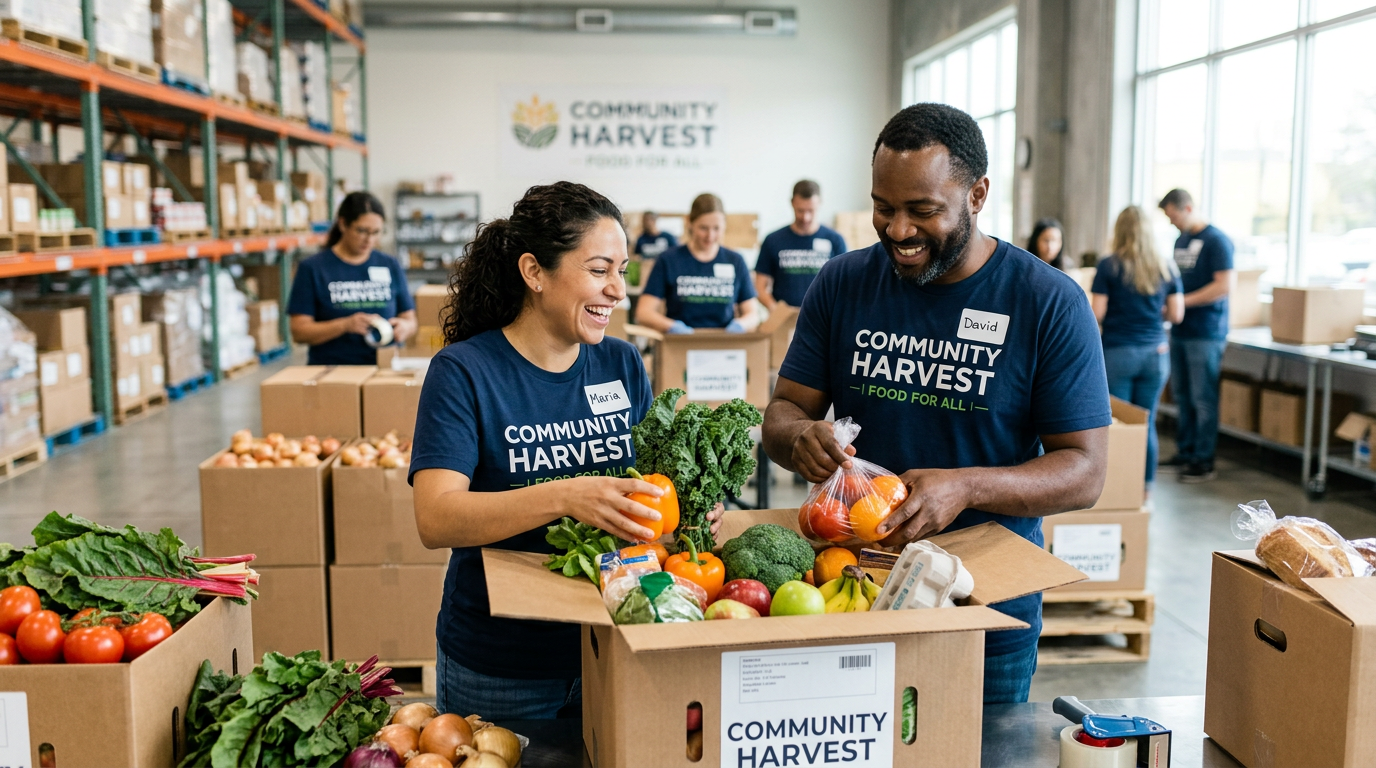
The church converted an underutilized, poorly lit basement into a state-of-the-art climate-controlled micro-fulfillment center. This space wasn't just for storage; it was designed for rapid sorting, high-volume packing, and cold-chain compliance. By applying "Lean" management principles—strategies commonly used in high-efficiency manufacturing—they optimized their volunteer workflows. They designed specialized packing stations that allowed a team of five volunteers to process more food in two hours than a team of twenty could have handled in an entire afternoon under the old system.
Phase Three: Decentralizing for Maximum Reach
Scaling the Compassion Network meant recognizing that the church building shouldn't be the only destination for those in need. If the goal was to serve the city, the distribution had to be decentralized.
The "Hub and Spoke" Distribution Strategy
The Compassion Network leveraged local school partnerships, apartment complex community rooms, and smaller neighborhood centers as distribution "spokes." The main church campus acted as the central hub where high-volume logistics occurred. Once the boxes were packed and sorted, church-owned vans and a network of volunteer drivers delivered them to These "spokes" where the final, personal hand-off occurred.
This model drastically reduced the transportation burden on the neighbors. Instead of a mother taking three buses to get to the church, she could walk two blocks to her child’s elementary school. By embedding the ministry deep within the existing infrastructure of the neighborhood, the church became a neighborly presence rather than a distant institution.
The Role of Leadership: From Managers to Architects
One of the most profound shifts in The Compassion Network was how it changed the role of pastoral and lay leadership. In the old model, the "Outreach Pastor" spent 80% of their time managing logistics—ordering cans, calling volunteers who didn't show up, and handling physical inventory.
In the new framework, the Outreach Pastor became an Architect of Systems. Their time shifted from managing tasks to managing partnerships and developing leaders. They focused on negotiating contracts with food banks, refining the data pipelines, and training "Site Leaders" for the various distribution spokes. This shift allowed the leadership to operate at a higher level, looking at the "big picture" of community health rather than being buried in the weeds of daily operations.
Integration with Discipleship: The Holistic Care Loop
Crucially, The Compassion Network was never intended to be "just" a food program. Because the logistics were handled by efficient systems, the volunteers at the spokes had the time and mental margin to actually talk to their neighbors.
The data from the Neighbor Portal was integrated with the church’s broader care management system. If a family checked "unemployed" on their registration, the system flagged them for the church's career coaching ministry. If they noted they were new to the area, they received an invite to a local neighborhood dinner. The food was the "bridge," but the system ensured that no one crossed that bridge without being offered a deeper level of care and community.
Results: The Impact of Scalable Systems
After eighteen months of operating under this new framework, the results were clear and staggering:
- Quantitative Growth: The network expanded from serving 150 families per month to over 600, maintaining a consistent delivery accuracy rate of 98%.
- Operational Efficiency: The cost-per-family-served dropped by 35% due to reduced waste and more strategic procurement.
- Volunteer Health: Volunteer retention rates soared. By providing clear roles and high-functioning systems, the church turned "burdensome chores" into "strategic service." Volunteers felt their time was valued because the environment was professional and the results were visible.
- Dignity and Respect: The removal of lines and the introduction of choice (via the portal) fundamentally changed the power dynamic. Neighbors were no longer "recipients of charity"; they were "members of a network."
Practical Advice for Implementing a Scalable Outreach Framework
If your church leadership is feeling the weight of growing needs and stagnant systems, consider taking these four strategic steps toward building your own Compassion Network:
1. Stop Guessing and Start Tracking
You cannot manage what you do not measure. The first step is to audit your current data collection. If it's on paper or in a siloed spreadsheet, it's not working for you. Invest in a platform that allows for relational tracking and predictive reporting. Understanding the patterns of need is the first step toward meeting the people in need.
2. Design for "High-Tech, High-Touch"
Automate the logistics so you can humanize the interactions. Every minute a volunteer spends looking for a box of pasta is a minute they aren't listening to a neighbor’s story. Use technology to handle the "heavy lifting" of ministry so your people can handle the "heavy hearts."
3. Seek Modular Partnerships
Don't try to build a food bank, a logistics company, and a data center all at once. Look for existing organizations in your city that are already doing one of those things well and offer to be their "local expression." A partnership with a local tech firm can provide the software, while a partnership with a regional distributor can provide the inventory. Your value is in the "last mile" of relational connection.
4. Build a "Minimum Viable Outreach"
Don't wait until you have a multi-site fulfillment center to start. Start by digitizing one small aspect of your service—perhaps just the sign-in process—and build from there. Learn what your neighbors actually want before you build the infrastructure to give it to them.
Conclusion: The Architecture of Hope
The Compassion Network stands as a testament to the fact that scaling a ministry does not mean losing its soul. On the contrary, by architecting robust, scalable pipelines for our outreach, we demonstrate a profound respect for our neighbors and a high level of stewardship for the resources God has entrusted to us.
When the logistics of our compassion are excellent, the message of our Gospel is clearer. In the busy, often chaotic urban environment, a church that can provide consistent, dignified, and data-backed care becomes an anchor of hope that cannot be ignored.
Ready to Bridge the Gap in Your Ministry?
Building a scalable ministry requires more than just a great vision; it requires the right tools to manage people, data, and resources with excellence. FaithBridge is the unified platform designed specifically for forward-thinking church leaders who want to bridge the gap between intent and impact. From guest integration to volunteer coordination and outreach logistics, FaithBridge provides the infrastructure you need to scale your mission without losing your heart.
[Discover FaithBridge Today] – Architecting the future of your ministry, one connection at a time.
Frequently asked questions
What is a hub-and-spoke distribution model for churches?
A hub-and-spoke model involves a large church campus acting as a central logistics 'hub' for sorting and packing, while local neighborhood sites (schools, community centers) act as 'spokes' for personal distribution.
How can a church start scaling their food pantry?
Start by digitizing your data tracking, moving from walk-in lines to scheduled appointments, and seeking logistical partnerships with local food surplus programs.
Does scaling church outreach lose the relational aspect?
On the contrary, efficient systems handle the logistical burden, freeing volunteers to spend more time listening to and talking with their neighbors.
Related articles
Community Outreach
Beyond the Breadline: 12 Best Practices for Architecting Sustainable Community Empowerment Ecosystems in High-Growth Churches
Community Outreach
Event-Based Outreach vs. Presence-Based Incarnation: A Strategic Comparison for Scaling Sustainable Neighborhood Transformation

Church Growth
The Rural-to-Regional Rebound: A Case Study on Scaling Sustainable Church Growth Through Digital Integration at Northwood Community Church
Explore FaithBridge